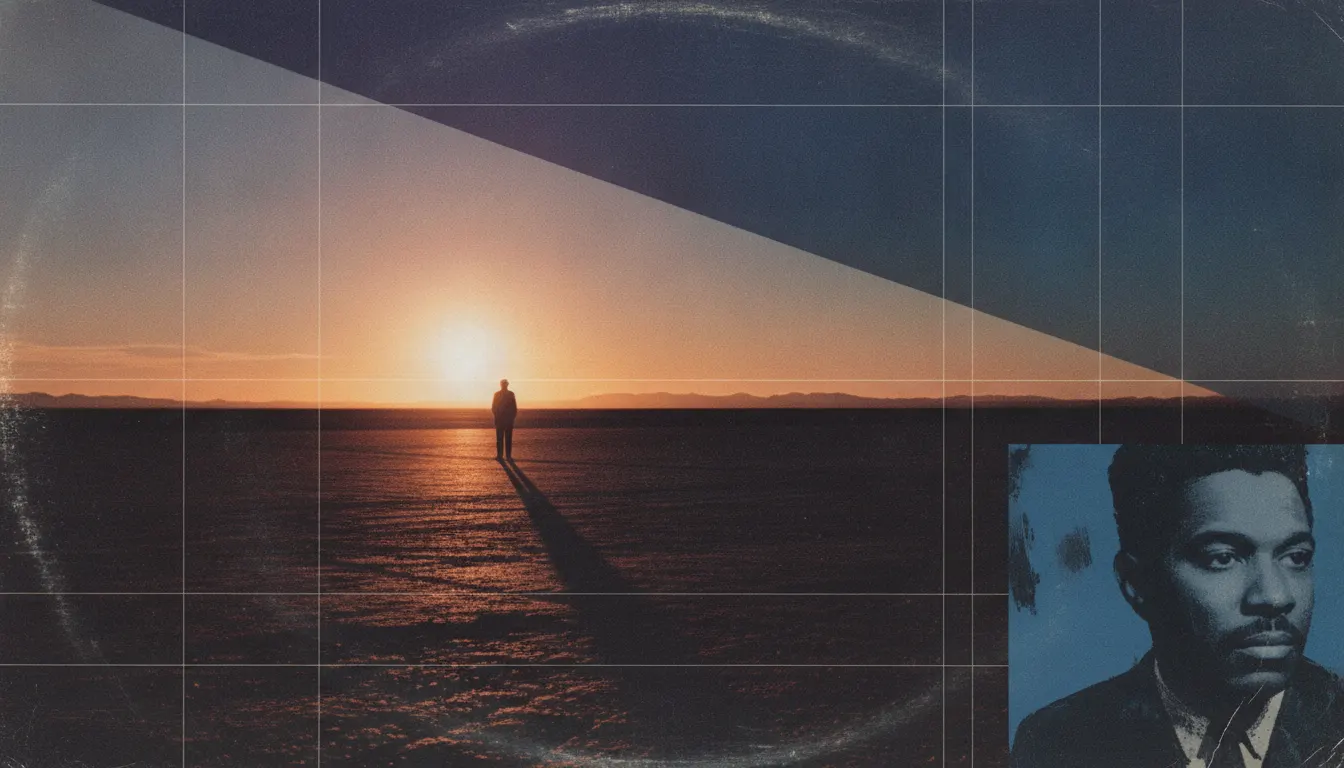
Song for My Father - Horace Silver
Reid Miles (design), Francis Wolff (photography) · 1964
Halftoned father portrait, green-yellow palette, massive Helvetica - one of the most studied graphic design objects of the 20th century
Reid Miles Blue Note jazz LP cover. Helvetica condensed tilted type, two-tone Francis Wolff photograph, modernist grid restraint.
The moves a human crew would use to get here. Cue applies them for you, and knowing their names is how you ask for a change.
Album title and artist name set in large-scale geometric or grotesque sans-serif type, often dominating the cover at 50% or more of the available space.
Wolff's studio portraits cropped to the point of near-abstraction - a single eye, half a trumpet bell, fingers on keys - turning the instrument's most expressive gesture into a graphic form.
Black-and-white photographs printed with visible halftone screen, reducing photographic information to a graphic texture that integrates with the typography.
Black, white, and 1-2 flat spot colors (often the label's signature blue, but also red, yellow, or green) used with restraint to achieve maximum visual impact.
Type treated as a visual element with compositional weight equal to or greater than the photograph - a radical departure from conventional album cover design hierarchy.
Wolff's low-angle, close-range studio portraits capturing musicians in the act of playing, instrument in foreground, face in middle ground, ambient light creating natural chiaroscuro.
Blue Note Records, founded in New York in 1939 by Alfred Lion and Francis Wolff, developed between 1956 and 1967 - under art director Reid Miles (1927-1993) and photographer Francis Wolff (1907-1971) - the most consistently excellent graphic design program in recorded music history. The Blue Note cover aesthetic of this period defined not just jazz graphic design but the visual language of cool, sophisticated mid-century modernity, and it remains one of the most referenced design traditions in contemporary graphic work.
Reid Miles joined Blue Note as a freelance designer in 1956 and produced approximately 500 album cover designs before leaving in 1967. He had no formal music training and claimed not to particularly like jazz, which may explain the detached, formal quality of his design approach. His visual vocabulary: bold, oversized sans-serif or geometric typefaces (frequently Helvetica, but also Grotesque, Franklin Gothic, and hand-lettered display type) dominating the composition; radical cropping of Francis Wolff's studio photographs so that a face might be reduced to a single eye and part of a cheekbone; heavy use of typography as a compositional element rather than information label; and a graphic severity that cut against the smooth surfaces of competing labels.
Francis Wolff photographed almost every Blue Note recording session from 1939 to 1971. His studio portraits - shot in the basement recording studio at Van Gelder Studio in Englewood Cliffs, NJ or at various New York locations - are black-and-white images of concentrated, unselfconscious musicianship. Musicians appear as they played, not posed for promotional photography. Wolff's characteristic shooting position was close, low, and at an oblique angle to the instrument, capturing the physical act of playing in ambient light.
Coverwork for Song for My Father by Horace Silver (1964) - a halftoned photograph of Silver's father in rural Brazil, green-and-yellow color scheme, massive 'HORACE SILVER' in Helvetica - is one of the most studied graphic design objects of the 20th century. Midnight Blue by Kenny Burrell (1963), A Night at Birdland by Art Blakey (1954), The Sidewinder by Lee Morgan (1963), Inventions and Dimensions by Herbie Hancock (1963), and Point of Departure by Andrew Hill (1964) are among the most reproduced examples.
The Blue Note design language: black, white, and 1-2 spot colors (frequently blue, but also red, yellow, green); halftone screen applied to photographs for graphic texture rather than photographic fidelity; large-scale typography as primary compositional element; radical photographic cropping that turns portraits into near-abstract graphic forms; the album title and artist name treated as equivalent design elements rather than hierarchical labels.
Reid Miles (design), Francis Wolff (photography) · 1964
Halftoned father portrait, green-yellow palette, massive Helvetica - one of the most studied graphic design objects of the 20th century
Reid Miles (design), Francis Wolff (photography) · 1963
Deep blue color field, radically cropped portrait; the Blue Note look at its most atmospheric
Reid Miles (design), Francis Wolff (photography) · 1963
Red and black, Wolff's close trumpet portrait, geometric type arrangement
Reid Miles (design), Francis Wolff (photography) · 1964
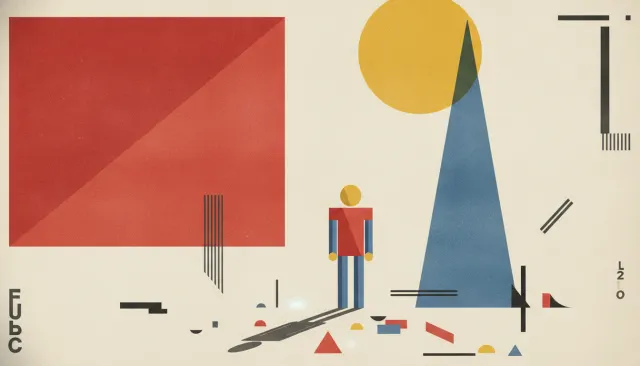
Abstract typographic arrangement; Reid Miles at his most formally experimental
Blue Note Records · 1954
Early Blue Note; live performance document; Francis Wolff photography establishing the club-photography aesthetic
Reid Miles (design), Francis Wolff (photography) · 1957
Coltrane's only Blue Note album; Wolff's iconic side-profile portrait; one of the best-selling Blue Note recordings
A Look is not a filter. It is a set of stored decisions the pipeline reads before it makes a single frame, so two videos in the same Look actually match.