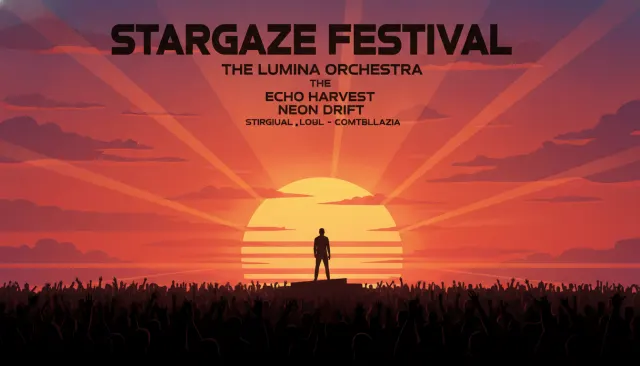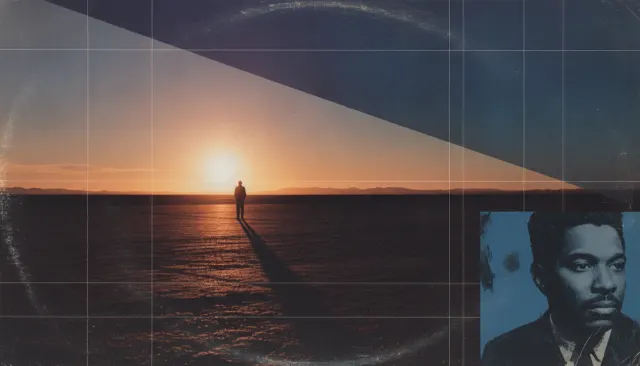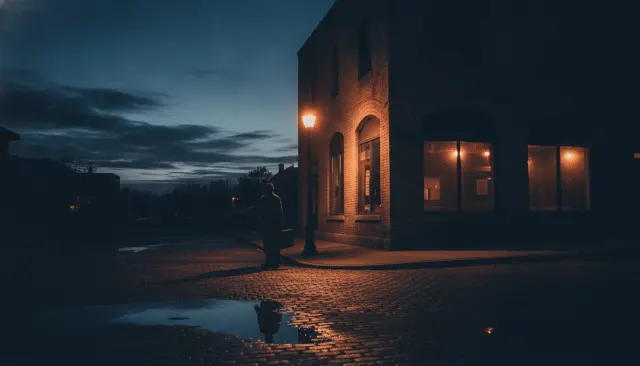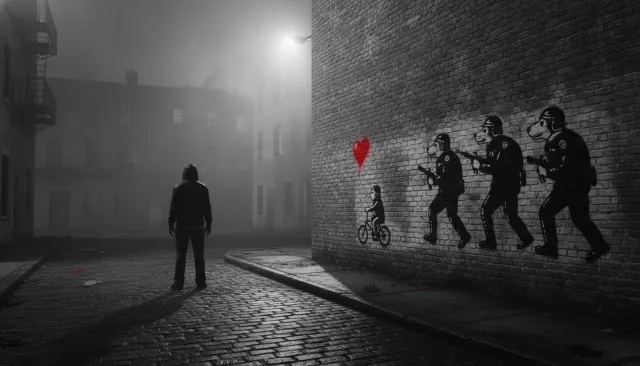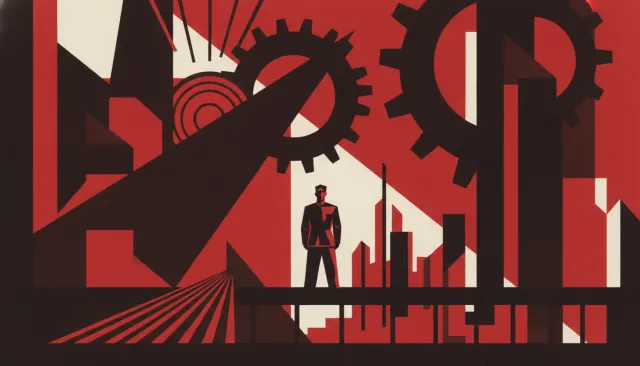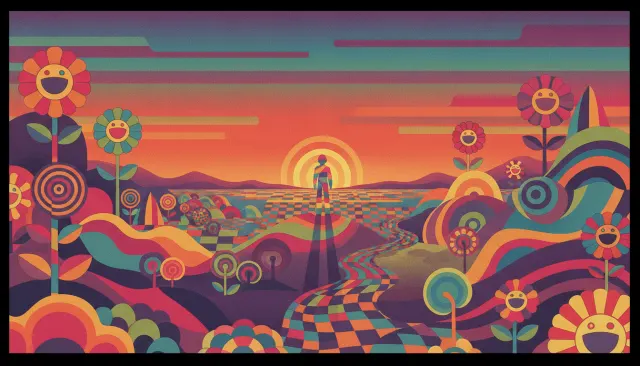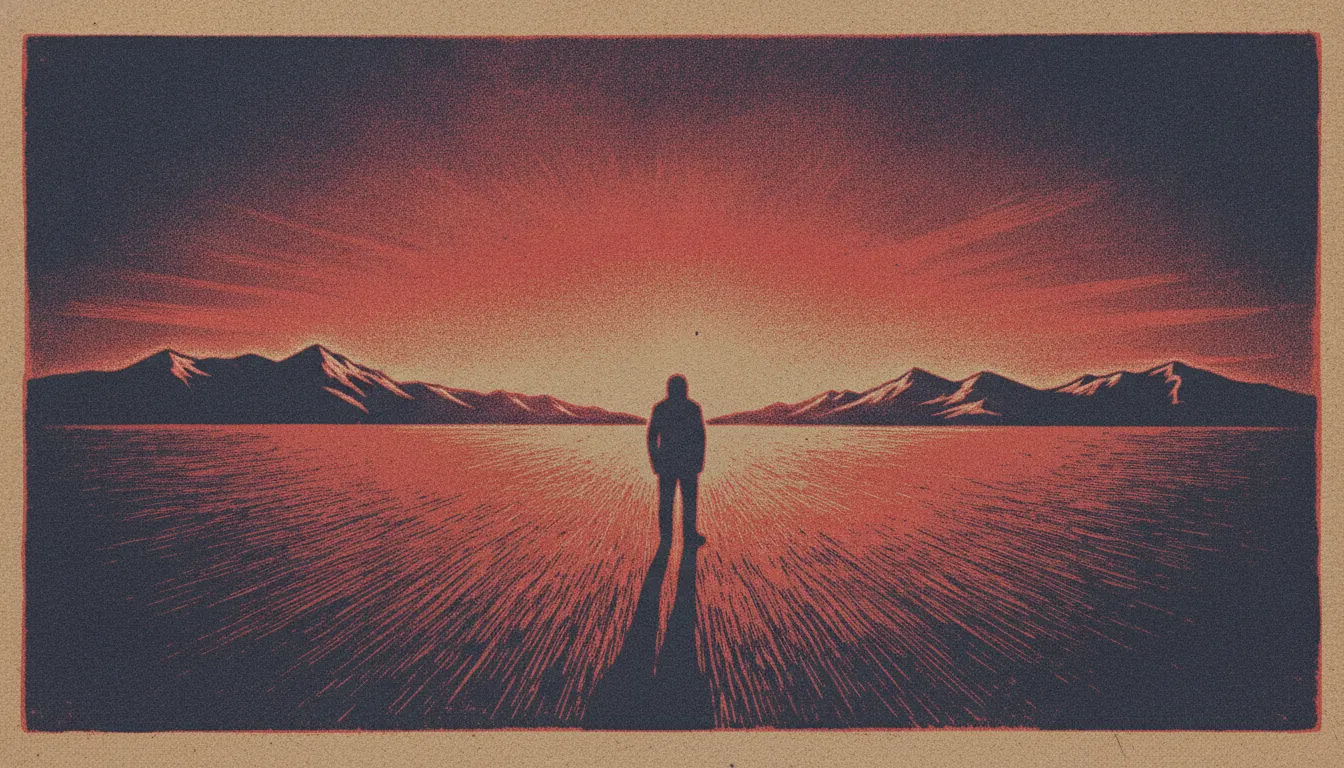
Art Chantry poster output (various bands)
Art Chantry · 1984-2000s
Seattle-based designer; defines the vintage-americana-meets-punk screenprint aesthetic for the early indie scene
Aaron Draplin Hatch Show Print indie-rock screen poster. Mis-registered hand-lettered type, two-color print, woodblock-feel show flyer.
The moves a human crew would use to get here. Cue applies them for you, and knowing their names is how you ask for a change.
2-5 colors including paper tone as an active element; each color is a separate printing pass, constraining the palette as a creative discipline.
Tonal gradation within a color achieved through halftone dot patterns - a photomechanical technique adapted from commercial printing that creates the recognizable 'screen' texture.
Intentional overlap of two transparent color layers produces a third color without a separate printing pass - a core screenprint economy that becomes an aesthetic feature.
Slight misalignment between color layers, either genuine or intentionally designed, signals handmade production and distinguishes screenprint from digital perfect registration.
Victorian engravings, scientific illustrations, vintage advertising art, and mid-century commercial images appropriated and recontextualized within the music poster context.
Headline in large display type (often distressed, vintage, or slab serif); supporting text in secondary weights; venue and date in smallest size - the genre's information hierarchy.
The indie rock screen print poster tradition is a distinct graphic art form that developed in parallel with the American independent music scene from the mid-1980s onward, reaching its peak aesthetic development in the 1990s-2000s and undergoing a conscious craft revival in the 2010s through organizations like the American Poster Institute's Flatstock convention and studios such as Aesthetic Apparatus (Minneapolis), Half and Half (Seattle), and Crosshair (Chicago).
The tradition descends directly from the San Francisco psychedelic poster movement of 1966-1971 (Wes Wilson, Victor Moscoso, Rick Griffin, Stanley Mouse), which established the concert poster as a collectible art object with visual complexity matching the music. By the 1980s, the DIY punk xerox poster and the independent venue flyer had fragmented the tradition into two streams: mass-reproduction xerox aesthetics (Xerography, cut-and-paste typography) and craft-conscious limited-run screenprint.
The screenprint stream consolidated into a recognizable aesthetic in the 1990s through the work of Firehouse (Seattle), Art Chantry (Seattle), and Frank Kozik (Austin/San Francisco). These designers worked in 2-4 color screenprint, adapting the limited palette constraint as an aesthetic rather than a limitation. Imagery drew from vintage americana (county fair, carnival, Old West), horror illustration, vintage scientific illustration, and mid-century commercial art, all filtered through a knowing irony that distinguished indie rock culture from mainstream pop.
In the 2000s, the Mondo Records visual program (Austin) and the Killian & Key design identity brought fine-art ambitions to the concert poster. Tyler Stout's screenprints for bands like Band of Horses and for film posters introduced photorealistic rendering techniques adapted to screenprint constraints. Jay Ryan (The Bird Machine, Chicago) developed a more illustrative, naively figurative style that became another pole of the genre.
The indie rock screenprint poster aesthetic: limited color palettes (2-5 colors including paper tone as a color); halftone dot patterns used for tonal gradation within a color layer; overprinting where two colors intersect to produce a third tone; rough registration suggesting handmade production; bold silhouette imagery with strong figure-ground contrast; eclectic image vocabularies mixing historical sources (victorian engravings, scientific illustration, vintage advertising) with contemporary pop culture; and heavy, legible display typography often set in vintage or distressed fonts.
Art Chantry · 1984-2000s
Seattle-based designer; defines the vintage-americana-meets-punk screenprint aesthetic for the early indie scene
Frank Kozik · 1989-present
Austin/San Francisco; signature style merges surreal imagery with bold line and acidic color
Jay Ryan · 2000-present
Chicago; naively figurative illustration style; wool-sweater texture and domestic surrealism within the screenprint genre
Tyler Stout and others, Mondo Records · 2007-present
Collectible limited-run film and concert posters; photorealistic rendering adapted to screenprint constraint
American Poster Institute (various) · 2002-present
Annual screenprint poster fair; the marketplace and community that sustains the craft tradition
Wes Wilson, Victor Moscoso, others · 1966-1971
The direct visual ancestor; psychedelic screenprint concert posters that established the poster-as-art-object model
A Look is not a filter. It is a set of stored decisions the pipeline reads before it makes a single frame, so two videos in the same Look actually match.