SIGNAGE EXTENDED · 1980S-PRESENT · JAPAN
Japanese Railway Tactical Signage
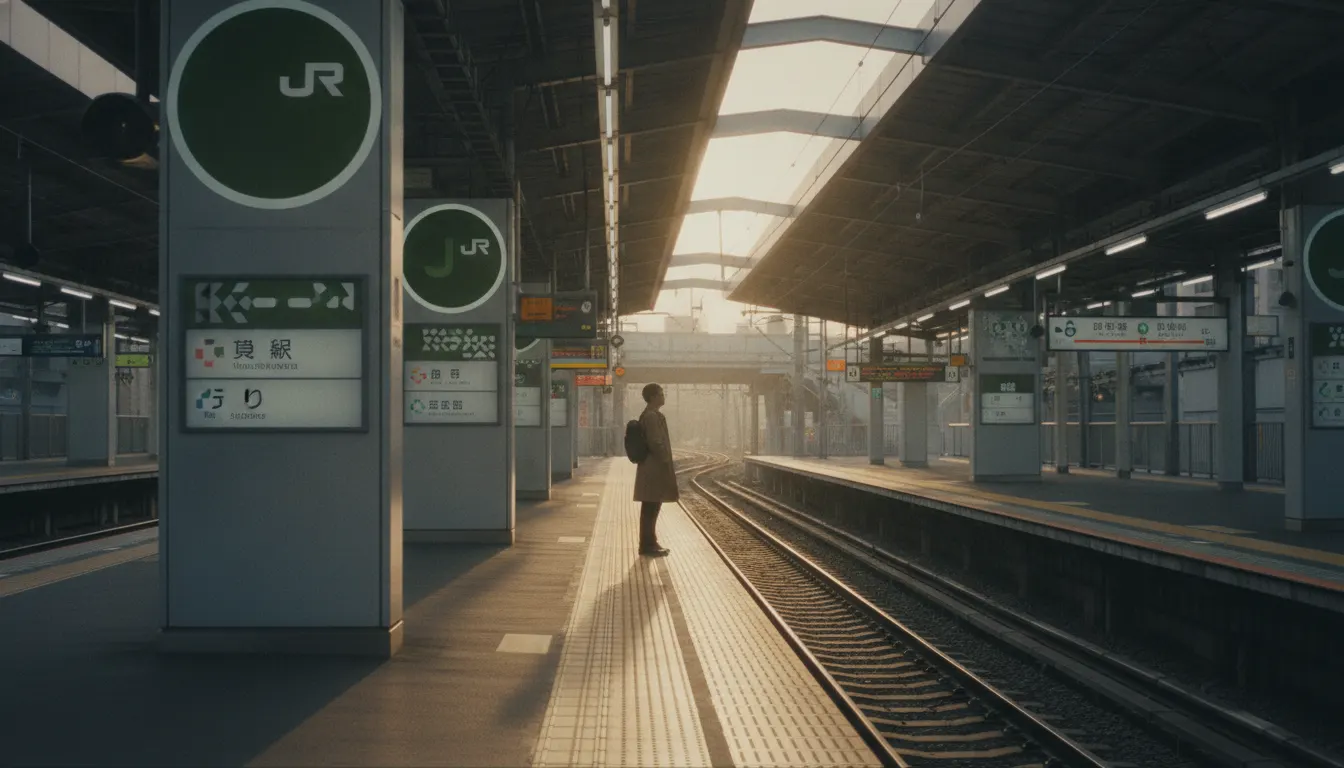
Japanese railway tactical signage aesthetic. JR Yamanote line-color disc, bilingual kanji + romaji station name, dense info hierarchy, world-class wayfinding system.
japanese-railwaysignagebilingualwayfinding
LUT jr-yamanote-bilingual
WHEN TO USE
- Wayfinding, navigation UI, or transportation-adjacent content where dense information needs clear systematic hierarchy
- Tech product interfaces drawing on transit map metaphors for route visualization, pipeline diagrams, or process flows
- City guides, travel content, or Tokyo/Japan-focused editorial that benefits from authentic visual references
- Motion graphics or title sequences for documentaries or explainers about urban systems, logistics, or infrastructure
- Brand systems for transit operators, airports, or large institutions requiring multilingual, multi-modal signage
- Design editorial or educational content about information design, wayfinding, or systematic color coding
WHEN NOT TO USE
- Warm, personal, or emotional content - the system aesthetic is deliberately neutral and functional
- Luxury or artisanal brand positioning where handcrafted values are central
- Content for audiences unfamiliar with transit systems where the visual language feels cryptic rather than reassuring
SIGNATURE TECHNIQUES
How the look is made.
The moves a human crew would use to get here. Cue applies them for you, and knowing their names is how you ask for a change.
- 01Strict color coding
each line or category assigned an unchanging hue applied to all touchpoints
- 02Bilingual type stacking
Japanese above English, set in matching neo-grotesque typefaces
- 03High information density managed through strict three
level typographic hierarchy (primary, secondary, tertiary)
- 04JIS
standard pictograms: compact, high-contrast, unambiguous silhouettes
- 05Rounded corner numbering badges for platform, exit, and line identifiers
- 06Route map line diagrams
thick colored lines with precise geometric curves and station dot markers
- 07Generous use of white or mid
grey backgrounds to maintain contrast at all type sizes
HISTORY & CONTEXT
Where it comes from.
Japanese Railway Tactical Signage
Japanese railway signage represents one of the most fully realized examples of wayfinding design in the world - a system that routes tens of millions of daily passengers through multilingual, multi-operator networks with near-zero error. The visual language is spare, systematic, and immediately functional, but it has also become a recognized aesthetic in its own right, widely referenced in graphic design, motion graphics, and UI design.
System Design History
The modern Japanese railway signage system was largely formalized during the period of rapid rail expansion following the 1964 Tokyo Olympics, when the Shinkansen (bullet train) network launched. Japan National Railways standardized typefaces, color coding, and pictogram systems across its network in the late 1960s and 1970s. The Tokyo subway system, operated by multiple private and public companies, developed a color-coded line identification system - each line assigned a distinct hue - that has been refined through successive redesigns. Major redesigns in the 1990s and 2000s introduced cleaner typography and bilingual (Japanese/English) station naming as Japan prepared for increased international visitors ahead of the 2002 World Cup and subsequent tourism growth.
Visual Grammar
The system relies on several interlocking principles. Color is information: each railway line has an assigned color that appears on maps, platform signs, rolling stock, and station furniture without deviation. Typographic hierarchy is strict - station names in large bold type (Gothic Nami or an equivalent neo-grotesque), line names and connecting services in secondary weight, operational information in a tertiary size. Pictograms and icons, developed to JIS standards (Japanese Industrial Standards), are compact, high-contrast, and unambiguous. Bilingual text is handled by running Japanese (kanji/kana) above English, with both set in the same type family.
Aesthetic Qualities
The cumulative effect is a visual environment of extreme density managed through rigorous hierarchy. Platform signs, overhead route displays, and exit numbering systems layer information without apparent conflict. The color coding creates an almost abstract landscape when photographed - Tokyo Yamanote Line green, Chuo Line orange, Keio Line deep blue-green, each a precise Pantone equivalent. Platform edge markings, tactile paving strips, and priority seating graphics add layers of systematic visual communication that extend the language from walls to floors.
Global Influence
The Japanese railway aesthetic has influenced transit design globally. The PASMO and Suica card visual identities, the Shinkansen livery design by industrial designers at JR, and the platform signage systems all have an iconic quality that makes them reference points for transport and wayfinding designers internationally.
NOTABLE WORKS
Where you have seen it.
JR East Yamanote Line station signage redesign
2020
Shinkansen N700 series livery design
JR Central industrial design team
PASMO card visual identity
2007
Suica penguin character and card design
JR East
Osaka Metro signage redesign
2018
Hiromura Design Office
THE RECIPE
The exact knobs
the renderer turns.
A Look is not a filter. It is a set of stored decisions the pipeline reads before it makes a single frame, so two videos in the same Look actually match.
SettingValue
GradeColour LUT applied to every frame
jr-yamanote-bilingualTransitionHow one shot becomes the next
hard cuts · 120ms · linearKen BurnsCamera move applied to stills
Static framesTypographyDisplay / body / mono pairing
Noto Sans JP · Noto Sans JP · JetBrains MonoMusic moodWhat the bed under the voice sounds like
japanese-train-station-ambient · tokyo-metro-jinglePrompt suffixAppended to every shot prompt in this Look
Japanese railway tactical signage, JR Yamanote line color disc, bilingual kanji romaji station name, dense info hierarchy, world class wayfindingPALETTE
Primary
#9ACD32
Secondary
#1A1A1A
Accent
#FFFFFF
Text/Light
#1A1A1A
Text/Dark
#FFFFFF
BG 900
#1A1A1A
BG 800
#2A2A2A
RELATED LOOKS
Next to it on the shelf.

Your first cut
is on us.
+ New videoFree plan · no card · 1080p export