Sniffin' Glue zine
Mark Perry, London 1976-1977
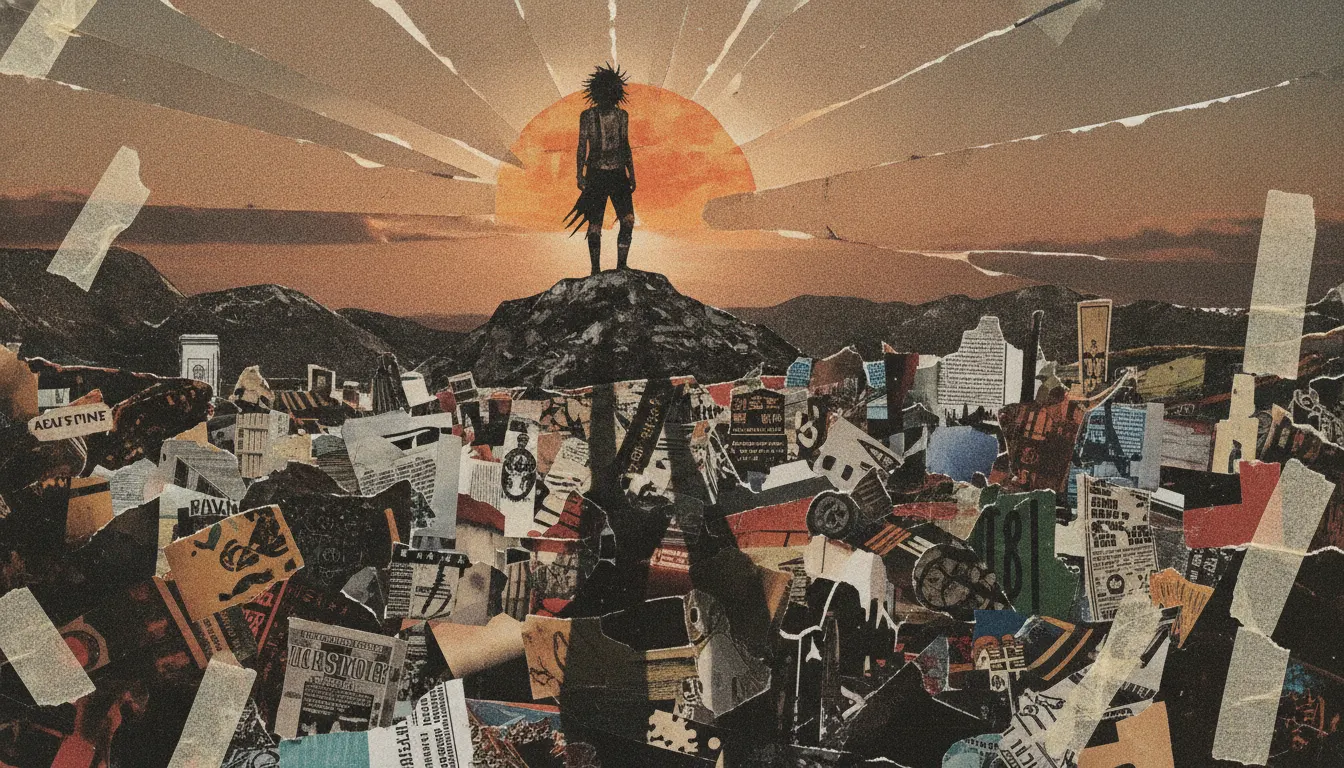
Indie zine cut-and-paste. Photocopied collage, ransom-note typography, scotch tape and tape marks, fanzine handmade DIY, riot grrrl punk energy.
The moves a human crew would use to get here. Cue applies them for you, and knowing their names is how you ask for a change.
note typography: mixed fonts, sizes, and weights clipped from magazines and reassembled
blown-out highlights, heavy grain, misregistration, visible halftone dots
tip, ballpoint, or Sharpie alongside or replacing printed type
Out) used as visible design elements
and-white or two-color printing with spot colors applied manually (marker, highlighter)
The cut-and-paste zine aesthetic emerged from the punk underground of the mid-1970s and was cemented as a radical visual language by the Riot Grrrl movement of the early 1990s. It is defined by the visible seams of physical production - photocopied halftones, hand-lettered type, clipped magazine headlines, rubber stamps, and Letraset - assembled with deliberate roughness as a statement against slick commercial design.
Mark Perry's Sniffin' Glue (1976, London) established the template. Published monthly during the peak of UK punk, Perry produced each issue with a typewriter, felt-tip pens, and scissors, then photocopied it at a corner shop. The visual rawness was inseparable from the DIY ethic: anyone with £2 could make a zine. In the US, Search and Destroy (1977, San Francisco) and Slash (1977, Los Angeles) adopted similar methods. By 1978-79, every city with a punk scene had zines produced this way.
Kathleen Hanna of Bikini Kill and Tobi Vail circulated Bikini Kill zine (1990-91, Olympia, Washington) combining political manifestos with personal diary entries, collaged photographs, and hand-drawn art. The Riot Grrrl network produced hundreds of zines - Girl Germs, Jigsaw, Factsheet Five - that spread the aesthetic nationwide. The photocopied grid became a symbol of feminist self-publishing outside corporate media structures.
Core to the look is visible reproduction artifacts: blurred halftones, misaligned columns, white-out corrections left visible, pages that show the grey tonal shifts of a photocopier toner running low. Typography mixes ransom-note clippings from magazines with hand lettering in Sharpie or ballpoint. Imagery is sourced from magazines, medical textbooks, advertisements - recombined for irony or shock. Borders are made with tape, stamps, drawn lines. Layout ignores the grid entirely or aggressively subverts it.
Beyond the UK punk origin, the American hardcore scene of 1981-1985 (Washington DC's Dischord Records, Ian MacKaye's Minor Threat, and later Fugazi) developed a related but distinct visual language: photocopied flyers with urgency-driven typography, simple two-color offset printing for album covers, and a visual austerity that served both budget constraints and ethical positioning about commercial excess. Raymond Pettibon's illustrations for Black Flag's SST Records releases combined hand-drawn imagery with fragmentary text in ways that extended the zine visual vocabulary into record sleeve art.
The aesthetic revived strongly around 2012-2018 in music packaging (Sleater-Kinney, Chvrches), independent publishing, and social media content targeting audiences who read its roughness as authenticity. Digital tools like Procreate, Canva cutout brushes, and distressed Photoshop filters now simulate the look. The distinction between scanned physical collage and digital approximation is meaningful to practitioners but invisible to most audiences, a tension that has driven renewed interest in genuinely analog production methods among younger designers and musicians.
Mark Perry, London 1976-1977
V. Vale, San Francisco 1977-1979
Kathleen Hanna and Tobi Vail, Olympia 1990-1991
Bratmobile, 1991-1994
San Francisco 1977-2019 (long-running punk zine)
Washington DC 1980s
2015
No Cities to Love packaging design
A Look is not a filter. It is a set of stored decisions the pipeline reads before it makes a single frame, so two videos in the same Look actually match.