Hyper Light Drifter
Heart Machine / Alex Preston, 2016 (PC/Mac/Linux/PS4/Xbox One/Switch)
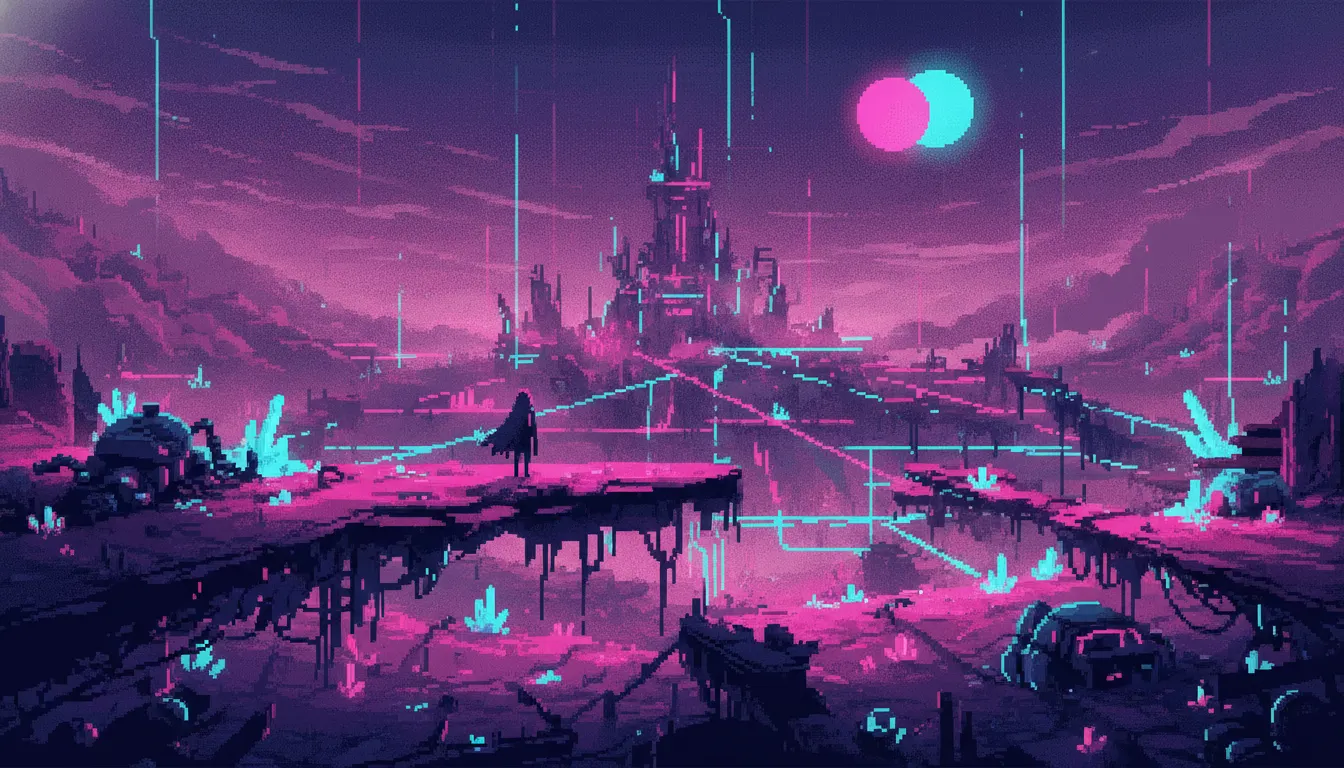
Hyper Light Drifter neon pixel aesthetic. Magenta-and-cyan post-apocalyptic palette, no-text storytelling, Heart Machine atmospheric world.
The moves a human crew would use to get here. Cue applies them for you, and knowing their names is how you ask for a change.
bit-resolution pixel art character and environment sprites with contemporary neon palettes not achievable on original SNES hardware
black base backgrounds that let acid pinks, electric blues, and poisonous greens glow at maximum contrast
free world-building: history communicated through environmental pixel murals, ruins, and architectural decay
cultural architectural synthesis: Mesoamerican, Egyptian, Central Asian ruins creating unfamiliar ancient world
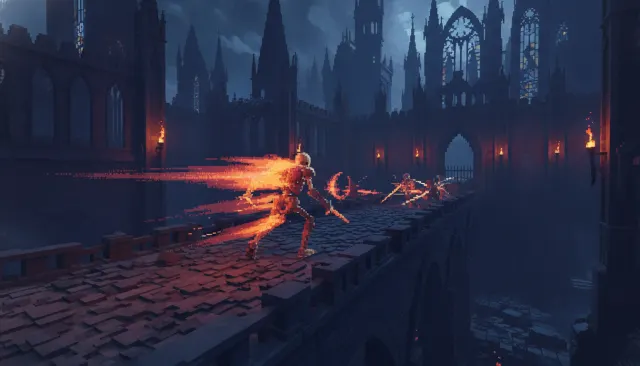
time dynamic lighting: enemy glow, crystal radiance, and bonfire light pools recoloring surrounding pixel grids
screen shake, hit-freeze frames, and color-flash on impact
Alex Preston's Hyper Light Drifter (Heart Machine, 2016) arrived from a Kickstarter campaign as one of the most visually ambitious pixel-art games ever made. Preston, who designed the game while managing a serious heart condition, channeled personal mortality into a post-apocalyptic world built from the vocabulary of SNES-era JRPGs refracted through a modern acid-neon color theory.
The pixel art in Hyper Light Drifter operates at a resolution that echoes 16-bit consoles - characters are small, environments are tightly gridded - but the color palette is completely contemporary. Acid pinks, electric blues, deep magentas, and poisonous greens sit against near-black backgrounds. The combination creates a visual dissonance: the nostalgic form of 1990s pixel art filled with colors that no 1990s display could accurately reproduce. This tension is the look's defining quality.
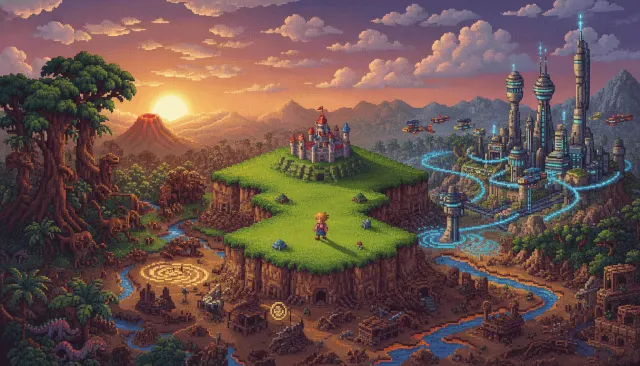
The world has no text. No dialogue boxes, no exposition - Preston communicates history, tragedy, and civilization collapse entirely through environmental pixel art: crumbling towers, overgrown ruins, corrupted machinery half-swallowed by soil, and ancient murals painted across cave walls. Structures reference Mesoamerican, Egyptian, and Central Asian architectural traditions - not any single culture, but a synthesis that feels genuinely ancient and alien.
Particle effects and light blooms give the pixel world atmospheric depth beyond what sprites alone could achieve. Enemies glow with internal light. The Drifter's dash leaves a neon afterimage. Bonfires and crystal formations emit radial light pools that recolor the pixel grid around them. Rain systems and cloud shadows pass over environments in real time.
Hyper Light Drifter's specific combination of tight pixel discipline with contemporary neon color theory and action-RPG brutalism became extremely influential on indie development in the late 2010s. Dozens of games explicitly cite it as a reference for 'dark pixel neon' or 'post-apocalyptic pixel RPG' art direction.
Heart Machine / Alex Preston, 2016 (PC/Mac/Linux/PS4/Xbox One/Switch)
Heart Machine, 2021 - Preston's follow-up game, evolving to 3D but retaining neon atmospheric palette
Toby Fox, 2015 - pixel-era peer exploring narrative depth in retro-resolution art
Extremely OK Games, 2018 - parallel precision pixel platformer with similarly handcrafted aesthetic care
Motion Twin, 2018 - dark pixel roguelike citing similar SNES-era influences
Pixpil, 2021 - pixel RPG building on the neon-influenced modern pixel tradition
Radical Fish Games, 2018 - dense pixel-art RPG in the same aesthetic lineage
A Look is not a filter. It is a set of stored decisions the pipeline reads before it makes a single frame, so two videos in the same Look actually match.