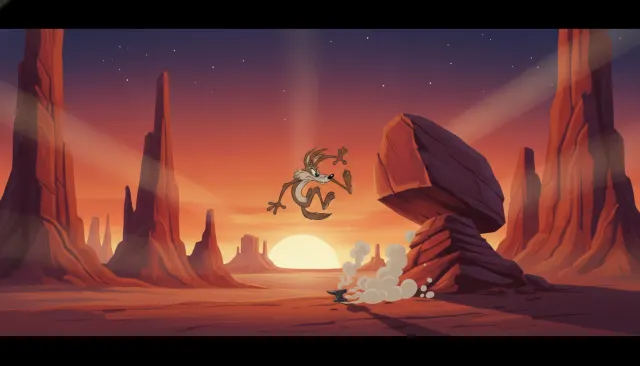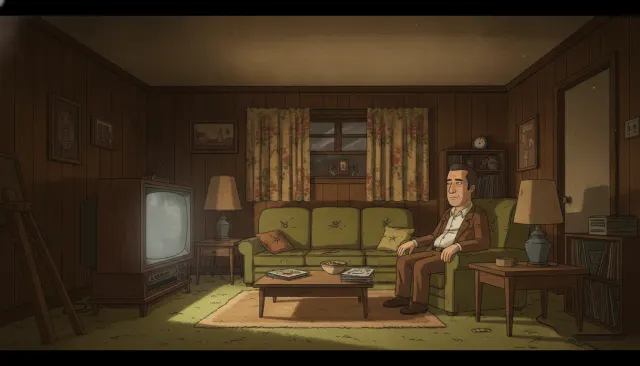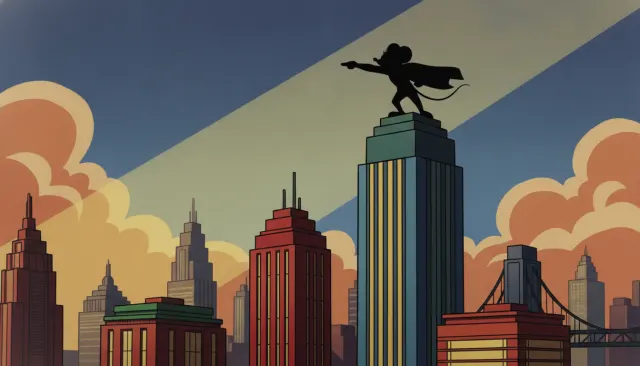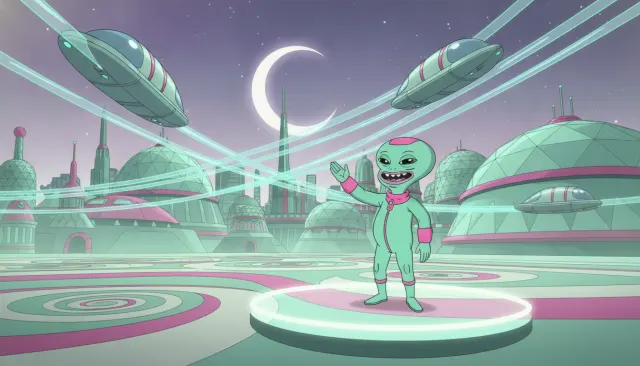
The Huckleberry Hound Show
William Hanna & Joseph Barbera · 1958
Studio launch; established limited animation template for TV
Flintstones, Jetsons, Scooby-Doo 1960s limited TV animation. Repeating backgrounds, mouth-only character motion, mid-century cel palette.
The moves a human crew would use to get here. Cue applies them for you, and knowing their names is how you ask for a change.
Reusable character element libraries (mouths, eyes, walking legs) reduce production cost and create the characteristic snap-and-hold movement.
Single background paintings looped horizontally during running or chase sequences - Scooby-Doo's hallway loop is the defining example.
Characters hold positions between actions with subtle registration vibration from slight drawing variations - creates tension without requiring full movement.
Characters filled with consistent, high-contrast flat colors - no shading, no gradients - making them reproducible across offshore studios.
Simple oval-bodied characters with round heads and readable silhouettes, designed for maximum reproducibility under offshore production.
Heavy reliance on dialogue to convey action that cannot be animated - a character says 'I'm running!' while a walk cycle loops over a panning background.
Backgrounds drawn with the same graphic, flat-color aesthetic as characters - minimal perspective, minimal atmospheric detail, maximum legibility.
Hanna-Barbera Productions, founded by William Hanna and Joseph Barbera in 1957, developed a production methodology that revolutionized - and fundamentally compromised, depending on one's perspective - the art of animation. Their 'limited animation' approach made television animation economically viable for the first time, and in doing so created an aesthetic that defined American childhood for three generations.
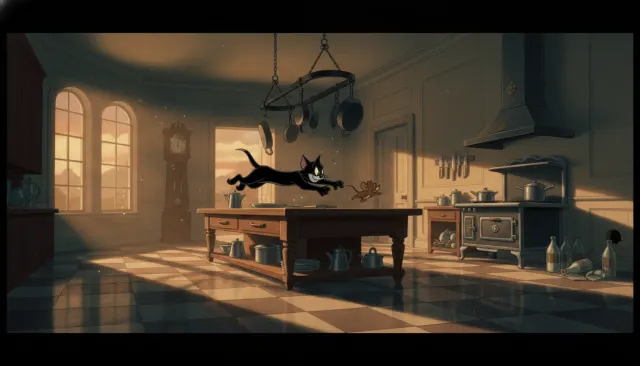
Hanna and Barbera had directed the Tom and Jerry cartoons at MGM from 1940 to 1957, winning multiple Academy Awards for fully animated theatrical shorts. When MGM closed its animation department, they founded their own studio and pivoted to the new medium of television - which had entirely different economic requirements. Theatrical animation cost $40,000-50,000 per seven-minute short; television needed content at a fraction of that cost.
Hanna-Barbera's solution was systematic reduction: eliminate animation wherever possible. Backgrounds could be static or slowly panning. Characters moved lips but held bodies still in dialogue scenes. Walk cycles reused the same four to six frames of leg movement across a static or looping background. Eyes, mouths, and hands were drawn separately and reused. This 'library' approach to animation - accumulating reusable character elements - became the studio's core production technology.
The results were distinctive: Hanna-Barbera characters had a specific quality of arrested motion, with vibrating still holds between action poses, looping backgrounds in chase sequences (Scooby-Doo's hallway loop became a cultural icon), and a characteristic 'snap' between positions that replaced the smooth arcs of Disney full animation.
The character design aesthetic, developed primarily by Ed Benedict (who designed Huckleberry Hound, Yogi Bear, and the Flintstones), is immediately recognizable: simple oval forms, bold flat color fills, consistent black outline weights, and highly readable silhouettes. This was functional design - characters needed to be reproducible by Korean animation studios under tight deadlines, so complexity was systematically avoided. The result is a 'flat graphic' aesthetic that, in retrospect, aligns with the concurrent UPA modernist movement while serving entirely different economic ends.
The Huckleberry Hound Show (1958) launched the studio and established the template. The Flintstones (1960), the first primetime animated series, proved adult audiences could accept limited animation. Top Cat (1961), The Jetsons (1962), Wacky Races (1968), Scooby-Doo (1969), and dozens more followed. The 1970s expanded into Saturday morning with Yogi's Gang, Captain Caveman, and Hong Kong Phooey. By the 1980s, with shows like The Smurfs, Hanna-Barbera dominated Saturday morning television.
The studio's assets were acquired by Turner Broadcasting in 1991 and later folded into Cartoon Network, which launched in 1992 partially as a vehicle for the Hanna-Barbera library. The visual style directly influenced virtually all American TV animation from 1958 to the late 1980s and remains the defining reference for 'classic cartoon' nostalgia.
William Hanna & Joseph Barbera · 1958
Studio launch; established limited animation template for TV
William Hanna & Joseph Barbera · 1960
First primetime animated series; stone-age domestic comedy
William Hanna & Joseph Barbera · 1962
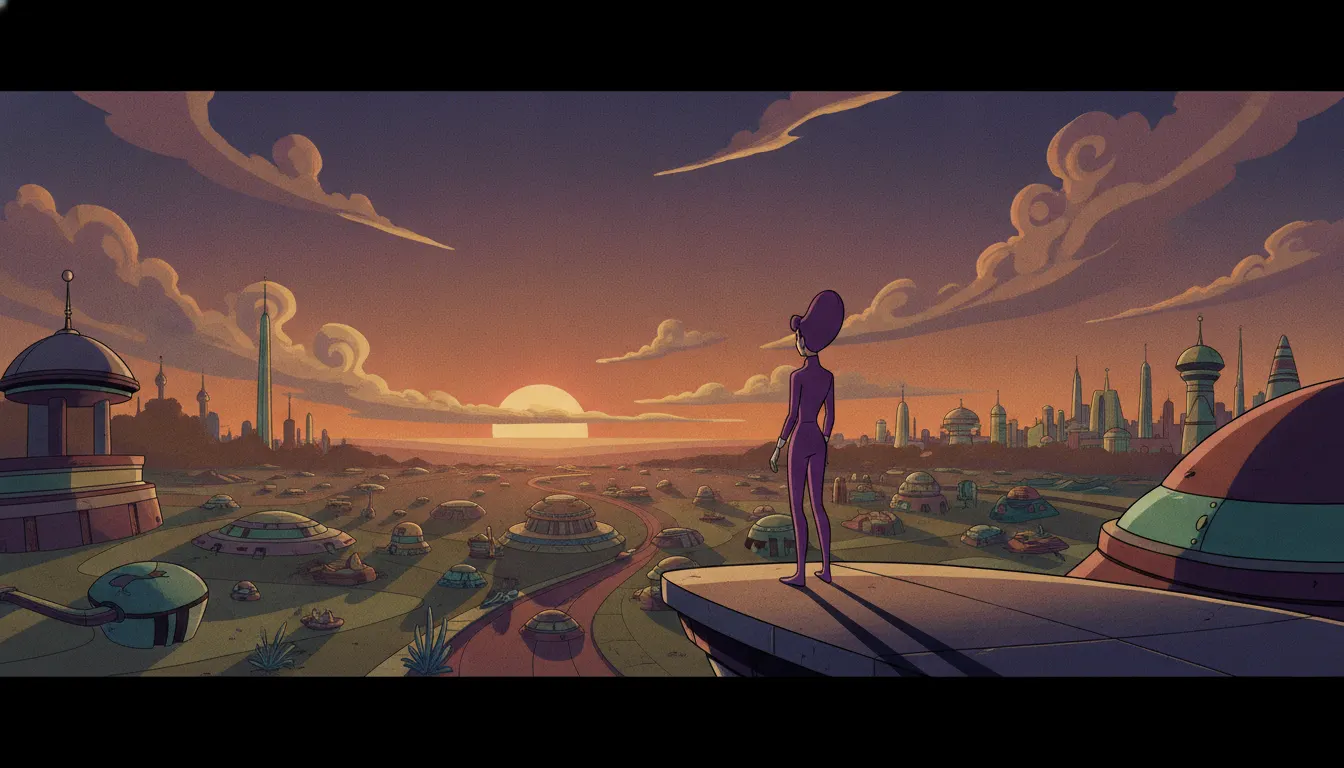
Space-age suburban family; retrofuturist design twin to The Flintstones
William Hanna & Joseph Barbera · 1969
Enduring mystery-comedy franchise; looping hallway background became a cultural symbol
William Hanna & Joseph Barbera · 1968
Racing ensemble show; character design variety across a unified visual template
William Hanna & Joseph Barbera · 1961
Breakout character from Huckleberry Hound; defined the 'smarter than average bear' archetype
William Hanna & Joseph Barbera · 1981
1980s Saturday morning peak; highest-rated show of the era
A Look is not a filter. It is a set of stored decisions the pipeline reads before it makes a single frame, so two videos in the same Look actually match.