Green Day, 'Holiday' dir. Samuel Bayer
2004
white room performance vs. war footage
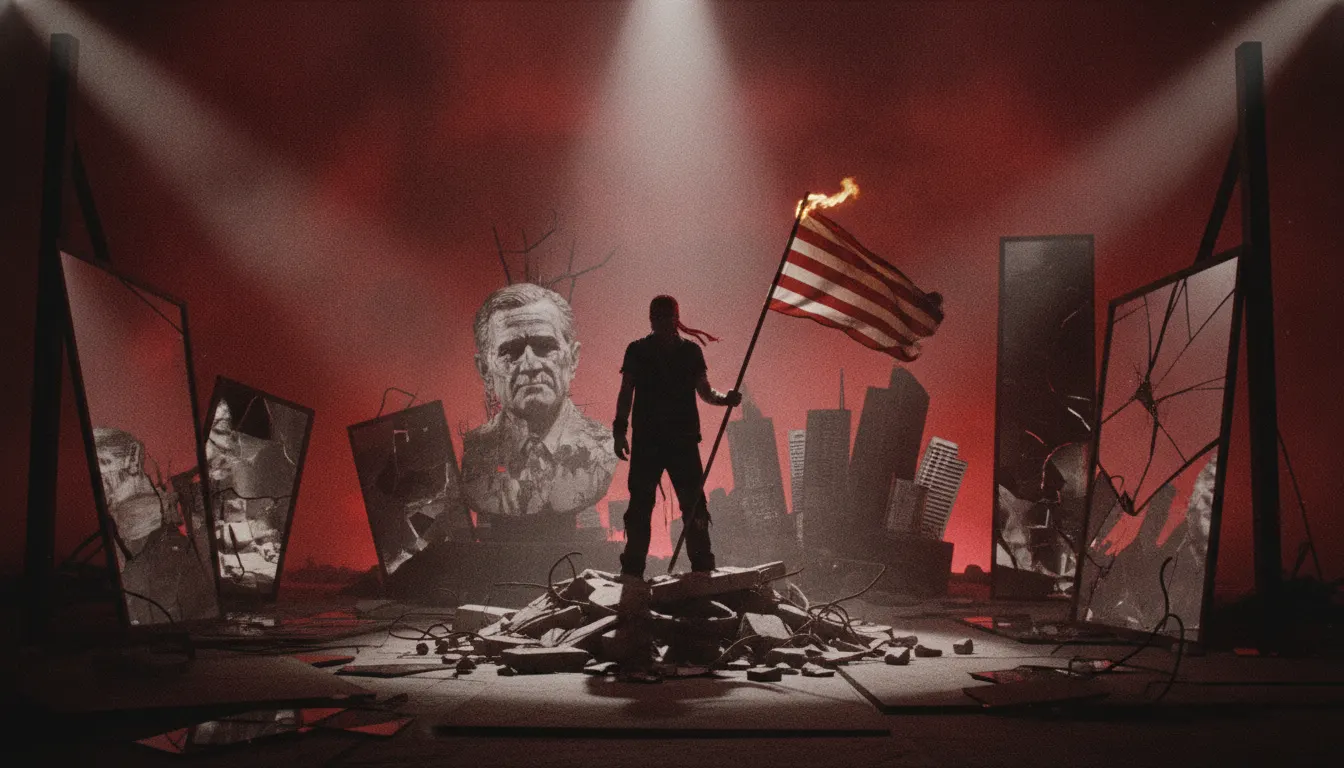
Green Day American Idiot protest MV aesthetic. Bush-era political punk anthem, red-white-black palette, Samuel Bayer direction, broken-mirror dystopian set design.
The moves a human crew would use to get here. Cue applies them for you, and knowing their names is how you ask for a change.
in-white-room intercutting against documentary or news archival footage
the American flag palette pushed to excess
movie wide-angle desolation: gas stations, motels, empty American commercial landscape
contrast exposure - blocked shadows, slightly blown sky highlights
down stillness in narrative sequences
not a star-vehicle, maintaining collective identity throughout
The visual language of Green Day's American Idiot album cycle (2004-2005) represents a specific fusion of punk urgency with a cinematic ambition that few rock bands of their generation attempted - and which Samuel Bayer executed with a scope that matched the album's concept-album aspirations.
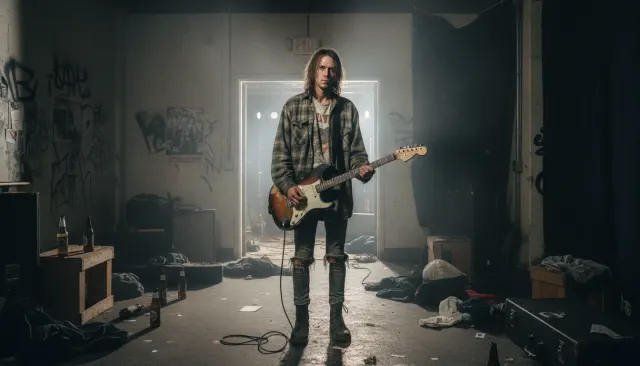
Samuel Bayer, who had previously directed Nirvana's "Smells Like Teen Spirit" (1991) - the video that arguably defined MTV's alternative era - returned to politically conscious rock with Green Day's three-video American Idiot campaign. Each video escalated in production scale and thematic specificity.
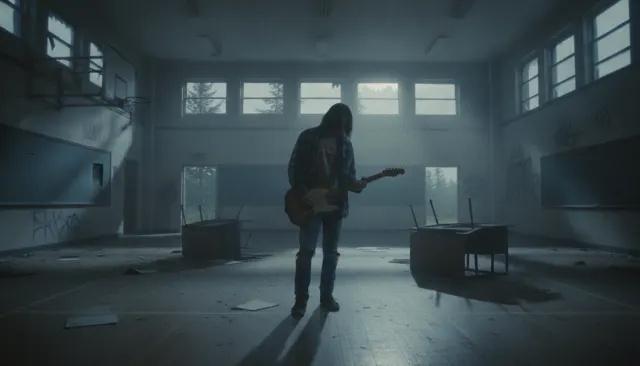
"Holiday" (2004) used a performance-vs-newsreel split structure: Green Day performing in a stark white room while images from the Iraq War, political rallies, and protest footage intercut against their performance. The white room - clinical, institutional - was a deliberate contrast to the chaotic archival material. The color palette pushed red-white-and-blue into garish excess, a critique embedded in the visual language.
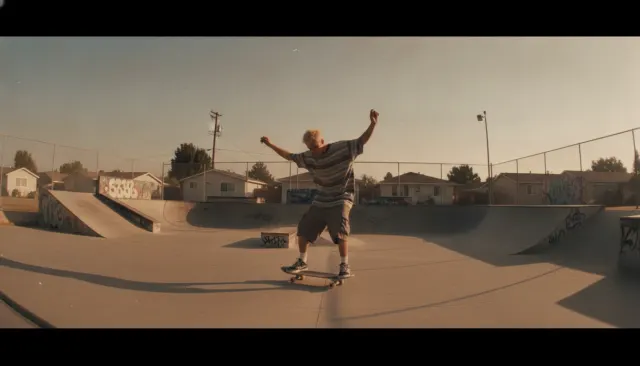
"Boulevard of Broken Dreams" (2004, dir. Samuel Bayer) became the album's visual signature: the band walking through a deserted American landscape - gas stations, motels, strip-mall periphery - with desaturated color treatment and a lonely wide-angle compositional language borrowed from road-movie cinema. The emptiness of the American West reads as a political statement about abandonment and disillusionment.
"Wake Me Up When September Ends" (2005, dirs. Samuel Bayer) departed most radically from the concert aesthetic, following actors Jamie Bell and Evan Rachel Wood through a young relationship disrupted by military deployment, using a deeply cinematic narrative structure with no Green Day performance footage at all.
The broader American Idiot visual identity - designed across album art, stage design, and video work - drew on punk's historical relationship to collage and political agitation graphics. Jamie Hewlett's illustrated work for the stage production and the album booklet established a high-contrast, graphic quality that the videos translated into live-action terms: bold compositions, strong color blocking, and an adversarial relationship to mainstream American imagery.
Bayer's approach connected Green Day to a lineage of politically engaged rock video work: Rage Against the Machine's 1990s Michael Moore-directed videos, the Clash's agit-prop imagery, and the broader tradition of punk's typographic radicalism. The willingness to use real war news footage in a commercial music video was itself a statement in the post-9/11 media environment.
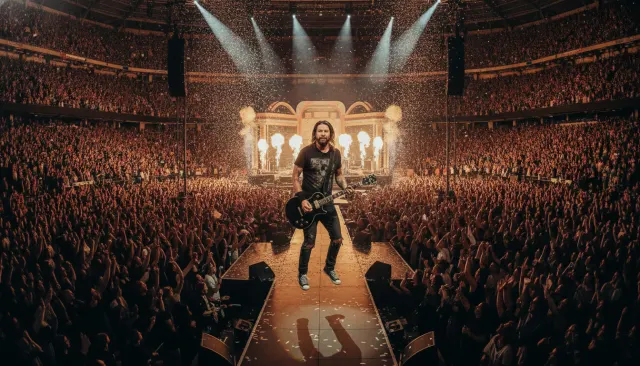
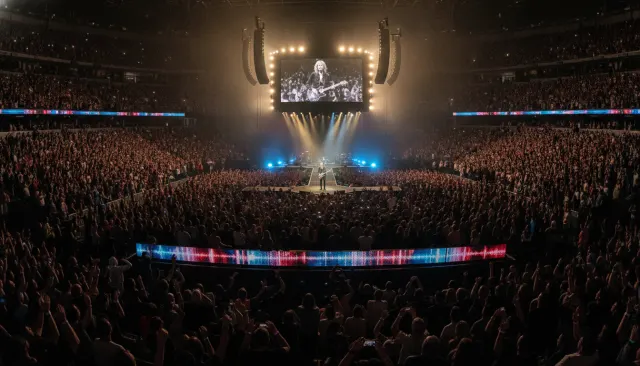
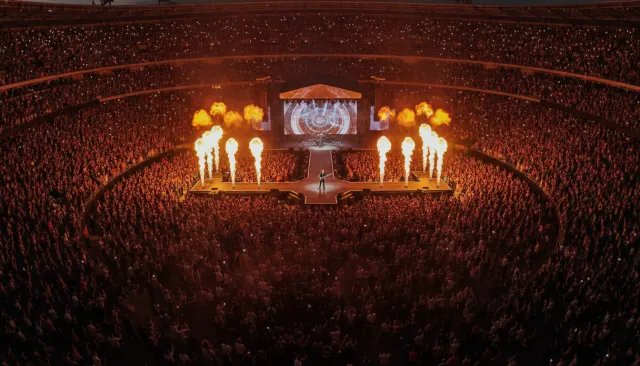
The visual campaign extended beyond the three primary videos into Green Day's 2005 live production. The American Idiot tour used large-scale video screens playing archival and conceptual footage behind the band during performance - one of the earlier major rock tours to integrate video content as narrative backdrop rather than merely performance documentation. The stage design drew on the same graphic vocabulary as the videos: bold primary colors, typographic elements, and the explicit use of American imagery as critique rather than celebration. This integration of video aesthetics into live performance created a coherent world that reinforced the album's concept-album structure and positioned Green Day as heirs to a rock tradition - The Who's Tommy, Pink Floyd's The Wall - where a unified visual and sonic world was the unit of artistic expression.
2004
white room performance vs. war footage
2004
road-movie desolation
2005
full narrative film
1991
Bayer's foundational work
1992
protest rock comparison
graphic agitation lineage
2005
A Look is not a filter. It is a set of stored decisions the pipeline reads before it makes a single frame, so two videos in the same Look actually match.