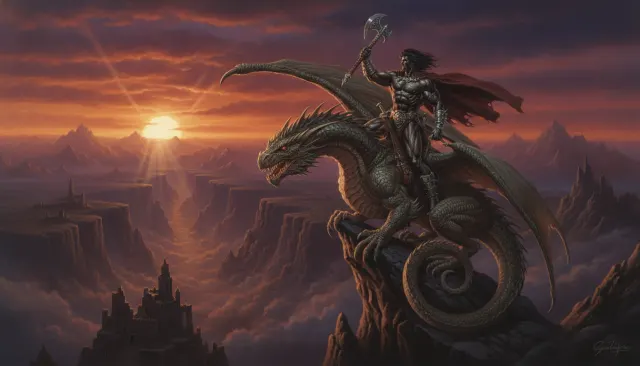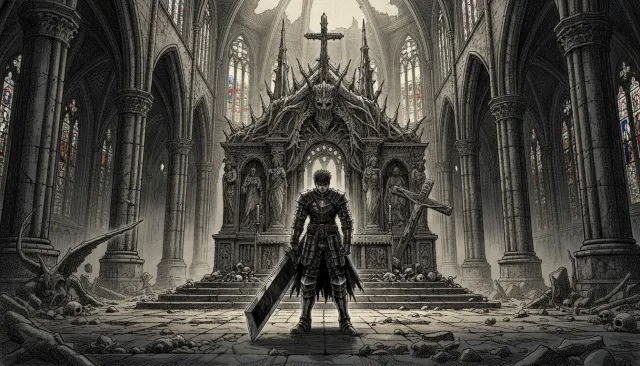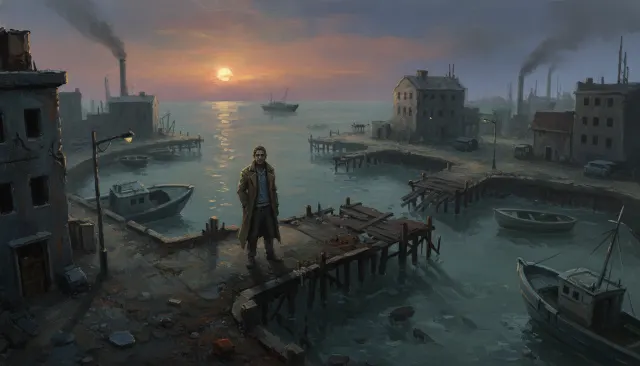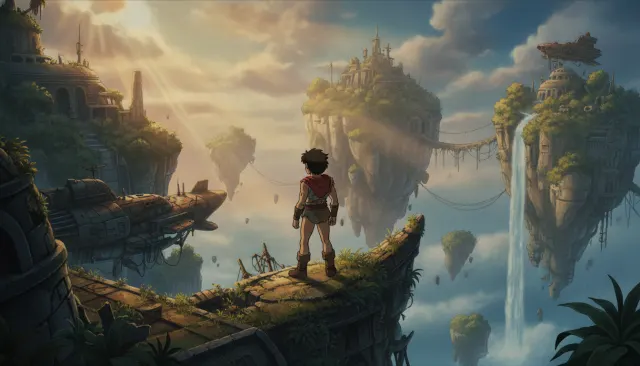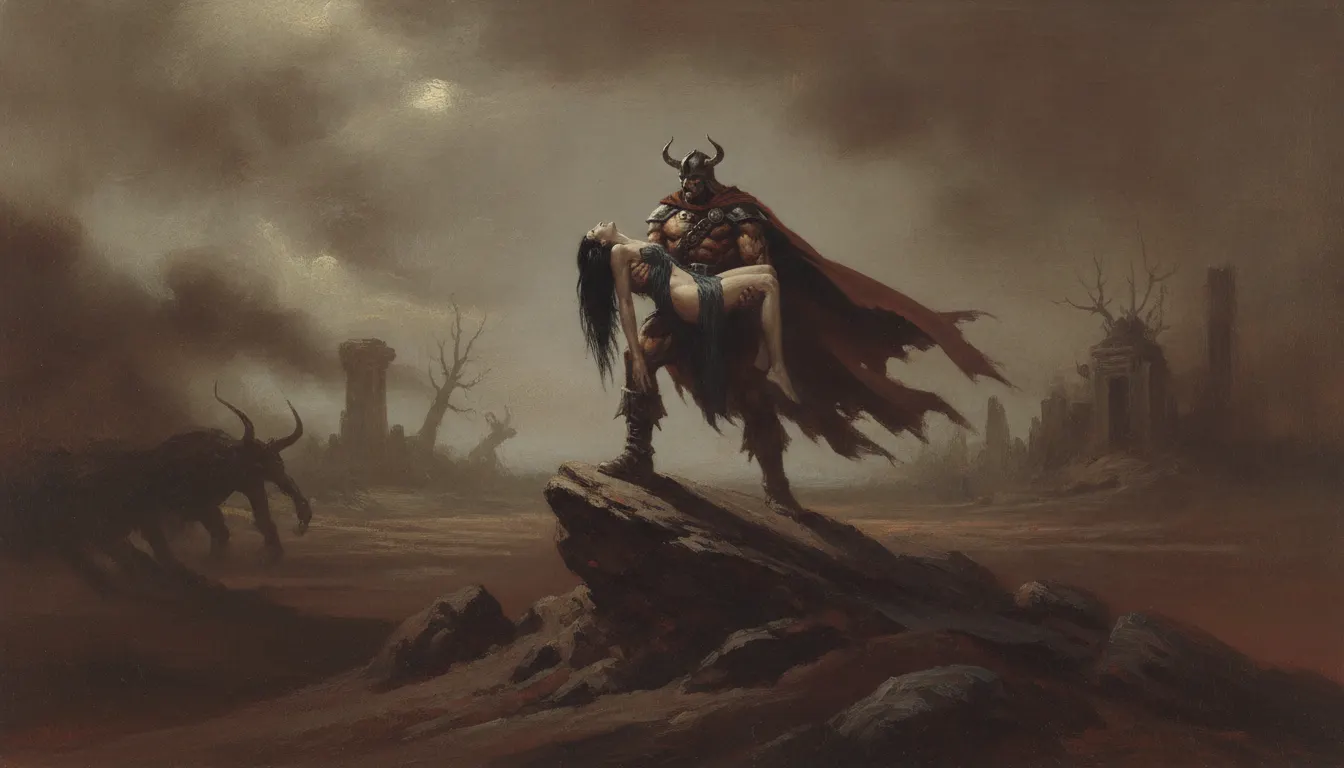
Conan the Conqueror (cover painting)
Frank Frazetta · 1967
First major Conan cover; warrior atop enemies against orange-red sky; transforms the public image of heroic fantasy
Frank Frazetta fantasy paperback cover. Muscular barbarian, draped maiden, painterly atmospheric murk, Death Dealer Conan iconography.
The moves a human crew would use to get here. Cue applies them for you, and knowing their names is how you ask for a change.
Primary figures rendered with high detail in expressive focal passages; background environments swept in with large brushes and gestural improvisation, creating depth through resolution contrast.
Primary figure placed at lower-left foreground, composition thrusting toward upper-right atmospheric background - creating visual momentum and cinematic dynamism.
Warm burnt sienna and yellow ochre in lit passages, cobalt and ultramarine deepening into shadow, titanium white for the pure light on skin and metal - a traditional academic palette at high contrast.
Skies populated with clouds, fire, smoke, or lurid sunset colors that amplify narrative drama and provide compositional counterweight to the foreground figure mass.
Musculature exaggerated toward the ideal of physical power without anatomical impossibility - the Frazetta figure is recognizably human and implausibly powerful simultaneously.
As in Death Dealer (1973): the figure reduced to near-silhouette against a lighter atmospheric background, identity erased, power made absolute through formal abstraction.
Frank Frazetta (1928-2010) is the American painter and illustrator whose work defined the visual vocabulary of heroic fantasy for the latter half of the 20th century. His oil paintings for paperback novel covers, film posters, and album art combined virtuosic academic painting technique with an instinctive compositional boldness and an unashamed celebration of physical power that created a genre aesthetic so influential that every subsequent fantasy illustrator works in its shadow.
Frazetta was born in Brooklyn and demonstrated extraordinary drafting ability from childhood, attending the Brooklyn Academy of Fine Arts at age eight. He worked as a comic strip assistant to John Caniff on Li'l Abner (1954-1961) before transitioning to editorial and paperback illustration. His breakthrough was the Ace Books Conan series by Robert E. Howard, beginning around 1966, for which he painted a series of covers that transformed the public image of the heroic fantasy genre.
Conan the Conqueror (1967) is among the most cited: a massive warrior - bare-chested, sword raised - stands atop a pile of defeated enemies, his posture combining exhaustion and triumph, against a glowing orange-red sky. The anatomy is exaggerated toward the heroic ideal but never implausible; the painting technique moves from tightly rendered figure to loose, atmospheric background, drawing the eye through a compositional hierarchy from specific to general.
Death Dealer (1973) - originally painted as a personal experiment, later used as album art and on multiple products - shows a horned warrior on horseback in near-silhouette, face invisible behind a skull-like helmet, axe raised, shrouded in ground mist and smoke. It became one of the most reproduced fantasy images ever made and established a type: the figure-as-force, identity subsumed in the visual representation of power.
Other pivotal works include The Barbarian (1969, used for the Conan series), Fire and Ice (the 1983 animated film for which Frazetta served as concept artist and producer), and his Egyptian Queen (1969) - a female figure in gold and lapis, physically imposing and entirely in command.
Frazetta worked in oil on Masonite board, typically at modest sizes (18x24 to 24x36 inches) that reproduced well as paperback covers. His brushwork is a master class in controlled looseness: figures tightly rendered in their most expressive passages (face, weapon hand, muscles under tension) with background environments swept in with large brushes and significant improvisation. He mixed earth tones - burnt sienna, raw umber, yellow ochre - with cobalt and ultramarine for deep shadow, and used titanium white for the pure light passages on skin and metal.
Composition typically follows a diagonal thrust from lower-left foreground figure to upper-right atmospheric background, creating visual momentum. The sky is almost always active - clouds, fire, smoke, or lurid sunset colors that amplify the drama below.
Frank Frazetta · 1967
First major Conan cover; warrior atop enemies against orange-red sky; transforms the public image of heroic fantasy
Frank Frazetta · 1973
Horned warrior on horseback in near-silhouette; one of the most reproduced fantasy images ever made
Frank Frazetta · 1969
Conan series cover; the heroic anatomy and diagonal composition at full development
Frank Frazetta · 1969
Female fantasy figure in gold and lapis; physically imposing and compositionally commanding
Frank Frazetta (concept artist and producer), Ralph Bakshi (dir.) · 1983
Animated film; Frazetta's visual vocabulary translated to feature animation
Frank Frazetta · c.1970
Figure study in oil; demonstration of tight facial rendering against gestural background technique
Various (catalog) · 1992
Catalog documenting the two painters who defined the fantasy illustration genre vocabulary
A Look is not a filter. It is a set of stored decisions the pipeline reads before it makes a single frame, so two videos in the same Look actually match.