Sesshū Tōyō
1495
*Haboku-sansui* , Tokyo National Museum – definitive broken-ink landscape
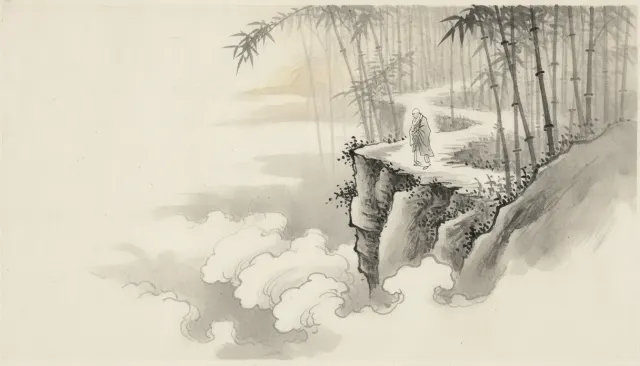
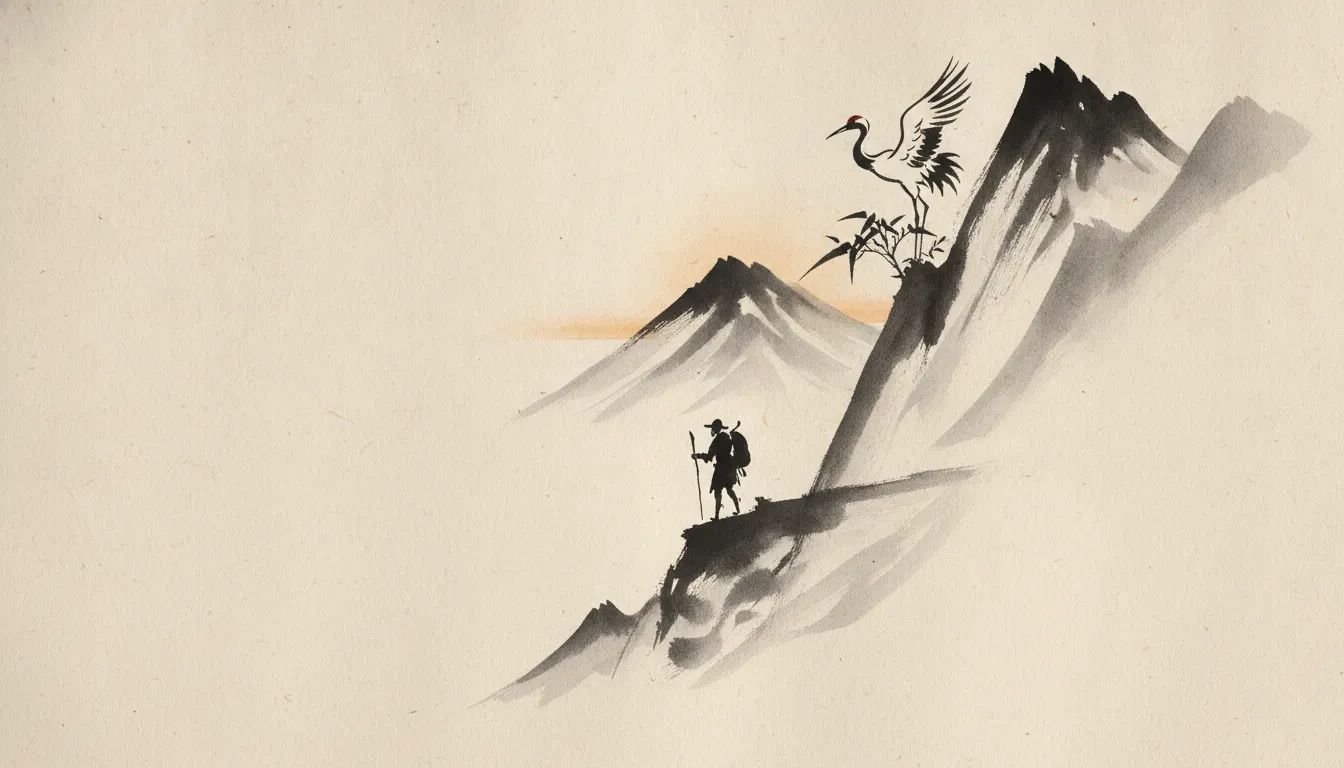
In the tradition of Japanese sumi-e ink painting and zen brushwork. Single-stroke bamboo, crane, and mountain on washi paper, vast negative space.
The moves a human crew would use to get here. Cue applies them for you, and knowing their names is how you ask for a change.
monochromatic palette of black sumi ink on white or warm-cream washi ground
ink' (*haboku*) wash passages for mountains, clouds, and water
stroke subjects: bamboo stalk, crane silhouette, Daruma circle (*enso*)
deep black passages balanced against expansive white fields
Sumi-e (墨絵) – literally 'ink picture' – is the Japanese refinement of Chinese ink-wash painting (shuimohua), brought to Japan by Zen monks in the 13th century and reaching its artistic summit in the Muromachi period. The practice is rooted in the same four treasures that govern calligraphy: ink stick (sumi), inkstone (suzuri), brush (fude), and paper or silk (kami/kinu).
Sesshū Tōyō (1420–1506) is the towering figure of Japanese ink painting. His Haboku-sansui ('broken-ink landscape', 1495, Tokyo National Museum) uses wild, splashed ink washes for mountains and tree forms – a method learned during his journey to Ming China. His Long Landscape Scroll (1486, Mōri Museum) stretches nearly sixteen meters, moving through four seasons with disciplined tonal gradation. Sesson Shūkei (c. 1504–c. 1589), working in the Kantō region without Sesshū's official patronage, developed a more eccentric, kinetic line that influenced later Edo-period ink painters. In the Zen painting tradition (zenga), Hakuin Ekaku (1686–1769) produced brutally simple brushwork – single-stroke Darumas, calligraphic tigers – that elevated spiritual directness over technical refinement.
The look is defined by tonal economy: pure black sumi on white or cream washi (Japanese paper), with value created entirely through ink dilution and brush pressure rather than color. Notan (dark-light harmony) governs composition; empty white space (ma) carries equal weight to painted marks. Brush vocabulary moves from the hair-thin hosseki (fine line) to the wide, saturated tataki (flat press), from the wet-bristle splayed stroke to the dry kasure (broken drag). Bamboo, pine, plum blossom, misty mountains, carp, and cranes are canonical subjects, each carrying coded meaning within the Sino-Japanese literary tradition.
Sumi-e translates powerfully into video as animated brushstrokes that reveal or wipe compositions, as overlaid ink textures on footage shot in neutral grey-tone, or as title card design that replaces vector type with calligraphic letterforms. The key is restraint: leave 60–70% of the frame white or near-white, and let three to five decisive brushmarks carry the entire visual weight.
Mastery of sumi-e is inseparable from the training discipline of the four treasures: grinding the ink stick (sumi) slowly on the inkstone (suzuri) in circular motions with a small amount of water is itself a meditative practice, centering the painter before the brush touches paper. The quality of the ink – its viscosity and the proportion of lamp-black carbon to glue binder – directly determines the range of values available in a single brushload. Premium ink sticks from Nara or Huizhou (China) are prized for their fine particle size and the velvety depth of the darkest blacks they produce. This insistence on material quality as spiritual practice distinguishes sumi-e from purely decorative ink work.
1495
*Haboku-sansui* , Tokyo National Museum – definitive broken-ink landscape
1486
*Long Landscape Scroll* , Mōri Museum, Yamaguchi
*Hawk on a Pine Branch* (16th c.), multiple museum collections
*Daruma* (18th c.), zenga single-stroke portrait, Ryōkoku Museum
*Landscape after Sesshū* (early 19th c.), Edo revival of Muromachi ink style
*Pine Trees* screen (c. 1595), Tokyo National Museum – mist-ink masterpiece
A Look is not a filter. It is a set of stored decisions the pipeline reads before it makes a single frame, so two videos in the same Look actually match.