Snow White and the Seven Dwarfs
Walt Disney / Disney · 1937
The first feature-length animated film; the inaugural work of the Golden Age
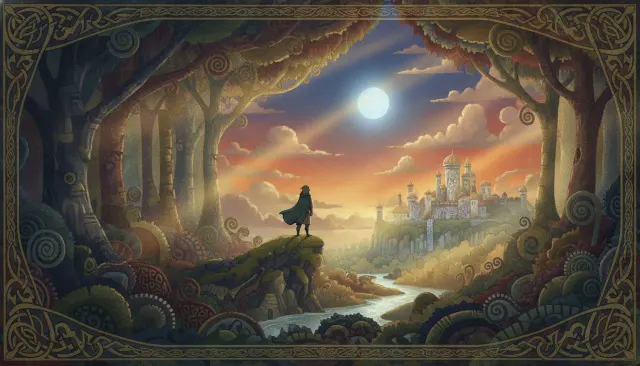
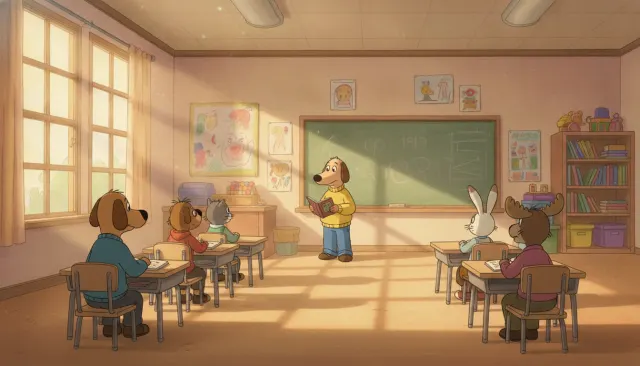
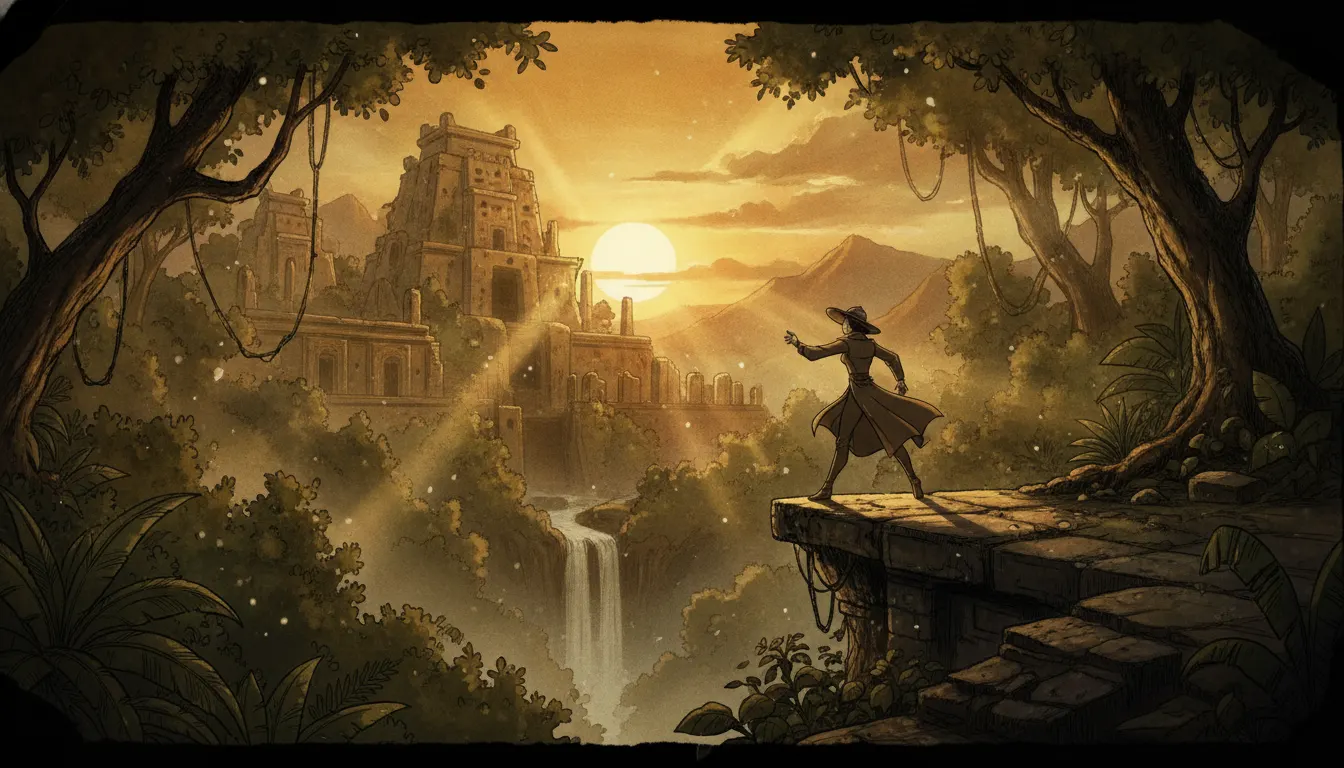
Walt Disney 1937 to 1942 hand-inked feature cel, lush painted backgrounds. Snow White, Pinocchio, Bambi forest-watercolor era.
The moves a human crew would use to get here. Cue applies them for you, and knowing their names is how you ask for a change.
Squash-and-stretch, anticipation, follow-through, arcs, and appeal -- the full vocabulary of the illusion of life, applied at maximum expressiveness.
Multiple painted glass layers move at different parallax rates to create genuine three-dimensional space within two-dimensional cel animation.
Human character movements are based on live-action reference footage (Snow White rotoscoped from Marge Champion) for unprecedented naturalism.
Animal characters are studied from live animals with anatomical specificity -- Bambi's deer movements are based on extensive Rico LeBrun studies.
Bambi's backgrounds drew from Song Dynasty Chinese ink-wash landscape painting, bringing Asian art tradition into American theatrical animation.
Color palettes were designed specifically for Technicolor's three-strip process, using the medium's capabilities to maximum dramatic effect.
The Disney Golden Age of animation spans roughly 1937 to 1942, encompassing Snow White and the Seven Dwarfs (1937), Pinocchio (1940), Fantasia (1940), Dumbo (1941), and Bambi (1942). This period represents the technical and artistic apex of cel animation as a medium -- the point at which the Disney studio, under Walt Disney's direct creative leadership, achieved the full realization of the 'illusion of life' that Disney animators Frank Thomas, Ollie Johnston, Ward Kimball, Milt Kahl, and their colleagues developed.
The twelve principles of animation, codified by Frank Thomas and Ollie Johnston in their 1981 book The Illusion of Life: Disney Animation, were developed through the Golden Age productions. These principles -- squash and stretch, anticipation, staging, straight-ahead vs. pose-to-pose, follow-through, slow in and slow out, arc, secondary action, timing, exaggeration, solid drawing, and appeal -- are the foundational grammar of character animation.
The Golden Age films pushed the illusion of life to its furthest extent in hand-drawn animation. Snow White's princess movements were rotoscoped from live dancer Marge Champion to achieve naturalistic human movement. Bambi's animals were studied from real animals and from artist Rico LeBrun's intensive drawing sessions with live deer. The level of observational specificity applied to character movement across these five films has never been matched in subsequent hand-drawn production.
The multiplane camera, developed by Ute Iwerks and the Disney engineering department, was first used for the short The Old Mill (1937) and then extensively in Snow White (1937) and Bambi (1942). The camera allowed multiple layers of painted glass to move at different rates relative to each other, creating a parallax depth effect that gave cel animation its first genuine sense of three-dimensional space.
Bambi's opening sequence -- a dawn forest landscape where multiple background layers move at different rates as the camera pushes in -- remains one of the most technically and aesthetically accomplished shots in the history of animation. Background artist Tyrus Wong developed Bambi's Chinese ink-wash-inspired landscape backgrounds, bringing Song Dynasty landscape painting into American theatrical animation.
Color design in the Golden Age films achieved a sophistication unprecedented in animation. Snow White's palette -- warm interior candlelight, cold poisoned-apple green, forest emerald, the queen's cold purple -- was designed by color theorist Herbert Kalmus working with three-strip Technicolor. Fantasia's visual interpretations of classical music established a sophisticated tradition of music-visual synesthesia that influenced music video and experimental animation for decades.
The Golden Age films established Disney as a cultural institution and animation as a legitimate art form capable of theatrical ambition. Their influence on subsequent animation is total and foundational: every hand-drawn animated film since 1942 works either in dialogue with or deliberate opposition to the principles these five films established. Disney's own subsequent output (the Silver Age of Cinderella, 1950, through Sleeping Beauty, 1959; the Renaissance of The Little Mermaid, 1989, through Tarzan, 1999) builds directly on Golden Age foundations.
Walt Disney / Disney · 1937
The first feature-length animated film; the inaugural work of the Golden Age
Ben Sharpsteen, Hamilton Luske / Disney · 1940
Technical peak of Golden Age cel animation; the multiplane camera at its most sophisticated
Ben Sharpsteen et al. / Disney · 1940
Music-visual synesthesia experiment; established animation as a vehicle for abstract artistic expression
Ben Sharpsteen / Disney · 1941
The most economical Golden Age film; proves the principles work even at reduced budget
David Hand / Disney · 1942
Tyrus Wong's background art; the observational animal animation peak of the era
Clyde Geronimi / Disney · 1959
The Golden Age methodology applied at maximum visual sophistication by Eyvind Earle's Art Nouveau-influenced backgrounds
Wolfgang Reitherman / Disney · 1967
Final film featuring the Nine Old Men in full creative control -- a late-period flowering of Golden Age character animation
A Look is not a filter. It is a set of stored decisions the pipeline reads before it makes a single frame, so two videos in the same Look actually match.