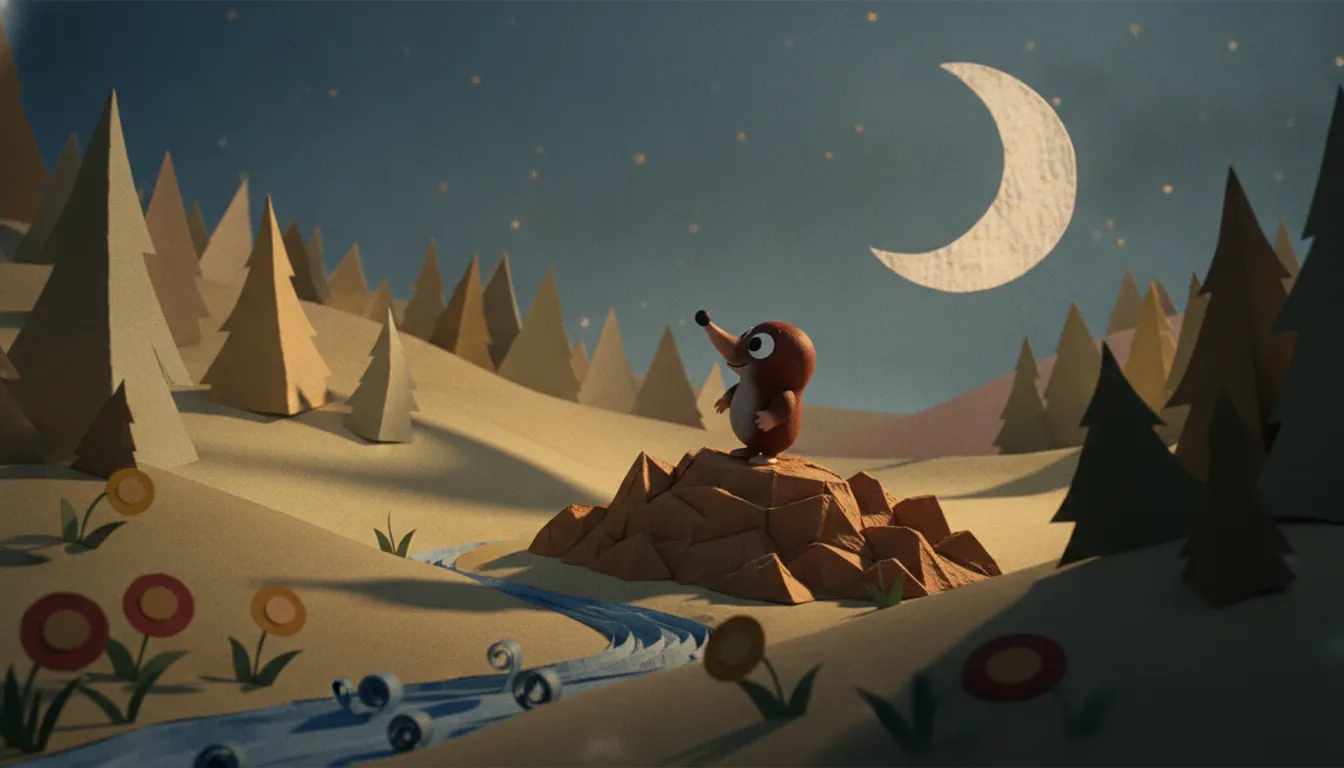
TRADITIONAL PUPPET EXTENDED · 1960S · CZECH-REPUBLIC
Czech Bratri v Triku Classic
Bratri v Triku Czech childrens puppet and paper animation studio. Krtek the Mole heritage, hand-cut paper sets, gentle wordless storytelling, Eastern bloc craft.
stop-motionczechchildrens-tvgentle
LUT bratri-v-triku-paper-warm
WHEN TO USE
- Content referencing Central European folk art, craft traditions, or Eastern Bloc cultural history
- Absurdist or surrealist animation that benefits from the studio's established tradition
- Educational content about animation history, Czech culture, or Eastern European art
- Artisanal or craft-forward brand content that wants a graphic, folk-art visual identity
- Children's content drawing on the simplified, warm character design of the Krtek tradition
- Film, arts, or cultural institution content that references animation heritage
WHEN NOT TO USE
- Contemporary or digital-forward contexts where the vintage 1960s-1980s aesthetic reads as outdated
- Audiences with no context for Eastern European visual culture who may find the references opaque
- Content requiring fluid, high-energy animation -- the studio's aesthetic tends toward measured, deliberate pacing
- Commercial or aspirational brand content where Communist-era associations create unintended connotations
SIGNATURE TECHNIQUES
How the look is made.
The moves a human crew would use to get here. Cue applies them for you, and knowing their names is how you ask for a change.
- 01Folk
art character design drawing on Czech and Moravian decorative traditions
- 02Flat graphic outlines with bold simplified forms and limited use of shadow
- 03Warm but muted Central European colour palette
terracotta, forest green, dusty yellow
- 04Mixed technique across cel animation, puppet film, cut
out, and textile stop-motion
- 05Absurdist or allegorical narrative structures encoding political commentary
- 06Simplified expressive faces optimised for character warmth over anatomical realism
- 07Craft
specific texture: whether clay, textile, or cell paint, material quality is always present
HISTORY & CONTEXT
Where it comes from.
Czech Bratri v Triku Classic Look
Bratri v Triku (Brothers of the Trick / Brothers in a Jersey) is the most important animation studio in Czech history, founded in Prague in 1945 by Jiri Trnka, Hermina Tyrlova, and Edward Hofman, among others. The studio produced an extraordinary range of animated work across cel animation, puppet animation, and cut-out techniques from 1945 through the Communist era and into the post-1989 period, establishing Czech animation as one of the most distinctive national traditions in the world.
Founding Generation
The studio's founding generation included figures who became internationally celebrated. Jiri Trnka created the foundational puppet animation works for which Czech animation is best known internationally (see separate Jiri Trnka entry). Hermina Tyrlova was a pioneer of textile and knitted-material stop-motion. Zdenek Miler created the beloved Krtek (The Little Mole) series in 1957, one of the most internationally distributed animated characters of the Eastern Bloc era.
Visual Characteristics
Bratri v Triku work across its different decades cannot be reduced to a single visual style, but recurring characteristics include: simplified folk-art character design drawing on Czech and Moravian decorative traditions; flat graphic design with bold outlines and limited shadow; a warm but sometimes muted Central European colour palette; surrealist or absurdist narrative structures; and a strong craft sensibility across whatever medium is employed.
Political Context
The studio operated under Communist censorship from 1948 through 1989, and much of its most celebrated work uses allegorical or fantastical framing to explore ideas that could not be stated directly. Trnka's final puppet film The Hand (1965) is a direct allegory of artistic freedom under state control.
International Influence
Bratri v Triku's output was distributed internationally through the state export agency Czechoslovakia Film and influenced animators across Europe, the Soviet Union, and Japan.
NOTABLE WORKS
Where you have seen it.
The Hand / Ruka (1965, dir. Jiri Trnka, Bratri v Triku)
A Midsummer Night's Dream (1959, dir. Jiri Trnka, puppet film feature)
The Snowman (Snehulak, 1966, dir. Hermina Tyrlova, textile stop-motion)
Pat and Mat (A je to!, 1976-present, dir. Lubomír Beneš / Vladimir Jiránek)
Pohádky z mechu a kapradí (Tales from the Moss and Fern, 1968, dir. Zdena Deitchova)
THE RECIPE
The exact knobs
the renderer turns.
A Look is not a filter. It is a set of stored decisions the pipeline reads before it makes a single frame, so two videos in the same Look actually match.
SettingValue
GradeColour LUT applied to every frame
bratri-v-triku-paper-warmTransitionHow one shot becomes the next
soft cuts · 280ms · ease-in-outKen BurnsCamera move applied to stills
Slow push · 0.025 · centerTypographyDisplay / body / mono pairing
Cormorant · Lora · CourierMusic moodWhat the bed under the voice sounds like
czech-childrens-folk · whistle-and-accordionPrompt suffixAppended to every shot prompt in this Look
Bratri v Triku Czech childrens puppet paper animation, Krtek the Mole heritage, hand cut paper set, gentle wordless storytelling, Eastern bloc craftPALETTE
Primary
#1A1A1A
Secondary
#3A3A3A
Accent
#E8552A
Text/Light
#0A0A0A
Text/Dark
#FFE8C0
BG 900
#080808
BG 800
#1A1A1A
RELATED LOOKS
Next to it on the shelf.
Your first cut
is on us.
+ New videoFree plan · no card · 1080p export