FELTED KNITTED TEXTILE · CONTEMPORARY · INTERNATIONAL
Fabric Rag Doll Stop Motion
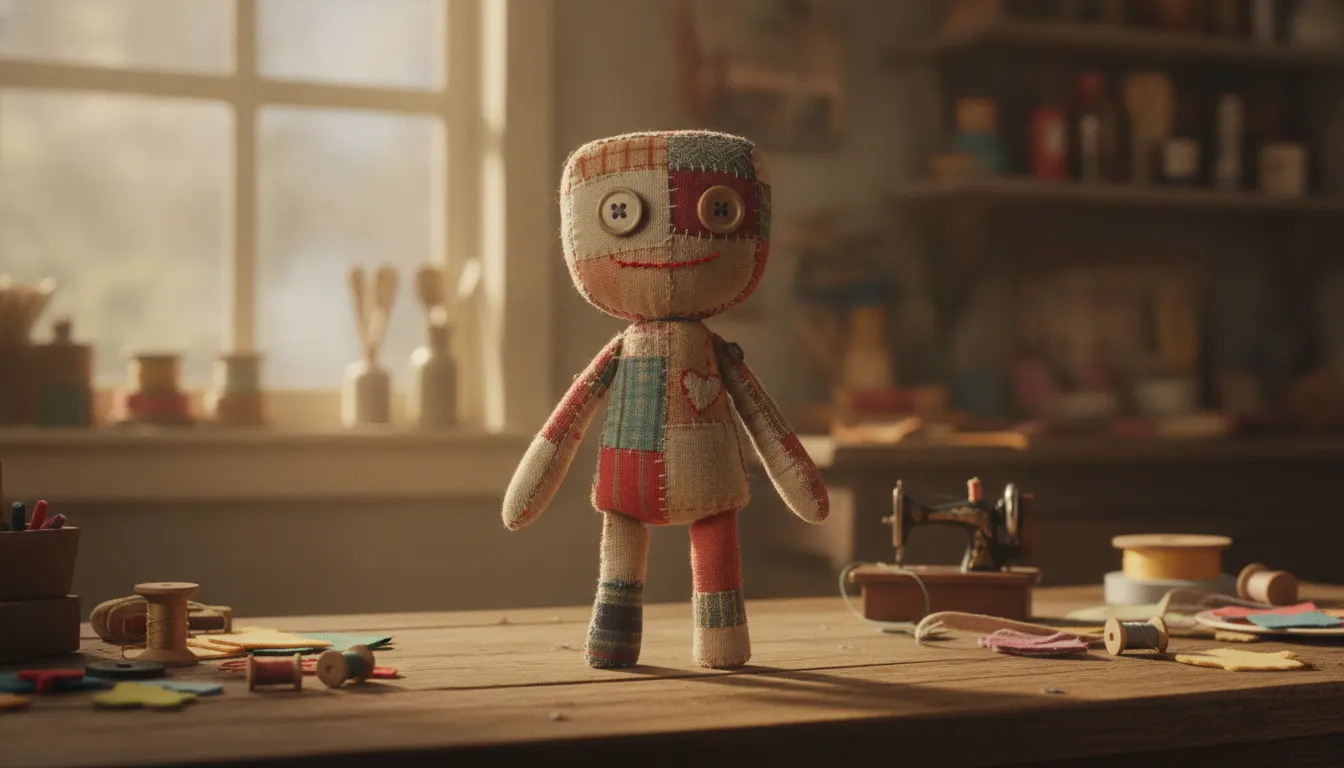
Fabric rag-doll puppet stop motion. Stitched-fabric body, button-and-thread features, handmade craft-fair aesthetic, intimate tabletop staging.
stop-motionfabricrag-dollhandmade
LUT fabric-rag-warm-craft
WHEN TO USE
- Children's content, nursery rhymes, or lullaby-adjacent material where handmade warmth is paramount
- Brand content for toy, children's fashion, or artisan textile brands
- Folk tale, fairy tale, or traditional story adaptations where craft aesthetics reinforce narrative
- Warm, intimate content where the visible hand of the maker is a value
- Content referencing childhood, nostalgia, or domestic handcraft traditions
- Social media craft content where the making process (sewing, stuffing, animating) is the story
WHEN NOT TO USE
- Content where the uncanny quality of animated soft objects creates unintended unease
- Sleek, modern, or digitally-forward contexts where handmade aesthetics feel anachronistic
- Action or dynamic content where soft body physics limit expressive range
- Adult dramatic content where the toy aesthetic undermines the emotional register
SIGNATURE TECHNIQUES
How the look is made.
The moves a human crew would use to get here. Cue applies them for you, and knowing their names is how you ask for a change.
- 01Wire armature within soft
stuffed bodies enabling pose-holding under stop-motion conditions
- 02Button eyes as expressive shorthand for handmade character personality
- 03Natural cloth drape and gravity response as aesthetic features rather than technical problems
- 04Embroidered or appliqued facial features rather than sculpted forms
- 05Woven and knitted textile surface textures under raking or soft studio lighting
- 06Visible hand
sewn seams, imperfect stitching, and material irregularity as craft markers
- 07Scale sets dressed with found domestic objects
cotton wool, thread spools, thimbles
HISTORY & CONTEXT
Where it comes from.
Fabric Rag Doll Stop-Motion Look
Fabric and rag doll stop-motion animation occupies a distinctive niche in the broader textile animation tradition: characters constructed from sewn cloth, stuffed with filling, and animated with wire armatures concealed within soft bodies. The form has roots in both folk toy-making and the broader tradition of puppet animation that stretches from traditional European marionette theatre through the Czech stop-motion tradition represented by Hermina Tyrlova at Bratri v Triku.
Historical Roots
Hermina Tyrlova (1900-1993), working at Bratri v Triku in Prague, was the pioneer of knitted and textile stop-motion animation, with films including The Snowman (Snehulak, 1966) and Revolt of the Toys (Vzpoura hracek, 1946) establishing the aesthetic language of soft-material animation. Tyrlova's work demonstrated that the resistance, drape, and texture of fabric could be assets rather than obstacles in stop-motion production.
Material Properties as Aesthetic
Fabric rag doll animation's visual identity comes directly from its material properties: the way cloth drapes and folds under gravity, the texture of woven or knitted surfaces under light, the slight compression and recovery of stuffed forms, and the hand-sewn qualities of seams, buttons, and embroidered features. Button eyes are a recurring motif -- a simple, expressive solution that has become a cultural shorthand for handmade character warmth.
Contemporary Practice
The form continues in contemporary stop-motion production. Coraline (2009, dir. Henry Selick, Laika Entertainment) uses rag doll-adjacent character construction for the Other Mother character's final form. Independent animators working in the textile stop-motion tradition include Kirsten Lepore, whose Bottle (2010) uses sand and snow animation with related material sensitivity, and Emma de Swaef and Marc Roels, whose Oh Willy... (2012) uses needle-felted characters.
Warmth and Uncanny Edge
Fabric characters sit at an interesting psychological position: they are immediately warm and handmade-coded, but the animation of soft objects can also enter uncanny territory, particularly when facial expressions are limited by the material's constraints.
NOTABLE WORKS
Where you have seen it.
The Snowman / Snehulak (1966, dir. Hermina Tyrlova, Bratri v Triku, knitted textile animation)
Oh Willy... (2012, dir. Emma de Swaef / Marc Roels, needle-felted characters)
Coraline (2009, dir. Henry Selick, Laika, fabric elements in Other Mother design)
Knit Knights (various, stop-motion using knitted and sewn characters)
The Boy, the Mole, the Fox and the Horse (2022, BBC/Apple TV+, has fabric-adjacent soft character design)
THE RECIPE
The exact knobs
the renderer turns.
A Look is not a filter. It is a set of stored decisions the pipeline reads before it makes a single frame, so two videos in the same Look actually match.
SettingValue
GradeColour LUT applied to every frame
fabric-rag-warm-craftTransitionHow one shot becomes the next
soft cuts · 240ms · ease-in-outKen BurnsCamera move applied to stills
Slow push · 0.025 · centerTypographyDisplay / body / mono pairing
Lora · Lora · CourierMusic moodWhat the bed under the voice sounds like
fingerpicked-guitar · soft-accordionPrompt suffixAppended to every shot prompt in this Look
fabric rag doll puppet stop motion, stitched fabric body, button and thread features, handmade craft fair aesthetic, intimate tabletopPALETTE
Primary
#A85A3E
Secondary
#5C3A2E
Accent
#F2E1B8
Text/Light
#2A1408
Text/Dark
#FFF1D0
BG 900
#1A0F08
BG 800
#2A1810
RELATED LOOKS
Next to it on the shelf.
Your first cut
is on us.
+ New videoFree plan · no card · 1080p export