Mark Perry
*Sniffin' Glue* zine, issues 1–12 (London, July 1976 – August 1977)
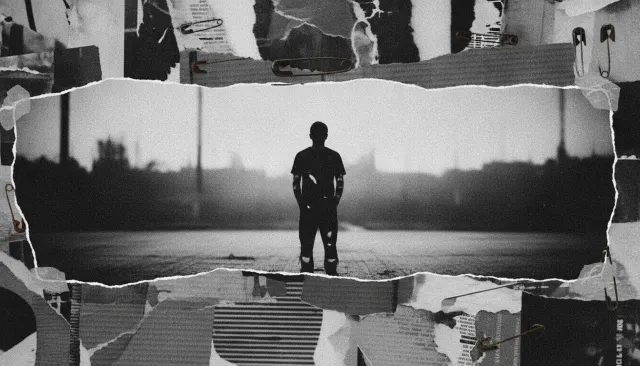
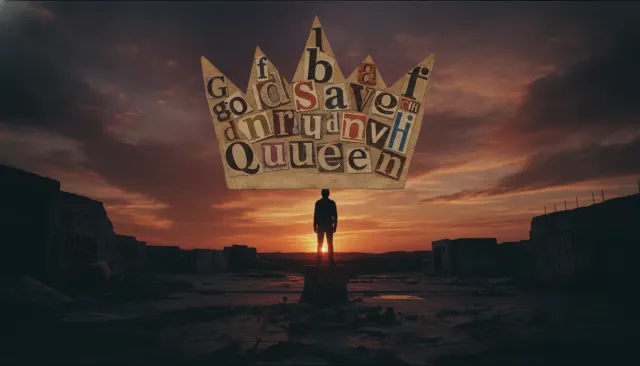
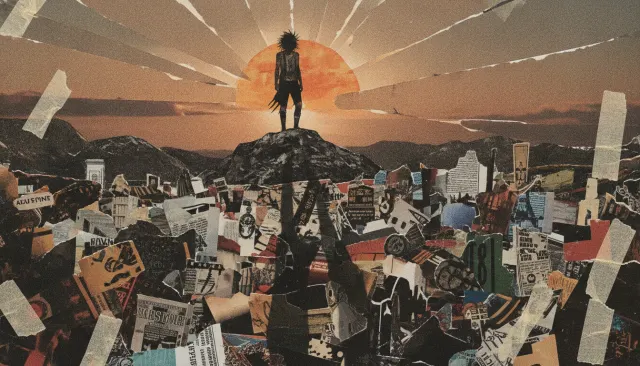
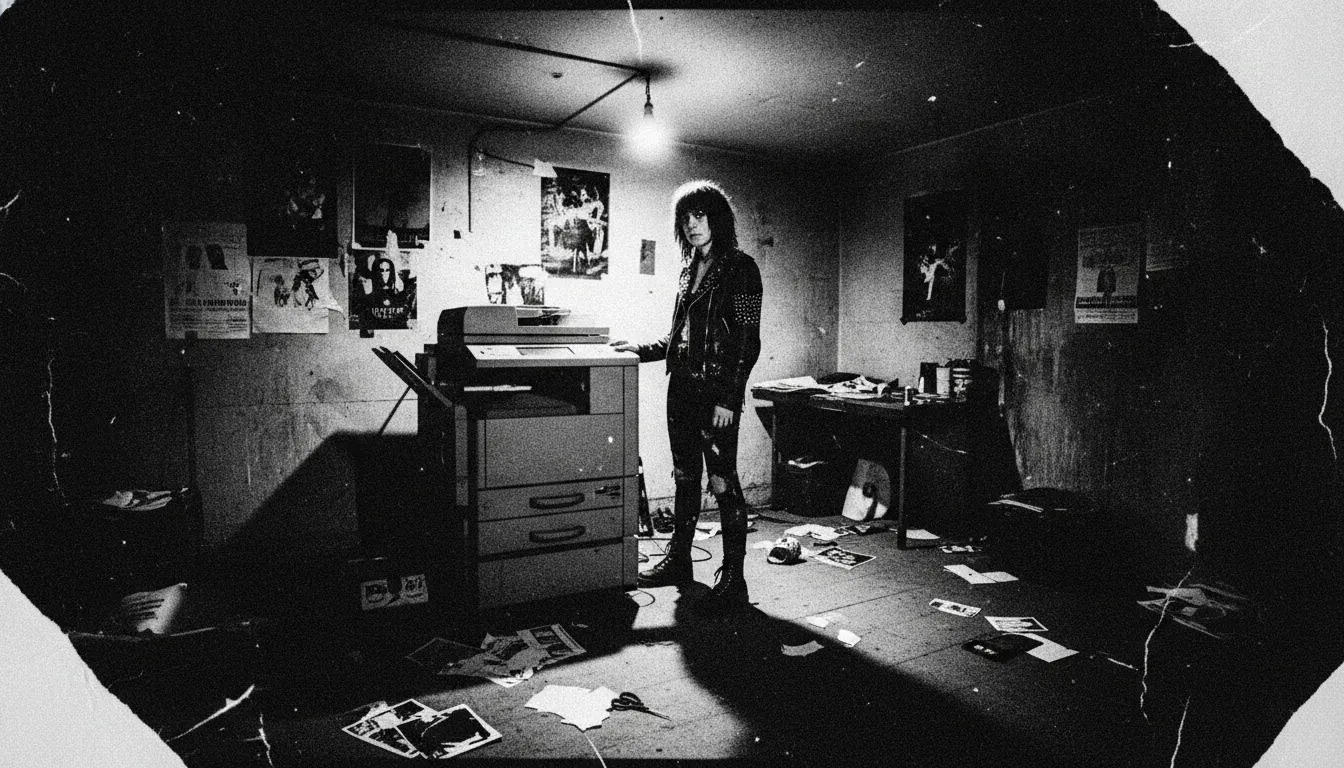
DIY zine photocopy cutout aesthetic. High-contrast black-and-white Xerox photocopies, paste-up paper, hand-cut layouts, riot grrrl Kathleen Hanna scene, basement-photocopier punk culture.
The moves a human crew would use to get here. Cue applies them for you, and knowing their names is how you ask for a change.
uniform grey noise texture applied to all image areas, especially white space
generation halftone: halftone dots visible in photographic areas, enlarged by reproduction copying
mono-spaced characters with ink-weight variation and occasional strikethroughs
up seams: visible edges where cut printed text was glued to the paste-up board before copying
drawn elements: marker or biro headers, arrows, stars, and marginalia at varying line weights
slight rotation of content suggesting the original was not perfectly square on the glass
through from reverse side: faint text or image visible through thin paper, confirming material substrate
The zine photocopy cutout punk aesthetic is defined by reproduction artifact as design element: the photocopy's grey grain, the halftone dots of newspaper images reprinted through another generation of copying, the obvious paste-up of cut printed text mixed with hand-drawn elements, and the slight skew of a sheet placed at an imperfect angle on the copier glass. Every quality that professional printing suppressed, the zine embraced as evidence of self-production outside institutional channels.
Mark Perry launched Sniffin' Glue in July 1976, the same month the Ramones played their first UK show at the Roundhouse, London. Typed on a manual typewriter, photocopied at 5p per page, and stapled in Perry's bedroom, the zine covered punk music from a participant perspective unavailable in commercial music press. Issues 1–12 (July 1976 to August 1977) established the visual grammar: typewriter text, photocopied live photographs degraded by reproduction, hand-drawn headers, and the famous issue 12 cover with a hand drawn guitar showing three chords captioned "This is a chord. This is another. This is a third. Now form a band." The caption democratized musical participation and became one of punk's founding texts.
The British punk zine explosion of 1976–1980 included 48 Thrills, London's Outrage, Ripped & Torn, and dozens of regional titles. In the US, Punk magazine (New York, 1976, John Holmstrom) applied similar visual strategies with more illustration. The hardcore era extended the form: Maximum Rocknroll (San Francisco, Tim Yohannan, 1982–2019) ran 322 issues over 37 years, maintaining the photocopied, independently produced aesthetic while growing to 10,000 copies per issue.
By the 1980s, the zine photocopy aesthetic had migrated beyond music journalism into riot grrrl (Bikini Kill's Bikini Kill zine, Olympia 1990), queer publishing, anarchist political organizing, and the broader DIY counterculture. The aesthetic carried its politics: if you can read it, you can make it. The photocopier was the printing press of the underground.
In the digital era, the aesthetic is reproduced digitally using grain overlays, halftone filters, and deliberately limited resolution – the craft is now simulating the resource constraints that were once unavoidable.
The Riot Grrrl movement (Olympia and Washington DC, 1991–1995) gave the zine aesthetic a new political direction: Kathleen Hanna's Bikini Kill zine, Tobi Vail's Jigsaw, and Corin Tucker's Chainsaw used the photocopied cutout grammar as feminist self-publishing infrastructure. The deliberately unpolished presentation was explicitly political – refusing the production values of mainstream magazines was a statement about whose voices those values excluded. Subsequent generations of queer, trans, and marginalised communities used zine culture as early publishing infrastructure for the same reasons. The zine photocopy cutout aesthetic carries this history: it is not merely lo-fi aesthetics but a specific tradition of self-publication against institutional gatekeeping. When commercial brands appropriate the look, the friction between its democratic origins and its sponsored deployment is legible to audiences with cultural fluency in the tradition.
*Sniffin' Glue* zine, issues 1–12 (London, July 1976 – August 1977)
*Punk* magazine (New York, 1976–1979, hand-drawn cartoon illustration with photocopy aesthetic)
*Bikini Kill* zine (Olympia WA, 1990–1997, riot grrrl founding text)
*Maximum Rocknroll* (San Francisco, 1982–2019, 322 issues)
Sex Pistols artwork as zine aesthetic elevated to vinyl (1977, Virgin Records)
review zine cataloguing zine publishing (Mike Gunderloy, 1982–1998)
1959
introduction of plain-paper copier Series 914 , enabling the entire zine movement
A Look is not a filter. It is a set of stored decisions the pipeline reads before it makes a single frame, so two videos in the same Look actually match.