Jamie Reid
*Never Mind the Bollocks* Sex Pistols album cover (1977, Virgin Records)
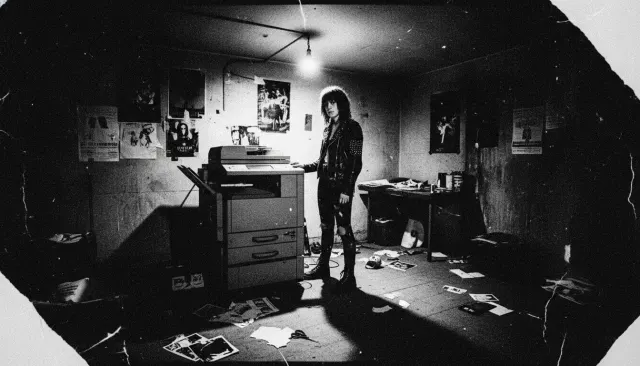
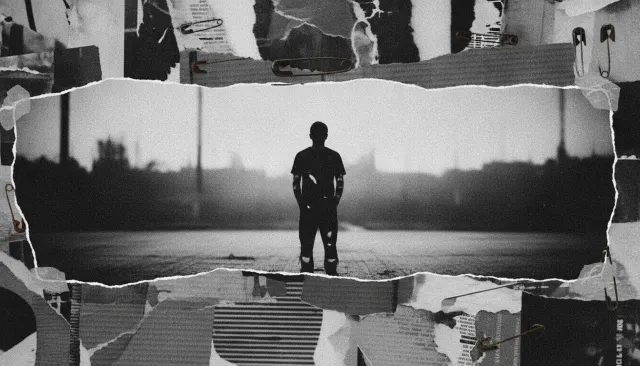
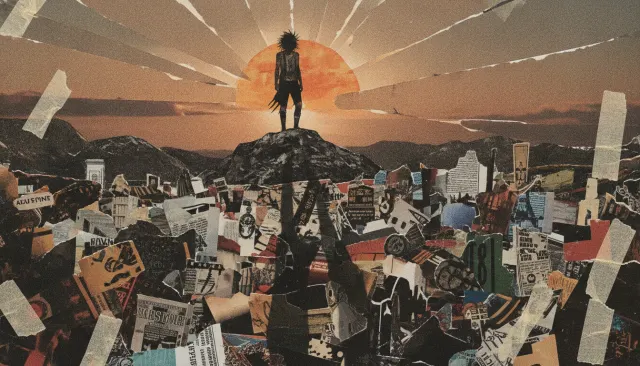
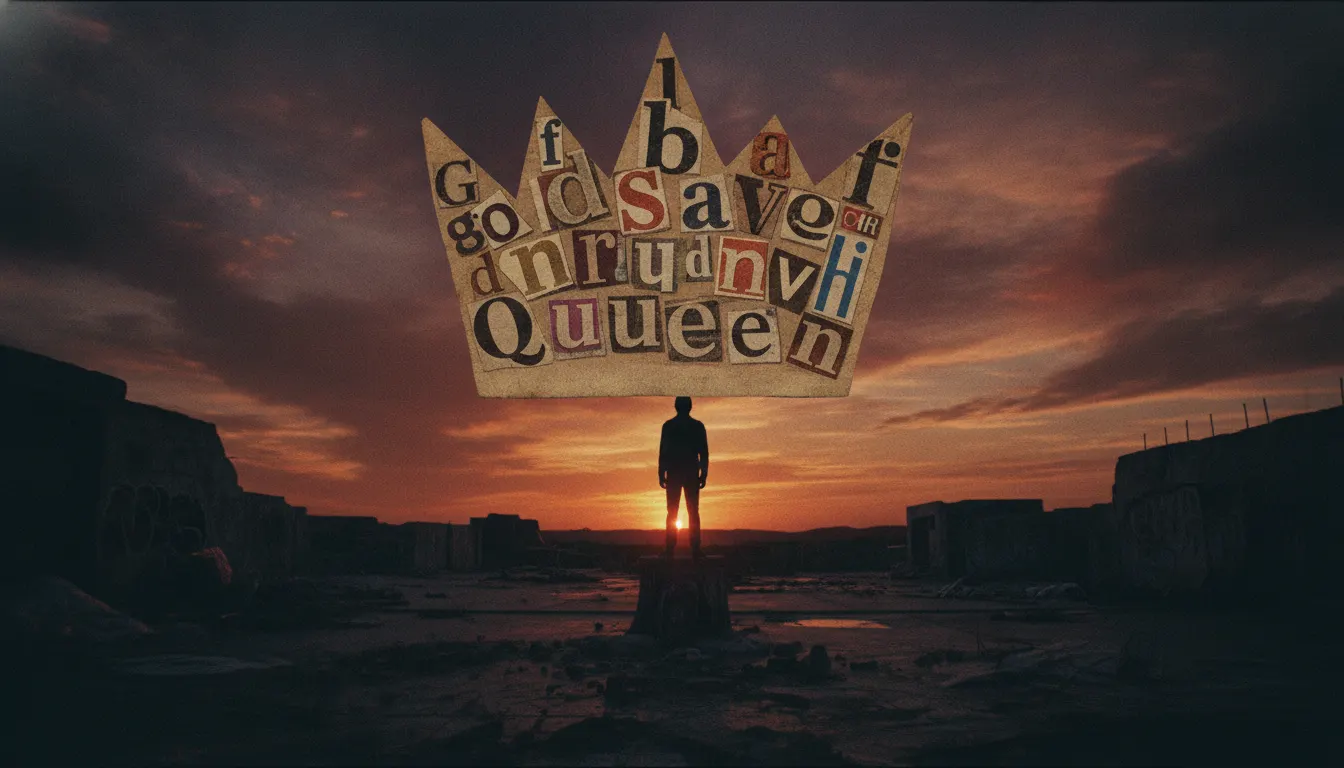
Ransom-note cutout typography aesthetic. Letters cut from disparate magazines and newspapers and glued onto paper, punk Jamie Reid Sex Pistols energy, scissor-edge chaos.
The moves a human crew would use to get here. Cue applies them for you, and knowing their names is how you ask for a change.
serif, sans-serif, italic, bold all coexisting in a single word
letters at dramatically different sizes within the same line
white newsprint, yellow tabloid, cream magazine all cut together
letters seated at slightly different baseline levels
scissor edges, slightly rough cuts that show the physical process
typically black letterforms on white, or white card on black ground
The ransom note typography cutout mix derives its name from the criminal communication technique of assembling messages from letters cut from different publications – making the message untraceable by denying any single handwriting source. As a visual style, it weaponizes that untraceable quality as an aesthetic virtue: every letter has a different typeface, weight, size, and paper tone. The aggregate message is legible but unsettling, democratic but aggressive.
The decisive moment for ransom-note typography as a cultural form was Jamie Reid's artwork for the Sex Pistols, particularly the Never Mind the Bollocks album cover (1977, Virgin Records). Reid assembled letters cut from newspapers and tabloids at different scales, using the Situationist cut-up technique as visual confrontation with the music industry's marketing conventions. The sleeve was banned in the UK under the Indecent Advertisements Act before the courts overturned the decision. Reid's approach – itself influenced by Situationist International détournement (Guy Debord, Paris 1957–1972) and Dada photomontage – embedded ransom-note typography permanently in punk visual culture.
The technique spread immediately to punk fanzines. Sniffin' Glue (edited by Mark Perry, London 1976–1977) used photocopied cutup text alongside hand-lettering. Maximum Rocknroll (launched 1982, San Francisco) sustained the aesthetic into the 1980s hardcore scene. These publications had no design budget, but the cutup style converted resource constraint into aesthetic principle.
John Lydon (PIL, 1978) continued using the style after the Pistols. By the 1980s and 1990s, the aesthetic migrated from political provocation to mainstream advertising wanting to borrow subcultural credibility. Beck's Odelay (1996, Geffen) used collage typography on the sleeve. Kurt Cobain's visual art incorporated cut-up techniques.
Digitally, the ransom-note aesthetic persists in variable font experiments, expressive web typography, and youth-brand identity systems that want to signal irreverence. Each variant maintains the core quality: no letter trusts the one beside it.
The Dadaist roots of ransom-note typography connect through William S. Burroughs and Brion Gysin's cut-up technique (first performed in Paris, 1959; documented in The Third Mind, 1978). Burroughs applied the literal technique of cutting published text and randomly reassembling it to novels including Nova Express (1964) and The Ticket That Exploded (1962), arguing that cut-up revealed suppressed meanings in text. The visual presentation of cut-up text – clearly cut edges, different typeface origins visible – was integral to its meaning as a practice of reading against the grain.
This literary-theoretical heritage gave ransom-note typography intellectual depth beyond its practical origins in low-budget fanzine production. When contemporary designers use the aesthetic, they are drawing on both the punk practicality of Reid's Pistols work and the Situationist/Dadaist tradition of using fragmentation as political and perceptual disruption.
*Never Mind the Bollocks* Sex Pistols album cover (1977, Virgin Records)
*God Save the Queen* single sleeve (1977, safety pin through Elizabeth II portrait)
Mark Perry, issues 1–12 (London, 1976–1977)
Tim Yohannan, launched 1982 (San Francisco)
détournement theory and practice (Paris, 1957–1972)
*Odelay* album artwork (1996, Geffen Records, Hank Trotter art direction)
collage notebooks and artwork (1988–1994, exhibited posthumously)
A Look is not a filter. It is a set of stored decisions the pipeline reads before it makes a single frame, so two videos in the same Look actually match.