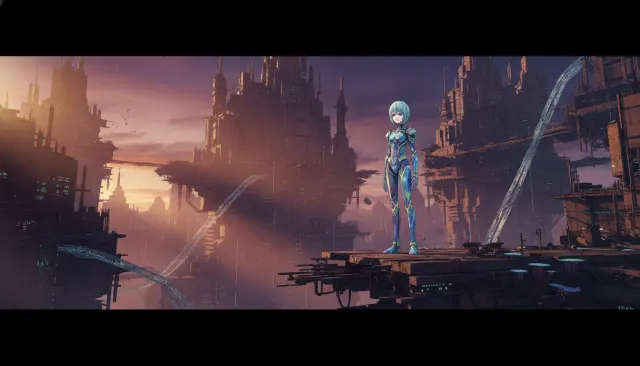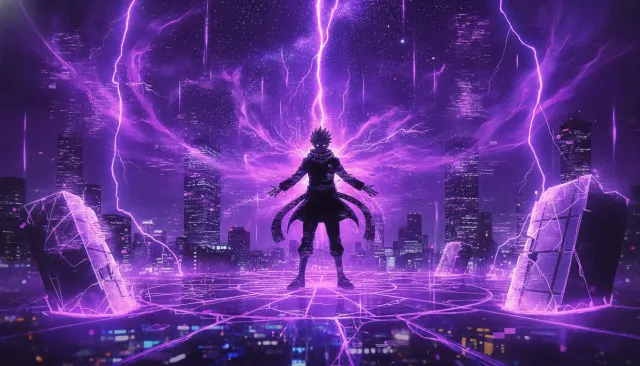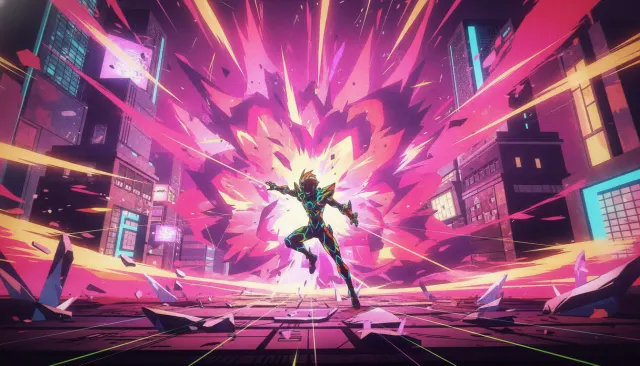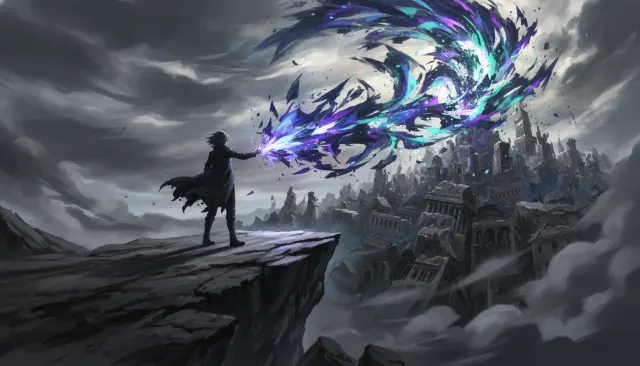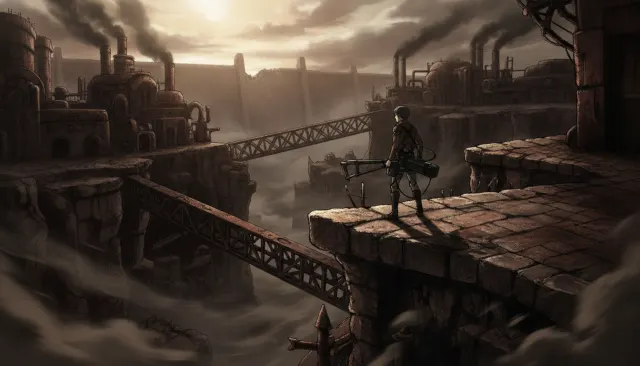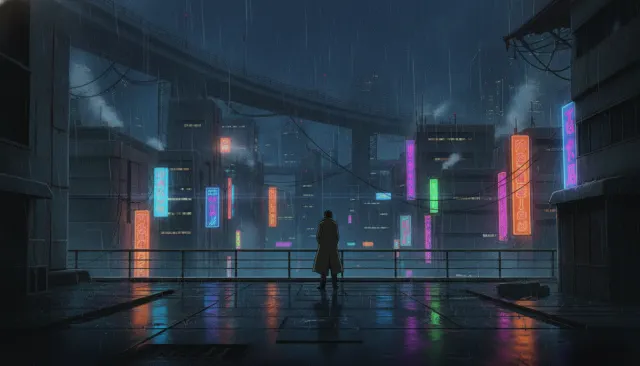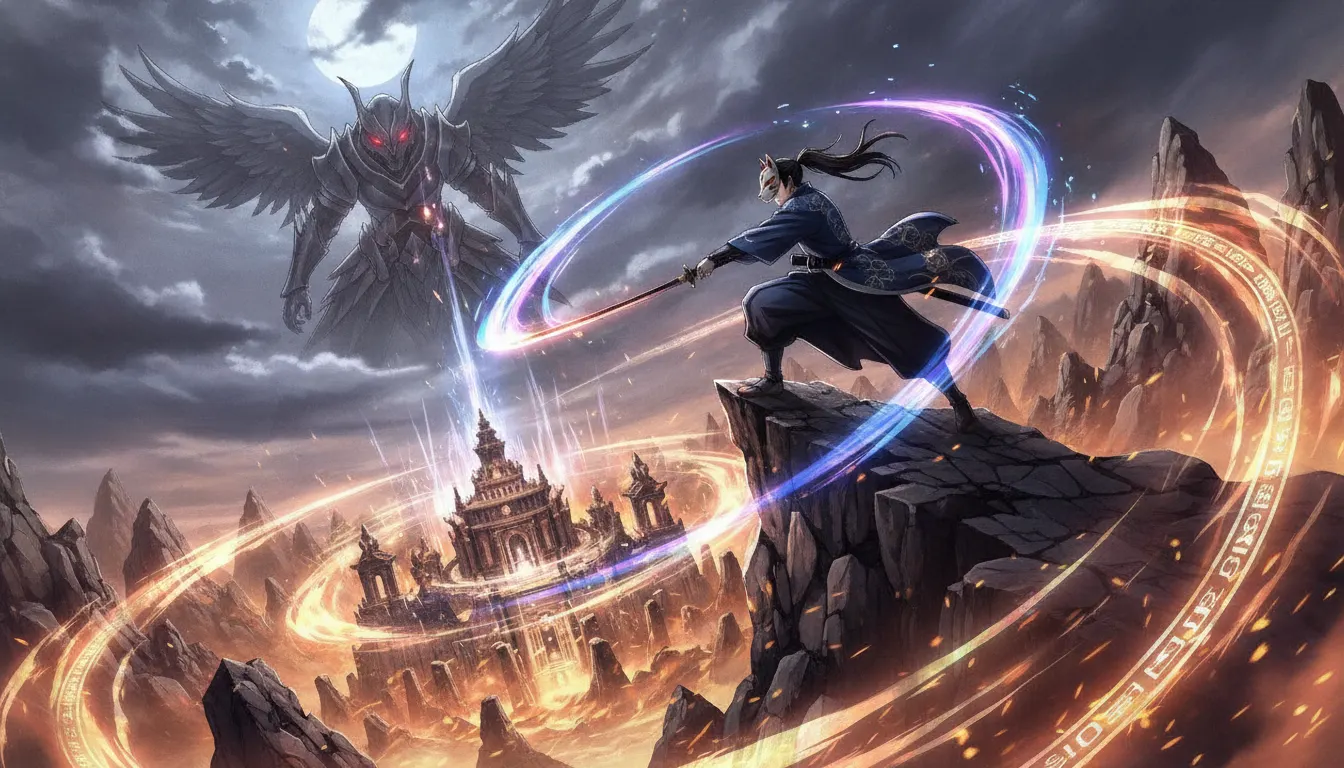
Fate/Zero (2011-2012)
ufotable, dir. Ei Aoki, TV cinematic benchmark
Ufotable (Demon Slayer, Fate/Zero, Fate/stay night UBW) signature register. Fluid 2D+3D camera swoops, magical practical effects, polished sword choreography.
The moves a human crew would use to get here. Cue applies them for you, and knowing their names is how you ask for a change.
sword techniques rendered as flowing water, crystalline ice, tumbling flame, or electrical arcs in 3D space around the character
- virtual cameras circle and track subjects with motion blur and depth-of-field changes
ray and volumetric light shafts penetrating environmental haze, creating depth and three-dimensionality impossible with flat painting
digital particles (water droplets, fire sparks, blood mist) rendered at screen resolution and composited over hand-drawn characters
motion isolation: key technique moments decelerated to allow appreciation of individual frames, revealing the artistic care within the action
foreground grass, mid-ground characters, background mountain, atmospheric haze each on separate compositing layers with different motion parallax
warm practical-source lighting effects creating complex shadow rigs on character faces in low-light environments
ufotable (founded 2000 by Hikaru Kondo) occupies a unique position in anime: it is the studio most associated with pushing the technical ceiling of what television and theatrical anime can achieve. While most studios optimize for production efficiency, ufotable invests extraordinary resources in digital compositing, 3D background integration, and particle system effects that have made its productions visually unprecedented within the medium.
Fate/Zero (2011-2012, 25 episodes, dir. Ei Aoki, script Gen Urobuchi) was the production that established ufotable's reputation for cinematic visual quality. The show composited hand-drawn character animation over fully rendered 3D environments with sophisticated lighting rigs -- a technical approach that most studios reserve for theatrical films. Battle sequences used virtual 3D cameras with motion blur, depth of field, and lighting effects that had no precedent in TV anime.
Demon Slayer (2019+, multiple seasons + theatrical, dir. Haruo Sotozaki) became the most commercially successful anime theatrical film in Japanese history with Mugen Train (2020, 40.4 billion yen box office). The visual achievement that drove this success was breathing technique visualization: each character's sword-fighting style generates a different natural element as a visual metaphor -- Tanjiro's water breathing creates flowing water forms, flame breathing creates fire tornadoes, thunder breathing creates lightning. These effects are rendered as a hybrid of hand-drawn animation and digital particle systems composited in 3D space.
ufotable's approach combines:
The Fate franchise includes Fate/stay night: Unlimited Blade Works (2014-2015, dir. Takahiro Miura), Heaven's Feel theatrical trilogy (2017-2020, dir. Tomonori Sudou), and Fate/Grand Order specials, each pushing the visual quality further. The Heaven's Feel films represent the current production ceiling for ufotable's theatrical work.
ufotable, dir. Ei Aoki, TV cinematic benchmark
ufotable, dir. Takahiro Miura
ufotable theatrical, technical ceiling
2019
ufotable, dir. Haruo Sotozaki, breathing effects debut
2020
ufotable theatrical, highest-grossing Japanese film in history
ufotable, Sound Hashira visual showcase
2023
ufotable, Love and Mist Hashira
ufotable, video game adaptation
A Look is not a filter. It is a set of stored decisions the pipeline reads before it makes a single frame, so two videos in the same Look actually match.