Beyonce Vogue September 2018 cover
first Black photographer on a US Vogue cover
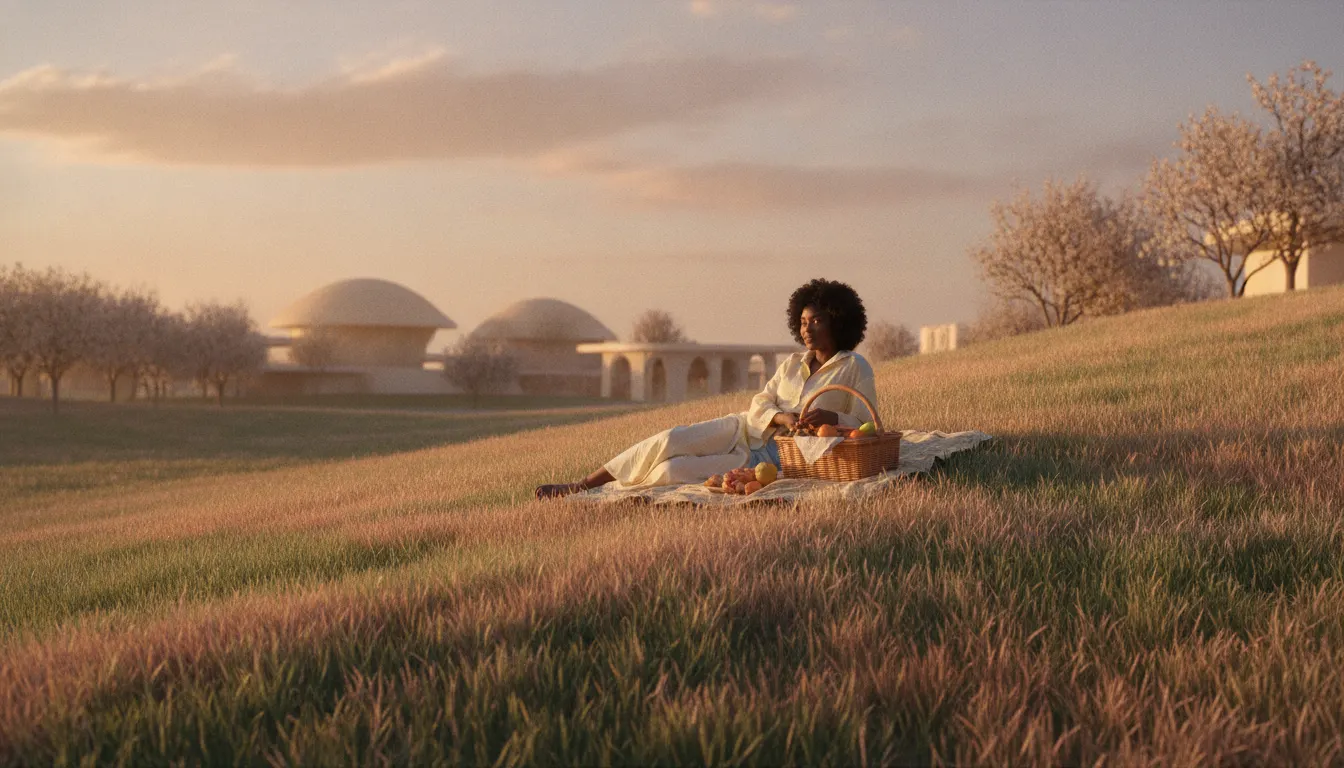
Tyler Mitchell warm utopian young Black culture. Pastel grass picnic, soft daylight, Vogue Beyonce cover legacy, Black joy fine-art editorial.
The moves a human crew would use to get here. Cue applies them for you, and knowing their names is how you ask for a change.
format film (Mamiya, Contax) on Kodak Portra 400 or Fuji 400H for creamy grain and color
late afternoon or lightly overcast for diffused gold without harsh shadow
warm color palette: peach skin tones, dusty amber-gold foliage, muted natural environments
of-field roll-off from medium format optics rather than abrupt telephoto bokeh
relaxed posing, genuine laughter, non-performative existence
yards, parks, beaches, interiors with warm natural light
authenticity signal rather than retro affectation
Tyler Mitchell became the first Black photographer to shoot the cover of American Vogue when his portraits of Beyonce appeared on the September 2018 issue - the most-read issue in the magazine s history. That moment crystallized an aesthetic approach Mitchell had been developing since his teens: warm, pastoral, joyful photography of young Black people in environments charged with freedom and ease.
The September issue of American Vogue is the fashion industry s most significant annual publication, known as fashion s bible. When Beyonce chose to control the entire editorial direction of her 2018 September issue - selecting Mitchell as photographer, co-editing the magazine herself - it was both a political statement about representation and a commercial gamble that proved spectacularly successful. The cover sold out within days, and Mitchell s name entered mainstream cultural conversation.
Mitchell s Beyonce images were deliberately warm and pastoral: soft natural light, golden-green foliage backgrounds, organic textures, and a tonal palette that leaned toward warm amber-gold rather than the cool-blue editorial light that had dominated Vogue for decades. The effect was less high-fashion severity and more humanizing radiance.
Mitchell s earlier work, including his debut monograph I Can Make You Feel Good (2019), documented young Black skaters, dreamers, and cultural figures in relaxed, sunlit environments - backyards, parks, beaches, and domestic spaces. The recurring visual gesture is softness: soft light, soft focus fall-off, soft grain from color negative film. Colors are warm but desaturated, tending toward peach and dusty gold rather than saturated orange.
The subjects in Mitchell s photographs are consistently at ease. They are not performing for the camera; they are existing within spaces that feel genuinely theirs. This quality of ease distinguishes Mitchell s work from both the aggressive confrontation of fashion-forward photography and the earnest but distanced quality of documentary work.
Mitchell works primarily with medium-format film cameras including Mamiya and Contax systems on Kodak Portra 400 and Fuji 400H film stocks. The medium-format frame captures a gradual, creamy depth-of-field roll-off rather than the abrupt separation of 35mm telephoto bokeh. Natural light is the primary source, often late afternoon or overcast for diffused warmth without harsh shadows.
first Black photographer on a US Vogue cover
debut book of young Black cultural figures
A Look is not a filter. It is a set of stored decisions the pipeline reads before it makes a single frame, so two videos in the same Look actually match.