The Sartorialist blog (Scott Schuman, 2005-present)
foundational street style archive
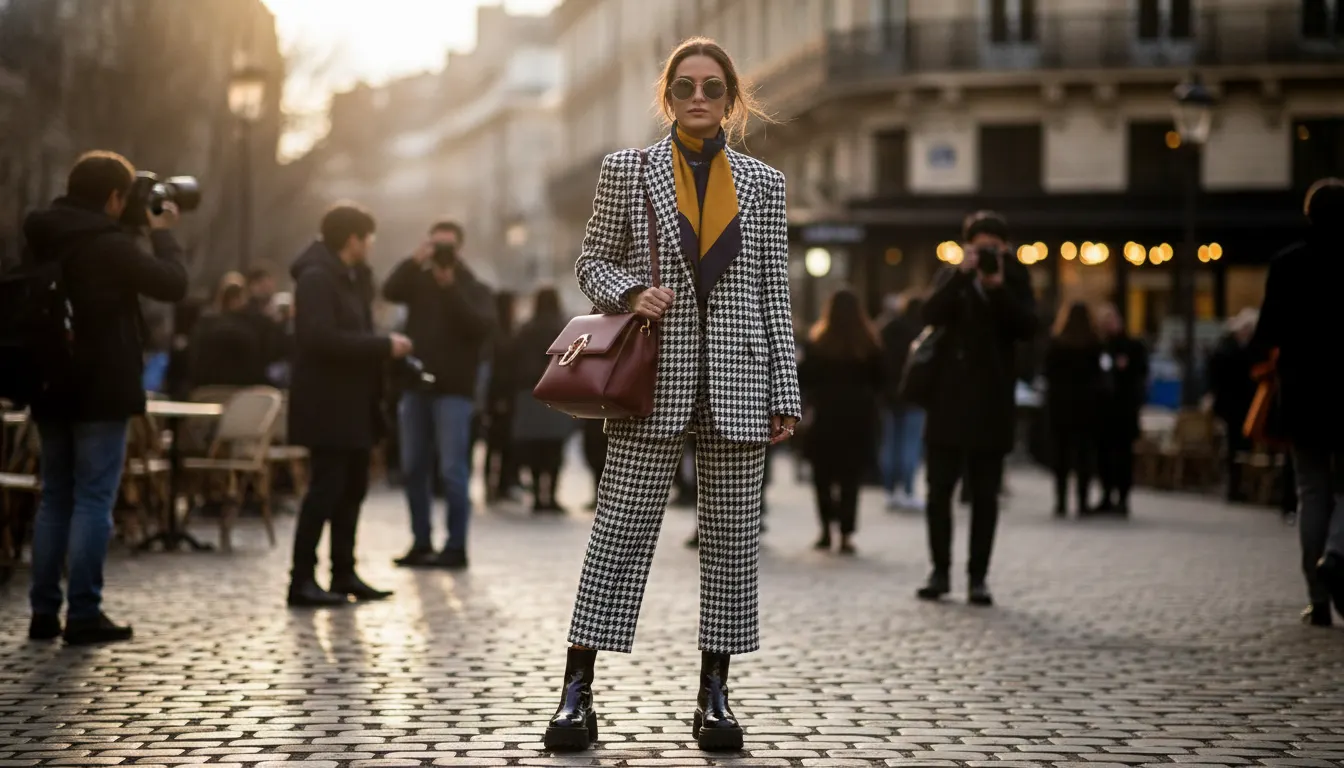
Street-style fashion blog 2010s. Tommy Ton Scott Schuman Sartorialist, Fashion Week sidewalk telephoto, eye-level full-length, designer head-to-toe.
The moves a human crew would use to get here. Cue applies them for you, and knowing their names is how you ask for a change.
limestone, iron, cobblestone, glazed storefronts
f/2.0 for natural perspective and gentle background separation
stride or posed naturally against a clean urban backdrop
never oversaturated, slightly lifted blacks
day or next-day publishing rhythm that prioritized currency over perfection
The street style fashion blog movement transformed fashion photography from a rarified studio practice into a democratic sidewalk art form. Between roughly 2005 and 2016, a handful of photographers with consumer-grade DSLRs and early digital camera systems stationed themselves outside Fashion Week venues in New York, Paris, Milan, and London and created a new genre that mixed editorial sensibility with snapshot accessibility.
Scott Schuman launched The Sartorialist in 2005 and within five years had become one of the most influential fashion photographers working anywhere. His methodology was simple: approach strangers on the street whose style caught his eye, ask permission to photograph, and post the result to the blog the same day. The immediacy and accessibility of the format democratized fashion media that had been locked behind closed shows and editorial gatekeepers.
Schuman's technical approach was deliberately understated. He worked primarily with a Canon 5D and a 50mm f/1.4 or 85mm f/1.8, shooting in available daylight against architectural backgrounds - limestone facades, iron railings, cobblestone streets. The depth of field was shallow enough to separate subjects but not so compressed as to feel manipulated. The color grading was warm but restrained, never oversaturated.
Tommy Ton (Jak & Jil blog) brought a more graphic, compressed telephoto approach using 70-200mm lenses to isolate details - a shoe, a handbag strap, a tucked collar. Garance Doré added illustrated sensibility and a Paris-specific warmth. Phil Oh (Street Peeper) covered the Asian markets. By 2010-2012, the genre had become institutionalized: Vogue, Elle, and Harper's Bazaar all ran street style galleries, and platforms like Style.com hired dedicated street photographers.
The genre's democratization accelerated its commodification. By 2013-2014, subjects outside Fashion Week shows were dressing explicitly for street style photographers - staging 'spontaneous' moments for cameras they knew were there. The 'peacocking' critique emerged: street style had shifted from documentation to performance. Instagram's visual-first format absorbed and displaced the blog format by 2015-2016, ending the street style blog era while dispersing its aesthetic vocabulary across the platform.
foundational street style archive
telephoto detail approach
Paris street style with illustrative warmth
print collection of 500+ images
peak era documentation
practitioner-as-subject extension of the genre
A Look is not a filter. It is a set of stored decisions the pipeline reads before it makes a single frame, so two videos in the same Look actually match.