Richardson x Barack Obama campaign photographs, 2008
widely circulated political images
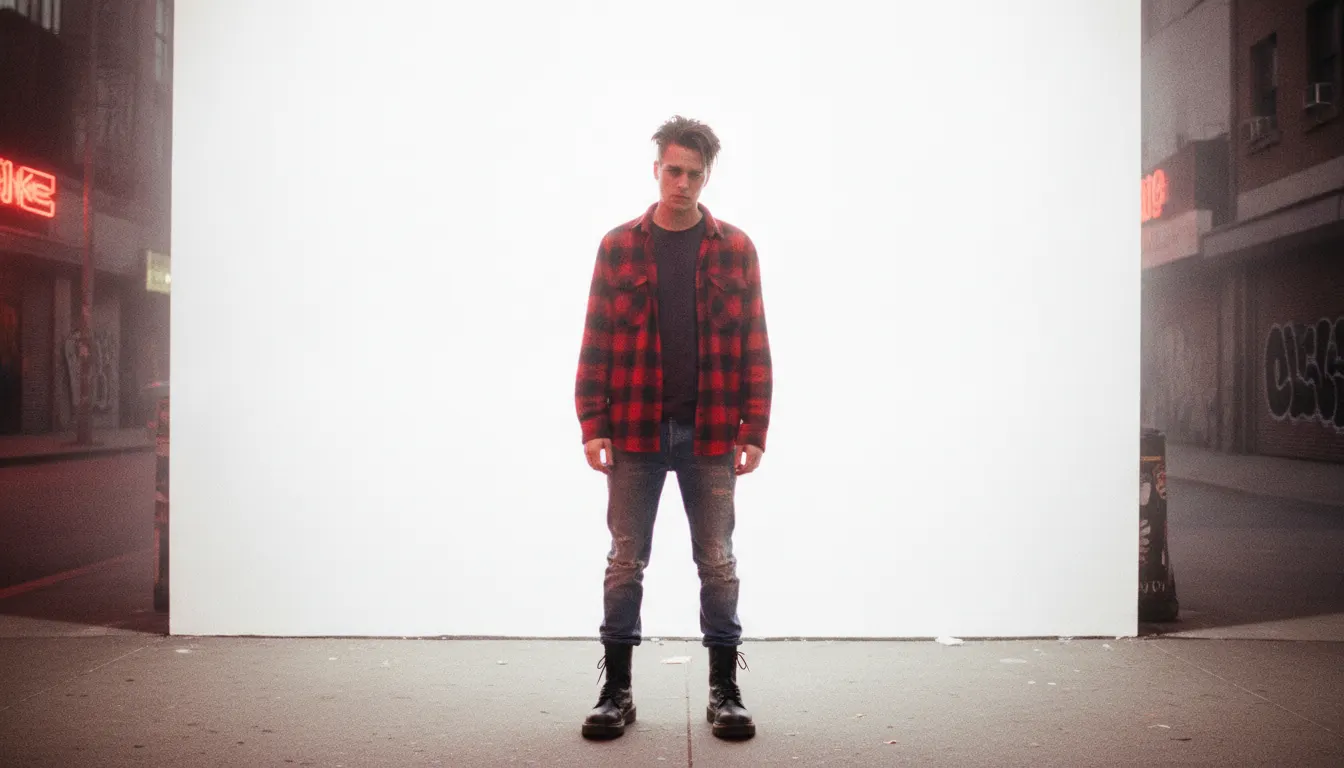
Hard on-axis ring-flash editorial. White wall, blown-out direct flash portrait, oversaturated red flannel, mid-2000s downtown style.
The moves a human crew would use to get here. Cue applies them for you, and knowing their names is how you ask for a change.
camera flash fired directly at subject with no diffusion, softbox, or bounce
5 feet of subject for intimate, space-collapsing proximity
forehead, cheekbones, nose bridge blown to white
real skin rendering: pores, texture, and blemishes fully visible without retouching
and-shoot framing: no tripod, no careful composition, slight off-axis tilt acceptable
Terry Richardson developed one of the most immediately recognizable and deeply controversial aesthetics in fashion and celebrity photography. Working primarily between the mid-1990s and 2017, when multiple misconduct allegations led major clients to sever relationships with him, Richardson built his visual signature around a studied refusal of technical sophistication.
Richardson shoots almost exclusively with a camera pressed close to the subject, an on-camera flash fired directly at the face, and a white seamless paper background or plain environment providing no visual escape. The flash creates a hard, flat, shadowless light that overexposes the highlights on skin and bleaches out background detail. There is no softbox, no reflector, no fill card - just the bare electronic pulse of a direct strobe.
This choice reads simultaneously as vernacular (the aesthetic of drugstore snapshots, school yearbooks, and family photographs) and aggressive (the flash eliminates the buffer of photographic flattery). Skin reads as hyper-real: pores, blemishes, and oil all visible at full resolution. The subject cannot hide behind sophisticated lighting because there is none.
Richardson was a staple of Vogue Paris, Vice Magazine, Rolling Stone, GQ, and Harper Bazaar through the 2000s. His clients included Marc Jacobs, Tom Ford, H and M, and Supreme. The aesthetic was particularly associated with Vice Magazine editorial culture of the 2000s, which used a similarly raw snapshot aesthetic to signal counter-cultural authenticity against the polished production values of mainstream fashion publishing.
High-profile subjects including Miley Cyrus, Lady Gaga, Beyonce, Barack Obama, and Lindsay Lohan sat for Richardson shoots. His images of Obama during the 2008 campaign were among the most circulated political photographs of that election cycle. Beginning around 2010 and escalating after a 2017 New York Times investigation, multiple models alleged that Richardson had used the power dynamic of shoots to coerce or pressure them. Major clients including Conde Nast and H and M publicly ended their relationships with him. The controversy permanently associated the aesthetic with its creator’s behavior in a way unusual in photography.
widely circulated political images
defining fashion flash aesthetic
counter-cultural snapshot register
peak mainstream visibility
monograph collecting the decade
mass-market application of the aesthetic
A Look is not a filter. It is a set of stored decisions the pipeline reads before it makes a single frame, so two videos in the same Look actually match.