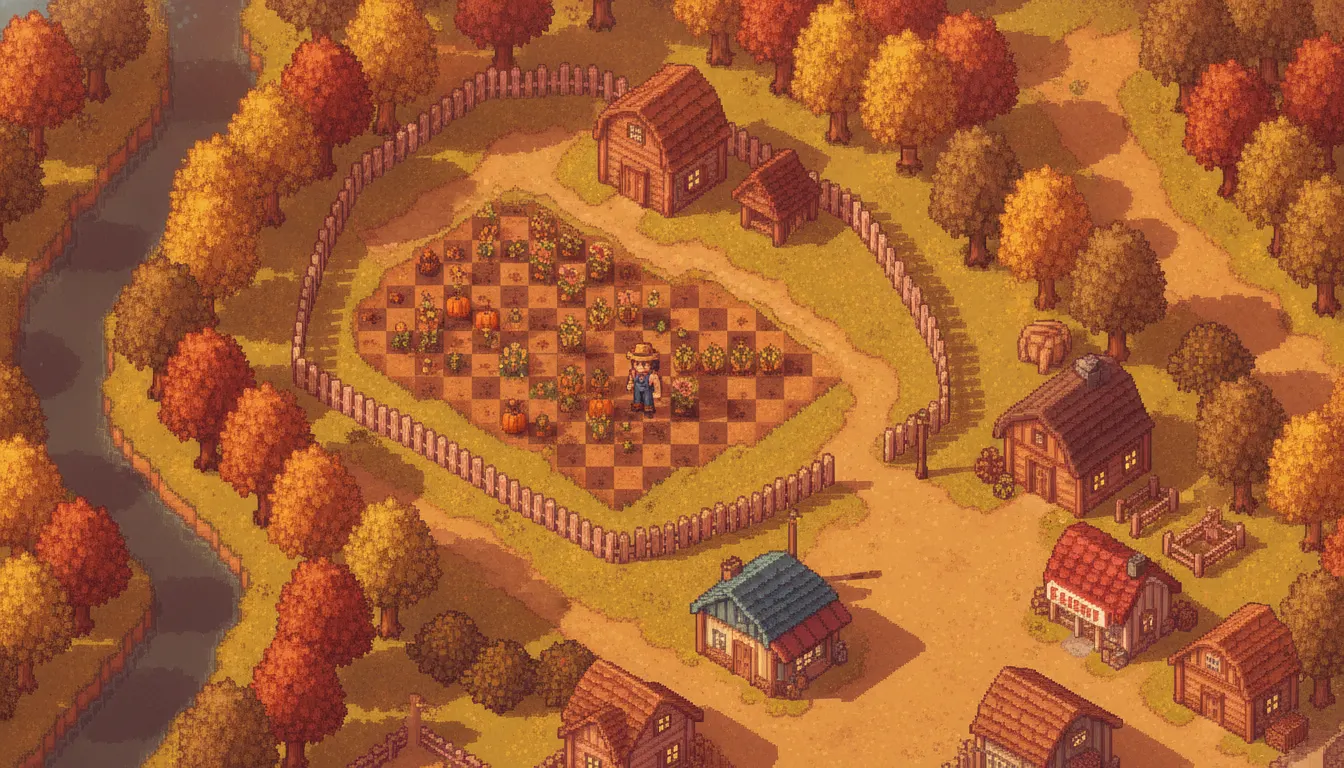
Stardew Valley (ConcernedApe, 2016)
the genre-defining cozy pixel farming game
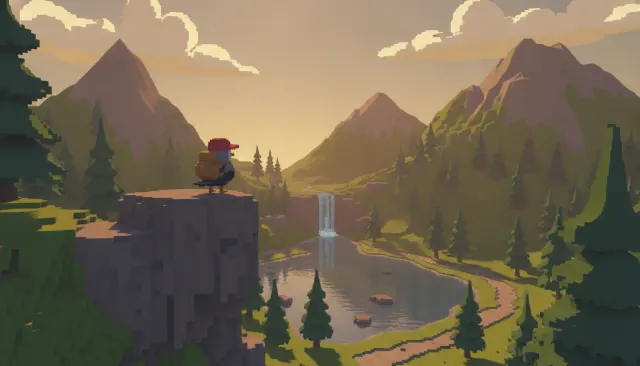
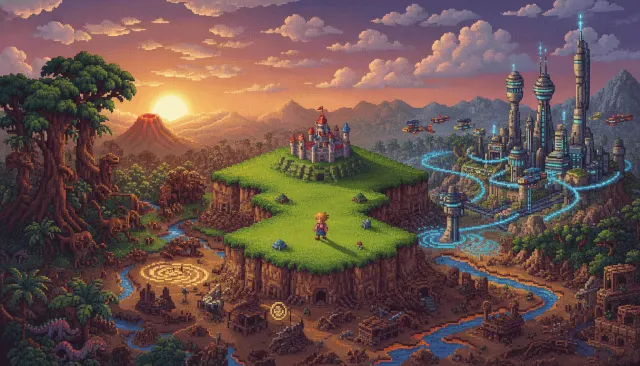
Stardew Valley cozy farming pixel aesthetic. ConcernedApe warm seasonal palette, Pelican Town overhead, crop tile grid, wholesome indie farm sim.
The moves a human crew would use to get here. Cue applies them for you, and knowing their names is how you ask for a change.
bit-inspired palette with chunky 16x32 character sprites at higher modern resolution
based world construction with dense, readable farm and town environments
afternoon golden hour baseline for outdoor scenes
Stardew Valley (ConcernedApe, 2016) is one of the most commercially successful solo-developed games in history, a four-year labor of love by Eric Barone that sold over 20 million copies and catalyzed an entire genre of cozy farming and life-simulation games. Its pixel art aesthetic - warm, chunky, 16-bit in spirit if not hardware constraint - became the visual template for indie cozy games in the 2020s.
Barone taught himself pixel art over the development period, drawing primary inspiration from 16-bit JRPGs, particularly Harvest Moon: Back to Nature (Natsume, 1999) on PlayStation. The result is a style that emulates SNES-era aesthetics using modern tools - higher resolution than SNES hardware required, but maintaining the chunky sprite proportions, limited color palettes per object, and tile-based world construction of that era.
Characters are rendered at roughly 16x32 pixels in their sprite form, with distinct rounded heads and simplified body proportions that read instantly at small scale. The overworld tiles use a warm, earthy palette dominated by greens, browns, and golds in spring and summer, transitioning to deep orange and rust in fall and stark whites and blues in winter. Each season is a complete visual identity shift.
Stardew Valley's four seasonal palettes are perhaps its most imitated feature. Spring: fresh greens, pinks, and pale yellows. Summer: deep saturated greens, cyan, and golden sun. Fall: amber, rust, orange, and dark brown. Winter: muted blues, whites, and greys with warm yellow window light as contrast. This seasonal color language has been adopted by dozens of subsequent cozy games and is now essentially the cozy genre's visual grammar.
Stardew Valley directly enabled the commercial viability of cozy indie games. Its success demonstrated that farming/life simulation - a genre Harvest Moon had pioneered but Nintendo had neglected - had enormous latent demand. Games like My Time at Portia (Pathea, 2019), Sun Haven (Pixel Sprout Studios, 2023), and Coral Island (Stairway Games, 2023) are all direct aesthetic descendants.
Pelican Town's exterior warmth is contrasted by the Mines - darker, cooler palette with desaturated stone tiles, purple crystal deposits, and enemy designs in sickly greens and blues. This contrast makes the farm more comforting by comparison, and the visual journey from sunlit farm to dark mine and back is itself a form of cozy game design.
the genre-defining cozy pixel farming game
primary visual and design ancestor
3D cozy farming in the Stardew tradition
direct pixel-art Stardew successor
eco-themed cozy farming descendant
Barone's follow-up aesthetic evolution
A Look is not a filter. It is a set of stored decisions the pipeline reads before it makes a single frame, so two videos in the same Look actually match.