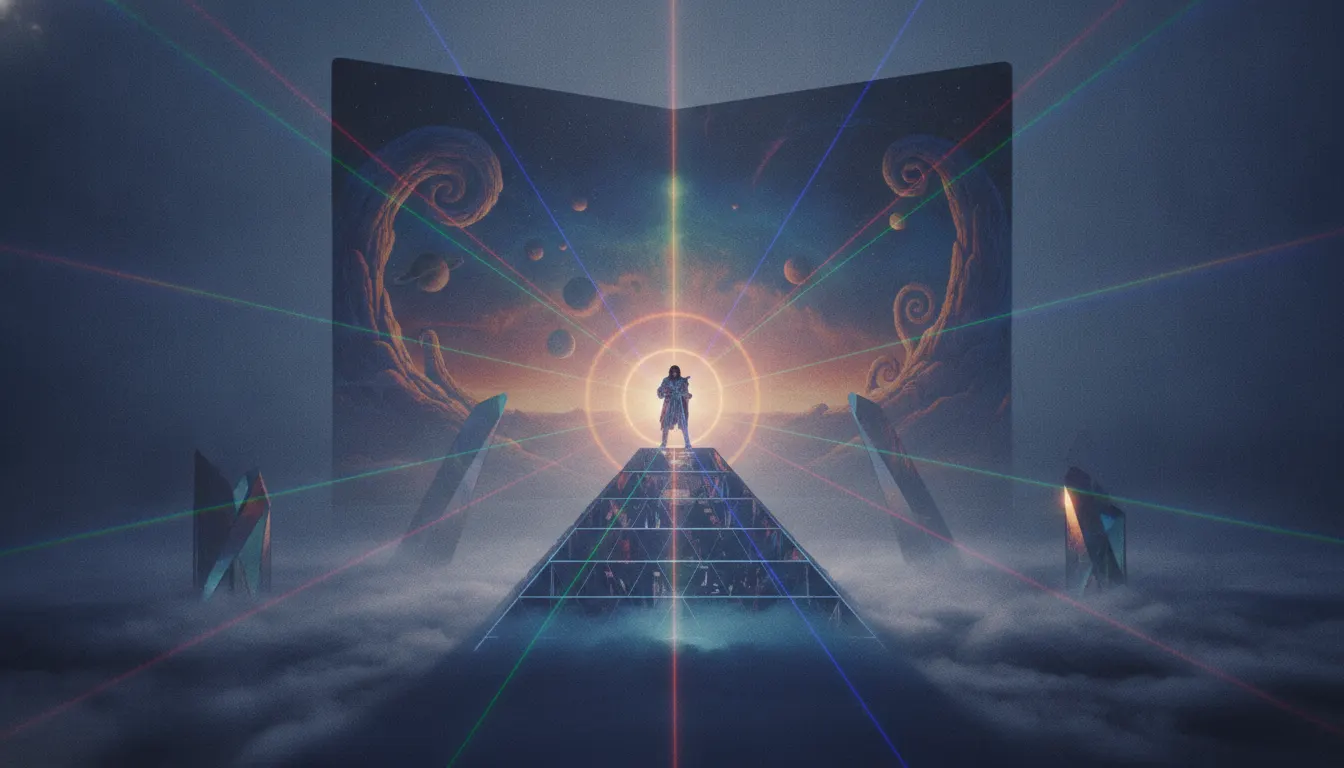
GENRE ROCK METAL · 1970S · UK
Prog Rock Pyramid Lasers
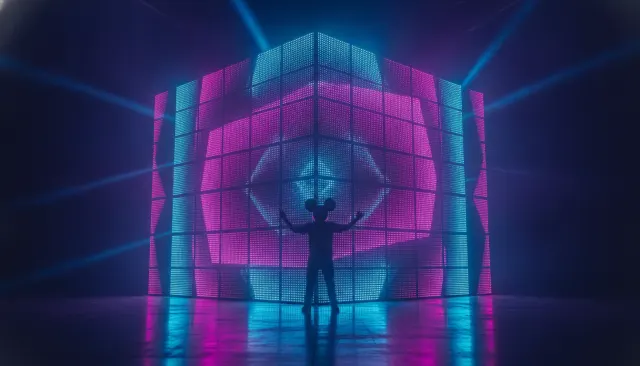
Prog rock pyramid laser MV. Pink Floyd Dark Side prism, Yes-coded Roger Dean fantasyscape, laser geometry, dry-ice fog, vinyl-gatefold cosmic.
prog-rockcosmiclaserfantasy
LUT prog-rock-cosmic-laser
WHEN TO USE
- Rock content referencing the 1973-1985 prog era, from the perspective of either authentic homage or knowing pastiche
- Concert or live event content that wants to invoke cosmic scale, laser light shows, and theatrical ambition
- Sci-fi adjacent content where the cosmic-architecture visual grammar serves the theme
- Brand content in gaming, audio technology, or entertainment sectors referencing classic rock spectacle
- Content for Gen X audiences who grew up with Pink Floyd, Yes, or Genesis as visual reference points
- Music content that contrasts intimate instrumentation with vast spatial or cosmic imagery
WHEN NOT TO USE
- Contemporary pop or hip-hop content where the 70s prog aesthetic is a genre category error
- Intimate or confessional content where the cosmic scale is tonally absurd
- Content where the theatrical artifice needs to be invisible rather than celebrated
- Content produced at budgets that cannot approximate the implied spectacle without irony
SIGNATURE TECHNIQUES
How the look is made.
The moves a human crew would use to get here. Cue applies them for you, and knowing their names is how you ask for a change.
- 01Laser geometry
beam lattices, pyramids, fans, and scanning patterns visible through stage fog
- 02Extreme stage scale
set pieces taller than performers, overwhelming architectural elements
- 03Proscenium darkness with dramatic isolated light sources
minimal ambient fill
- 04Fog machine saturation
stage fog dense enough to make laser beams fully visible
- 05Roger Dean
style organic alien landscape in set design and illustration
- 06Dramatic uplighting from floor level, creating heroic shadow patterns on performer faces
- 07Conceptual album art translated to stage
the 2D cover becomes the 3D environment
- 08Synchronized light cues on musical phrase changes
light responds to music structure
HISTORY & CONTEXT
Where it comes from.
Prog Rock Pyramid Lasers Aesthetic
Progressive rock's theatrical concert aesthetics from 1973 through the early 1980s produced some of the most visually ambitious live productions in rock history, and the videos and films that documented them established an aesthetic language that still reads as cosmic and grandiose in equal measure. The key visual elements - laser systems piercing fog in geometric patterns, giant screens, elaborate set pieces including actual pyramids and other cosmic architecture, and the scale of the proscenium that treated the concert stage as a total theatrical environment - defined an era when rock bands competed to produce the most visually overwhelming live experience.
Pink Floyd and the Apex of the Form
Pink Floyd, under the direction of designer Mark Fisher and light show pioneer Arthur Max, built some of the most ambitious concert staging in rock history. The 'Animals' tour (1977) featured a giant inflatable pig. The 'The Wall' tour (1980-1981) constructed an actual wall of cardboard bricks across the concert stage during the performance, hiding the band from the audience, then demolished it. Alan Parker's 'Pink Floyd The Wall' film (1982), using Gerald Scarfe's animation, brought the conceptual visual language to cinema: the animated sequences' organic grotesquerie alternated with live-action performance sequences that used dramatically lit stage imagery.
The 'Wish You Were Here' album era (1975) produced some of the defining laser imagery through the laser designs of Chris Langhart and the pyramid stage that Floyd used at Knebworth. The combination of the pyramid shape, Bayer polarized laser projections, and fog machines created the archetypal prog rock light show that every subsequent laser production has referenced.
Yes, ELO, and the Competition
Yes's tours with the Jon Anderson era (particularly 1973's 'Tales from Topographic Oceans' tour with Roger Dean's stage set designs translating his album cover world into three dimensions) competed directly with Floyd. Roger Dean's organic alien landscapes with floating islands, rendered in full stage set form, created a literal alien world on the concert floor. ELO's 'Time' tour (1981-1982) used a flying saucer set that descended from the stage ceiling - pure spectacle designed to match the science fiction concept of the album.
The Visual Grammar
The prog rock stage aesthetic shares specific elements across acts: dramatic darkness punctuated by geometric light sources; laser beams that create visible patterns through stage fog; extreme staging scale with set elements taller than the performers; and a commitment to creating complete alternative realities rather than simply amplifying a performer's presence.
NOTABLE WORKS
Where you have seen it.
Pink Floyd 'Animals' tour, 1977 (inflatable pig, laser spectacle)
Pink Floyd 'The Wall' tour, 1980-1981 (wall construction and demolition)
Yes 'Tales from Topographic Oceans' tour, 1973 (Roger Dean stage design)
ELO 'Time' tour, 1981 (flying saucer stage)
Genesis 'The Lamb Lies Down on Broadway' tour, 1974-75 (Peter Gabriel theatrical costume era)
Emerson, Lake and Palmer 'Works' tour, 1977 (full orchestra, extravagant staging)
Pink Floyd 'Knebworth' concert, 1975 (pyramid stage, laser design by Chris Langhart)
THE RECIPE
The exact knobs
the renderer turns.
A Look is not a filter. It is a set of stored decisions the pipeline reads before it makes a single frame, so two videos in the same Look actually match.
SettingValue
GradeColour LUT applied to every frame
prog-rock-cosmic-laserTransitionHow one shot becomes the next
dissolve cuts · 520ms · ease-in-outKen BurnsCamera move applied to stills
Slow push · 0.04 · centerTypographyDisplay / body / mono pairing
Cinzel · Lora · JetBrains MonoMusic moodWhat the bed under the voice sounds like
prog-rock-synth · cosmic-organPrompt suffixAppended to every shot prompt in this Look
Prog rock pyramid laser music video, Pink Floyd Dark Side prism, Roger Dean fantasyscape, laser geometry, dry ice fog, vinyl gatefold cosmicPALETTE
Primary
#5B2EFF
Secondary
#1A1A1A
Accent
#F59E0B
Text/Light
#0F0820
Text/Dark
#E5E0FF
BG 900
#040414
BG 800
#0A0820
RELATED LOOKS
Next to it on the shelf.


Your first cut
is on us.
+ New videoFree plan · no card · 1080p export