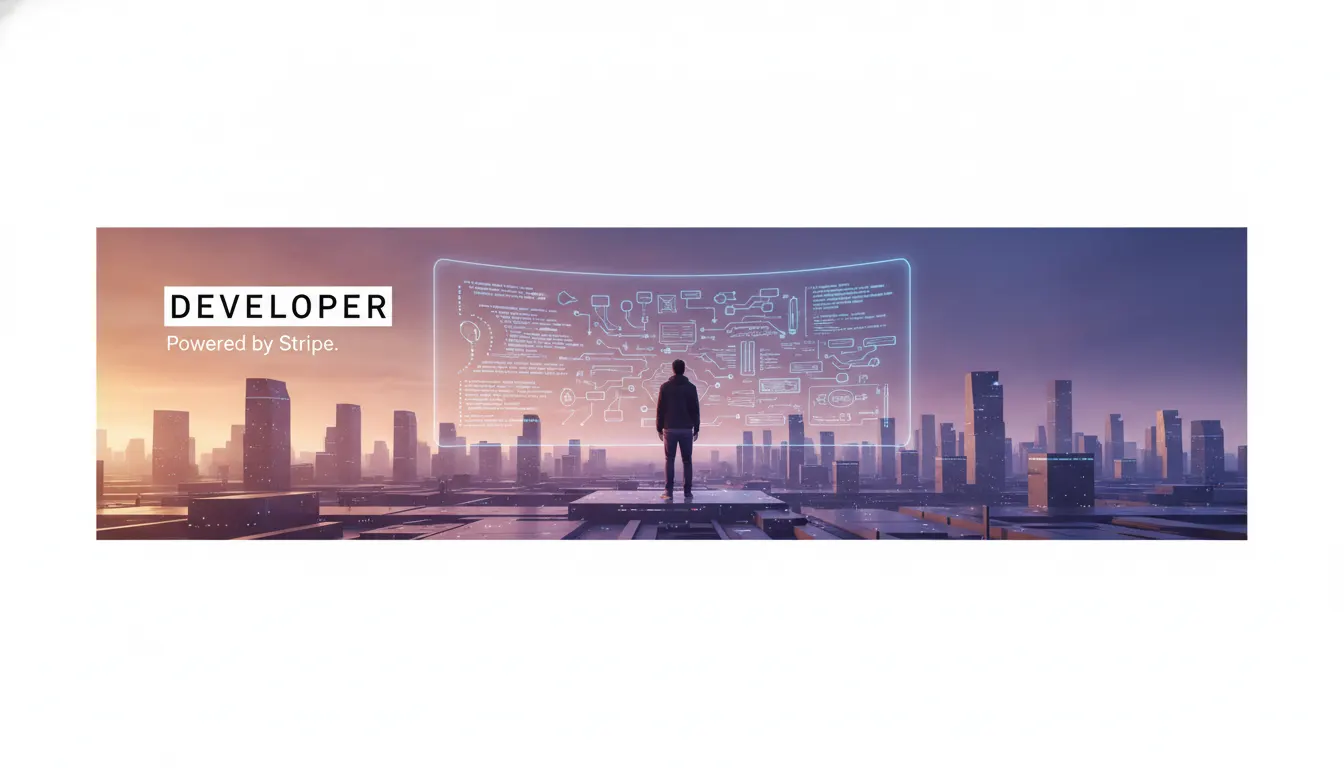
BRAND IDENTITY CORPORATE · CONTEMPORARY · GLOBAL
Modern Tech Brand Stripe
Modern tech brand identity in the Stripe lineage. Crisp gradient hero, hand-drawn dev illustrations, monospace eyebrow tags, generous white, calm sans.
modern-techdeveloper-brandgradientstripe-lineage
LUT stripe-tech-gradient
WHEN TO USE
- Developer tools, API products, fintech, or B2B SaaS content where technical sophistication and premium quality are both essential
- Product landing pages, pricing pages, or feature showcases for software products targeting professional audiences
- Dashboard UI design where the goal is combining data density with premium visual quality
- Brand identity work for technology companies positioning at the intersection of technical rigor and design maturity
- Any content where gradient-rich visual depth needs to signal sophistication rather than loudness
- Startup brand development targeting the post-2015 SaaS design aesthetic as the quality benchmark
WHEN NOT TO USE
- Consumer mass-market apps where the sophisticated design language creates accessibility distance
- Warm, personal, or artisanal brand positioning where the tech-company precision feels cold
- Legacy enterprise or government content where the modern gradient language conflicts with institutional trust cues
SIGNATURE TECHNIQUES
How the look is made.
The moves a human crew would use to get here. Cue applies them for you, and knowing their names is how you ask for a change.
- 01Multi
stop diagonal gradient backgrounds: deep purple to teal to blue, with animated or scroll-responsive variants
- 02Inter typeface
neutral grotesque optimized for screen reading with mathematical precision
- 03Isometric 3D product illustration using brand gradient palette applied to geometric forms
- 04Card
based dashboard layouts with precise 8px spacing grid and subtle elevation shadows
- 05Code blocks styled with syntax highlighting as premium visual content, not afterthought
- 06White or near
white background product sections alternating with full-bleed gradient hero areas
- 07Data visualization with the gradient palette
charts and graphs designed as brand assets
HISTORY & CONTEXT
Where it comes from.
Modern Tech Brand - Stripe
Stripe's visual identity is the defining brand of the 2010s fintech wave and one of the most influential design systems in the modern tech sector. Founded in 2010 by brothers Patrick Collison and John Collison in San Francisco, Stripe developed a brand language that positioned developer infrastructure as a product worthy of the same design investment that consumer apps received - clean, confident, and technically sophisticated.
Early Identity and Maturation
Stripe's early visual identity was functional and restrained, centering the teal-to-blue gradient that became its trademark. The company hired in-house design talent early and by 2015-2016 had developed a visual language sophisticated enough to influence the entire B2B SaaS sector. The key decision was treating documentation, API reference pages, and developer dashboards as brand touchpoints with the same rigor as marketing pages.
The Gradient System
Stripe's most recognizable visual element is its gradient system: deep purples, blues, and teals flowing diagonally across hero backgrounds, product illustrations, and data visualizations. Unlike the flat color systems dominant in the early 2010s (Material Design, iOS 7), Stripe's gradients have a dimensional, almost physical quality. The gradients are carefully crafted - not simple two-stop linear transitions but multi-point meshes that create complex light interactions. The 2020 website redesign pushed this system further, introducing animated gradient backgrounds that respond to scroll position.
Typography and Layout
Stripe's typography is built on Inter (an open-source grotesque designed by Rasmus Andersson, 2017-present) for UI and documentation, with display headings frequently set in a modified or custom-weight variant. Layout is spacious and confident - wide columns, generous line heights, and minimal decorative elements. The design system allows data-dense developer content to coexist with marketing-quality visual presentations without visual dissonance.
Illustration System
Stripe developed a distinctive isometric 3D illustration system for product explainers, showing credit cards, bank buildings, code terminals, and payment flows in a consistent visual language. The illustrations use the brand gradient palette applied to three-dimensional geometric forms, creating objects that are simultaneously abstract and recognizable.
Industry Influence
Stripe's design has been explicitly cited by dozens of SaaS companies as a direct reference. The 'Stripe aesthetic' became shorthand in product design communities for: gradient-hero backgrounds, isometric product illustrations, Inter typeface, card-heavy dashboards, and confident technical confidence. Companies including Linear, Vercel, Loom, and Figma all carry visible Stripe influence.
NOTABLE WORKS
Where you have seen it.
Stripe Dashboard redesign : benchmark for developer dashboard aesthetics
2018
Stripe Press publications and book covers (2018-present)
Stripe Atlas brand system : startup formation product with distinct identity
2016
Stripe Sessions conference identity (2018-present)
Stripe
Patrick and John Collison founding (San Francisco, 2010)
THE RECIPE
The exact knobs
the renderer turns.
A Look is not a filter. It is a set of stored decisions the pipeline reads before it makes a single frame, so two videos in the same Look actually match.
SettingValue
GradeColour LUT applied to every frame
stripe-tech-gradientTransitionHow one shot becomes the next
soft cuts · 220ms · ease-in-outKen BurnsCamera move applied to stills
Static framesTypographyDisplay / body / mono pairing
Inter · Inter · JetBrains MonoMusic moodWhat the bed under the voice sounds like
ambient-electronica · product-launch-synthPrompt suffixAppended to every shot prompt in this Look
Modern tech brand Stripe lineage, crisp gradient hero, hand-drawn developer illustration, monospace eyebrow tag, calm sans, generous whitePALETTE
Primary
#635BFF
Secondary
#0A2540
Accent
#00D4FF
Text/Light
#0A2540
Text/Dark
#F5F5FA
BG 900
#0A2540
BG 800
#142A50
RELATED LOOKS
Next to it on the shelf.

Your first cut
is on us.
+ New videoFree plan · no card · 1080p export