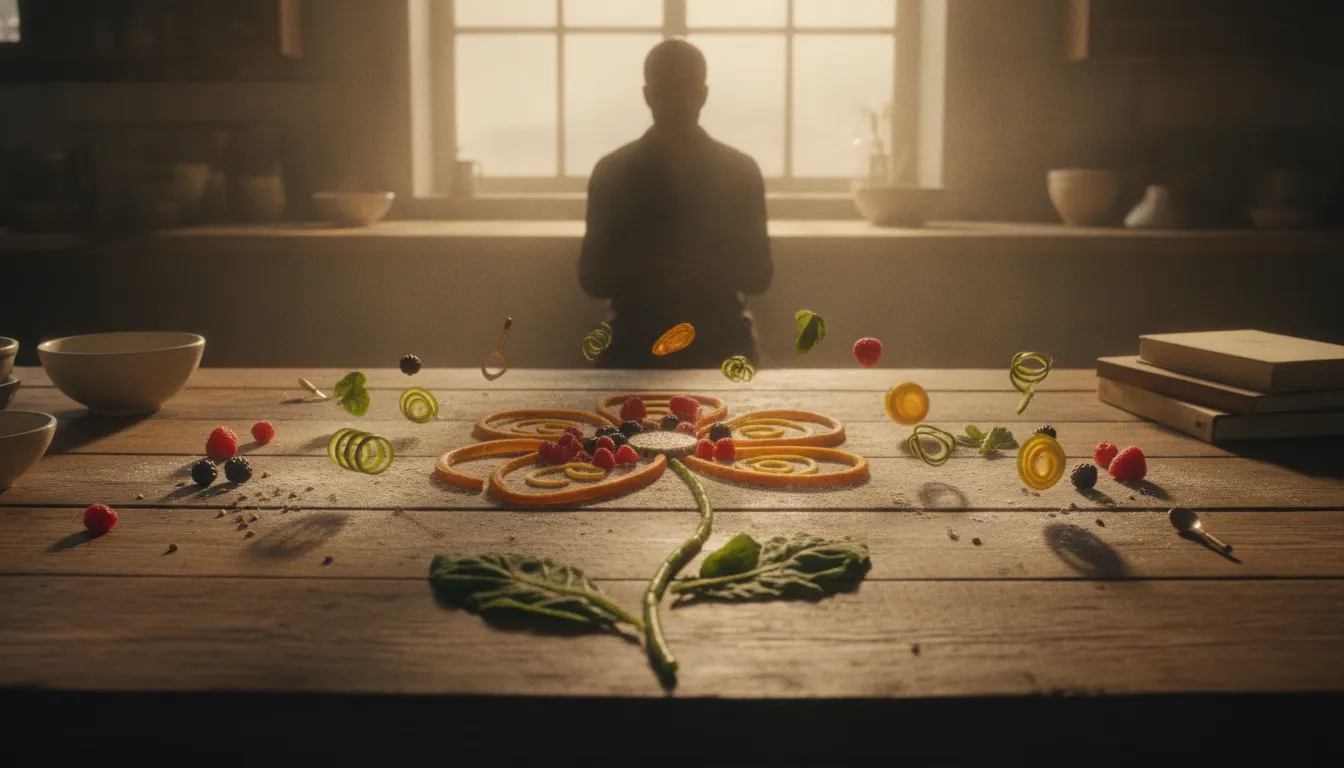
FOOD STOP MOTION · CONTEMPORARY · INTERNATIONAL
Food Art Stop Motion Tabletop
Top-down food-art stop motion. Ingredients dance into recipes, fruit and veg arranged into illustrations, kinetic Instagram-recipe-reel craft sensibility.
stop-motionfood-arttabletopinstagram-craft
LUT food-art-tabletop-bright
WHEN TO USE
- Food and beverage brand content for social media where visual transformation drives engagement
- Recipe content where the assembly process is shown as a satisfying stop-motion sequence
- Seasonal or campaign content using food ingredients as colour and texture palette
- Health, nutrition, or wellness brands that want to make ingredients visually compelling
- Short-form video content where a 15-30 second food transformation loop is the asset
- Product launch content for food brands where the product's ingredients are revealed progressively
WHEN NOT TO USE
- Non-food brands where the food association creates irrelevant brand connections
- Long-form content where the format's inherent brevity becomes a limitation
- Luxury fashion or premium non-food contexts where the tabletop aesthetic is tonally mismatched
- Content requiring character-driven storytelling -- food art stop-motion is primarily graphic and abstract
SIGNATURE TECHNIQUES
How the look is made.
The moves a human crew would use to get here. Cue applies them for you, and knowing their names is how you ask for a change.
- 01Overhead flat
lay composition treating food as graphic design material
- 02White, marble, or linen surface backgrounds providing neutral palettes for ingredient colour
- 03Frame
by-frame ingredient placement creating geometric transformation sequences
- 04Colour coordination across ingredient groups
monochrome, complementary, or gradient arrangements
- 05Satisfying loop logic
sequences designed to read as complete cycles for social media autoplay
- 06Raking natural light or soft studio lighting emphasising food texture and surface
- 07Scale play
macro close-ups of single ingredients cut against wide composition reveals
HISTORY & CONTEXT
Where it comes from.
Food Art Stop-Motion Tabletop Look
Food art stop-motion is a tabletop animation discipline in which food ingredients -- fruits, vegetables, spices, candy, noodles, bread, and other edibles -- are arranged and re-arranged frame by frame to create animated compositions. Distinct from functional food advertising (which documents real dishes), food art stop-motion treats ingredients as sculptural or graphic elements first and culinary objects second.
Origins and Social Media Context
The form developed significant visibility through Instagram and Vine from around 2012-2014, with creators including Brock Davis (@eatthis) and various advertising agencies pioneering the genre as a format for shareable branded food content. The overhead flat-lay composition became the dominant frame -- an arrangement that turns food into a graphic design problem, with ingredients placed for colour, texture, and geometric interest.
Visual Language
Food art stop-motion operates in two primary visual registers. The first is the precise, clean, studio-lit overhead composition: a white or marble surface, perfectly arranged ingredients moving through transformation sequences with satisfying geometric logic. The second is the more spontaneous, natural-light tabletop approach with wooden boards, linen napkins, and the less perfect beauty of artisanal food styling.
Transformation as Narrative
The core grammar of food art stop-motion is transformation: a pizza appearing piece by piece, a fruit morphing into a face, a bowl filling with coloured grains in a mandala pattern, a word spelled out in cookies. This transformation logic is deeply satisfying to watch and has strong algorithmic performance on social media platforms.
Production Considerations
Food stop-motion is relatively accessible for small production teams: it requires a stable overhead rig, consistent lighting, a clean surface, and patience. The main challenges are continuity of lighting across takes, food freshness over a multi-hour shoot, and the precision of small ingredient movements.
NOTABLE WORKS
Where you have seen it.
Bon Appetit magazine food stop-motion social content (Conde Nast, 2014-present)
Oreo stop-motion social campaigns (multiple agencies, 2012-present)
Various Tasty/BuzzFeed overhead food video format (2015-present, adaptation into stop-motion adjacent)
PES food short films: Western Spaghetti , Fresh Guacamole (2012, Academy Award nominee)
2008
THE RECIPE
The exact knobs
the renderer turns.
A Look is not a filter. It is a set of stored decisions the pipeline reads before it makes a single frame, so two videos in the same Look actually match.
SettingValue
GradeColour LUT applied to every frame
food-art-tabletop-brightTransitionHow one shot becomes the next
hard cuts · 140ms · ease-in-outKen BurnsCamera move applied to stills
Slow push · 0.04 · centerTypographyDisplay / body / mono pairing
Archivo · Inter · JetBrains MonoMusic moodWhat the bed under the voice sounds like
upbeat-ukulele · kitchen-marimba-bouncePrompt suffixAppended to every shot prompt in this Look
top down food art stop motion, ingredients dance into recipe, fruit and veg arranged into illustration, Instagram recipe reel craft, tabletopPALETTE
Primary
#E8552A
Secondary
#7A2E18
Accent
#5BB04C
Text/Light
#2A0F08
Text/Dark
#FFEAC8
BG 900
#1A0808
BG 800
#2A1410
RELATED LOOKS
Next to it on the shelf.
Your first cut
is on us.
+ New videoFree plan · no card · 1080p export