FAMILYFOLK & WORLDSUBFAMILYMIDDLE EASTERN EXTENDEDERATRADITIONALREGIONYEMEN

Yemeni Mashrabiya Window Pattern

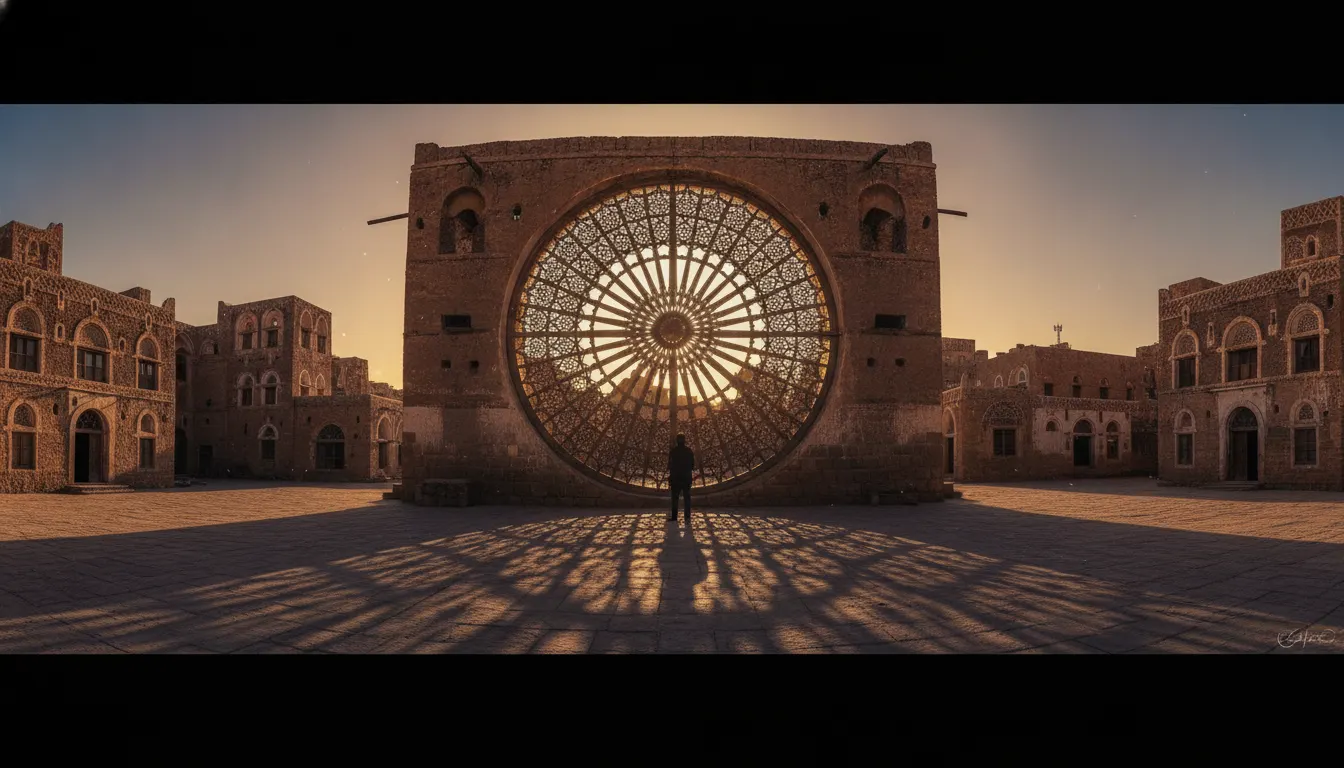
Honoring the craft of Yemeni mashrabiya turned-wood lattice window tradition from old Sanaa. Intricate geometric lattice casting shadow patterns into shaded rooms behind.

mashrabiyayemenilatticearchitectural

Samples

Samples pending

Visual reference frames for this look are being generated.

When to use
  • Middle Eastern or Islamic architectural content specifically referencing Yemeni, Egyptian, or Levantine heritage
  • Interior design, hospitality, or luxury property content drawing on historical Islamic domestic spatial conventions
  • Light-and-pattern content where lattice shadow play across surfaces is the visual subject
  • Documentary or cultural content about Yemen, Sanaa's Old City, or Hadhramaut heritage
  • Pattern design projects using the geometric turned-wood lattice vocabulary - octagonal stars, hexagonal grids
  • Content exploring privacy, threshold, and the division between public and private space in architectural terms
When not to use
  • Content conflating mashrabiya with other Islamic geometric traditions (Moroccan zellige, Iznik tile) without architectural specificity
  • Content about the current Yemeni conflict that would frame a heritage architectural tradition in war-damage contexts without sensitivity
  • Minimal or flat design contexts where the three-dimensional turned-wood texture is necessarily lost
  • Content about South Asian or East Asian architecture where Islamic domestic conventions are inapplicable

Signature techniques

  • 01
    Turned-wood spindle assembly (no glue) โ€” Identical turned spindles press into intersecting grooves by friction; no adhesive; the lattice is assembled and disassembled dry.
  • 02
    Coloured glass takhrim panels โ€” Geometric coloured-glass inserts within the lattice frame transmit jewelled light; blue, green, and yellow are the most common Yemeni colours.
  • 03
    Octagonal star lattice module โ€” Eight-pointed star field geometry created by specific spindle spacing and insertion angle; the most emblematic Yemeni mashrabiya pattern.
  • 04
    Light diffusion and shadow play โ€” The lattice casts geometric shadow patterns that migrate across interior floors and walls as the sun moves; the shadow play is a primary aesthetic effect.
  • 05
    White gypsum frieze integration โ€” Mashrabiya windows are set within white gypsum geometric frieze surrounds on Sanaa tower house facades, creating multi-layer ornamental programmes.
  • 06
    Vertical tower-house facade composition โ€” Rowshan placement is sequenced vertically: stone base, brick middle, rowshan upper storey, wind-catcher terrace - each with distinct visual texture.

History & context

Yemeni Window: Mashrabiya Pattern

The mashrabiya (also mashrabiyya, or in Yemeni context often called rowshan) is a projecting enclosed balcony or window screen of turned wood latticework that filters light, provides ventilation, and maintains privacy in the domestic architecture of Yemen, Egypt, the Levant, North Africa, and the broader Islamic world. In Yemen - particularly in the historic tower houses of Sanaa and the mudbrick cityscapes of Shibam in the Hadhramaut valley - this tradition achieved its most elaborate visual development.

Architecture and Function

The physical mashrabiya screen performs three simultaneous functions: it allows air circulation through the lattice gaps (critical in Yemen's hot climate); it reduces direct solar glare while admitting diffused light; and it allows the occupants to see out without being seen from the street. This combination of ventilation, light control, and privacy made the mashrabiya essential to Islamic domestic spatial conventions where the division between public and private space is architecturally enforced.

Yemeni rowshan are distinguished from Egyptian and Levantine mashrabiya by their use of coloured glass panels (takhrim) set within the lattice frame. In the tower houses of Sanaa's Old City (a UNESCO World Heritage Site since 1986), upper storey windows combine white alabaster or gypsum transom panels with geometric turned-wood latticework in multi-colour patterns. When interior lamps are lit at night, the coloured glass transmits jewelled light across the narrow lanes below.

Visual Characteristics

The turned-wood mashrabiya lattice uses a repeating modular geometry: the basic element is a turned wooden spindle, identical to its neighbours, assembled by pressing the spindle heads into intersecting grooves. The size and spacing of the spindles determines the visual density. Common geometric patterns include octagonal star fields, diagonal square grids, and hexagonal honeycomb arrangements. No glue is used - the lattice is assembled by friction and gravity.

Yemeni tower house facades are read as vertical compositions: lower floors of stone or rammed earth are followed by upper floors of fired brick decorated with white gypsum geometric friezes and the coloured-glass rowshan, and culminating in open-lattice uppermost rooms that function as wind-catchers.
Notable works

Old City of Sanaa tower house facades

Yemeni master builders (ustadh) over multiple centuries(Multiple centuries; UNESCO WHS designation 1986)

The densest surviving ensemble of traditional Yemeni domestic architecture; the rowshan programme is visible across the entire historic district

Shibam mudbrick skyscrapers, Hadhramaut

Hadhramaut building tradition(16th-century core; UNESCO WHS designation 1982)

"Manhattan of the Desert"; 500-year-old mudbrick tower blocks with mashrabiya-type window screens

Dar al-Hajar (Rock Palace), Wadi Dhahr

Imam Yahya commission(1930s construction on older foundations)

Royal summer palace on a rock pillar; elaborate rowshan windows and gypsum friezes; the most photographed Yemeni domestic architecture

Egyptian mashrabiya collection, Museum of Islamic Art, Cairo

Egyptian and Cairene workshops(Various centuries)

Most extensive comparative collection of Islamic turned-wood lattice; includes Yemeni examples alongside Egyptian Mamluk and Ottoman work

Hassan Fathy architectural drawings and documentation

Hassan Fathy (Egyptian architect)(1940s-1980s)

Influential revival of mashrabiya in modern Egyptian architecture; documented in Architecture for the Poor (1973)

UNESCO Sanaa conservation documentation

UNESCO World Heritage Committee(1986-present)

Ongoing documentation of tower house facades, rowshan patterns, and gypsum frieze types endangered by conflict

Aesthetic recipe

The exact knobs the renderer turns to produce this look.

Palette
Primary
#3A2A1A
Secondary
#5C3A1E
Accent
#C9956A
Text/Light
#1A100A
Text/Dark
#F2DCC0
BG 900
#0F0805
BG 800
#1A100A
Typography
Display
Source Serif Pro
Body
Lora
Mono
JetBrains Mono
Music moods
oud-arabicyemeni-vocal
Transition

soft cuts at 320ms, ease-in-out

Ken Burns

Slow push (0.025, center)

Grade LUT

mashrabiya-shadow

Generate a video in the Yemeni Mashrabiya Window Pattern look

Honoring the craft of Yemeni mashrabiya turned-wood lattice window tradition from old Sanaa. Intricate geometric lattice casting shadow patterns into shaded rooms behind.