Winnie-Pooh (Vinni-Pukh)
Fyodor Khitruk / Soyuzmultfilm · 1969-1972
Three-part series; the definitive Soyuzmultfilm flat graphic aesthetic; earth-tone palette, distinct from Disney version
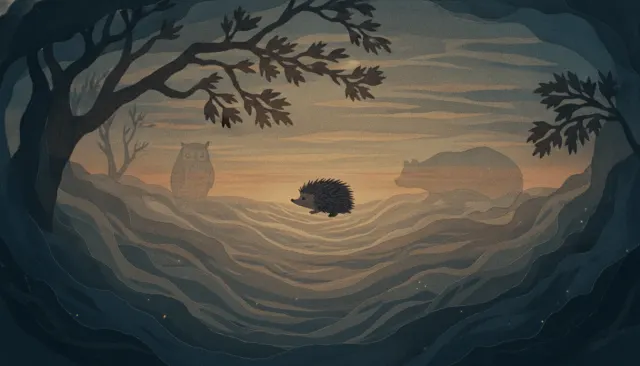
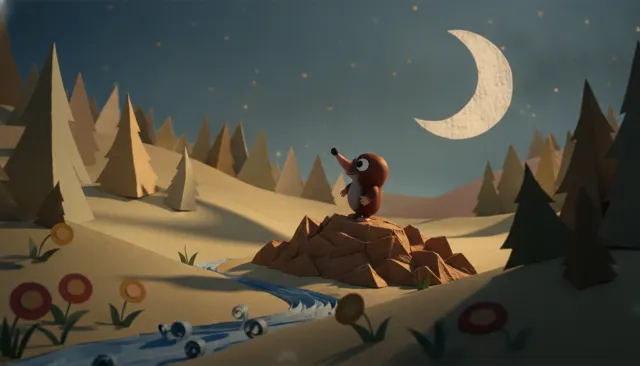
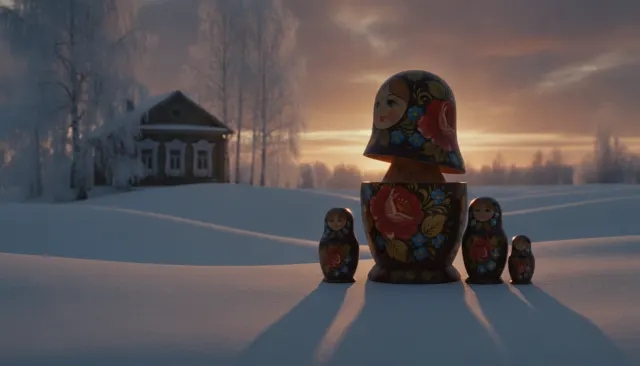
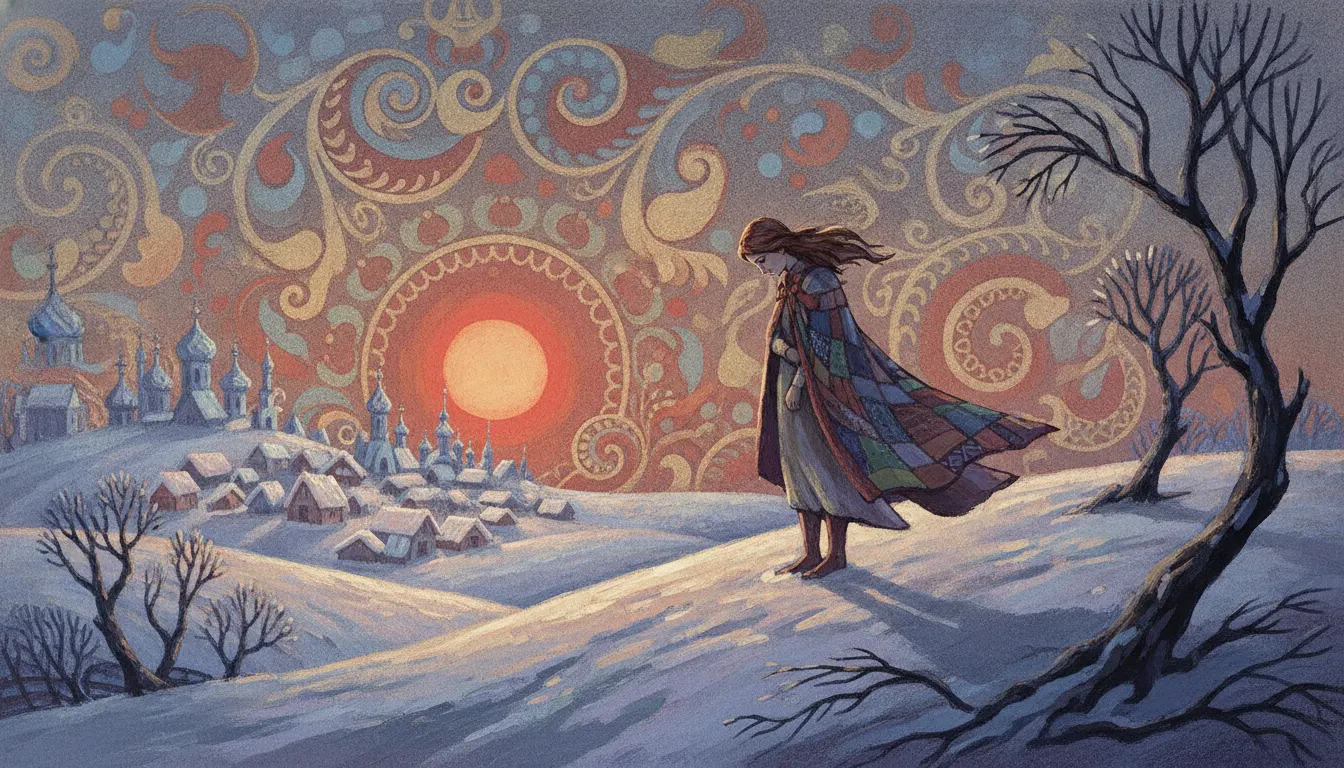
Inspired by Soyuzmultfilm Soviet animation tradition. Flat painterly cels with folk-pattern decorative backgrounds, melancholy children fable, fairy-tale lubok aesthetic.
The moves a human crew would use to get here. Cue applies them for you, and knowing their names is how you ask for a change.
Character designs reduce to clear two-value shapes readable in silhouette; minimal interior gradients or modelling.
Ochre, rust, terracotta, sage green, and cream replace the primaries of Disney animation; palette reads as folk-illustration warm.
Backgrounds use painted washes, flat colour planes, or pattern fields rather than literal perspective environments.
Characters hold static poses with isolated animating parts - a turning head, moving arms - minimising full-body redraws.
Title cards and on-screen text use constructivist or folk-influenced lettering designed as part of the visual system.
Speed lines, impact starbursts, and movement tracers drawn in a scratchy hand style punctuate action beats.
Soyuzmultfilm (Союзмультфильм, Union Animated Film) was the largest and most prolific animation studio in the Soviet Union, founded in Moscow in 1936. Over more than five decades of state operation it produced roughly 1,500 animated films, spanning a range of styles from Disney-influenced naturalism to the highly distinctive flat graphic style that became the studio's most internationally recognisable aesthetic.
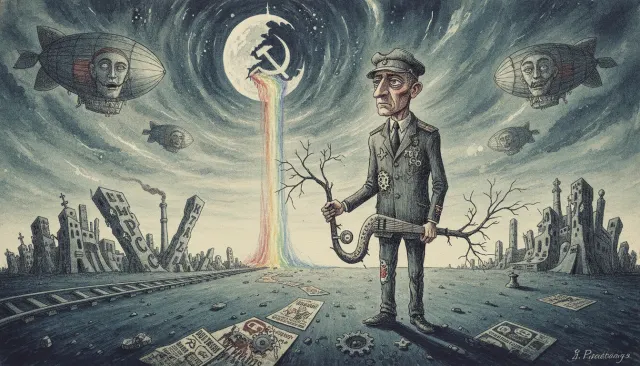
Established by a merger of smaller Soviet studios under the umbrella of Soyuzkino, Soyuzmultfilm initially drew on American cel-animation techniques - early films like Toidze's Puss in Boots (1938) show clear Disney influence. A stylistic shift toward flat, design-led illustration occurred during the 1950s-1960s as the studio reacted against what it increasingly saw as bourgeois naturalism, drawing instead on Russian and Soviet graphic design, folk luboks, and constructivist print traditions.
The studio's most celebrated works emerged from the 1960s-1980s. Winnie-Pooh (Vinni-Pukh, 1969, dir. Fyodor Khitruk) reimagined A.A. Milne's characters as flattened graphic shapes with clean outlines and earth-tone palettes entirely distinct from the Disney version. Cheburashka (1969-1983, dir. Roman Kachanov) introduced the beloved big-eared creature Cheburashka and crocodile Gena through puppet animation, but the show's graphic sensibility - warm colours, simple forms - aligned with the flat cel aesthetic. Nu, Pogodi! (Well, Just You Wait!, 1969-ongoing, dir. Vyacheslav Kotyonochkin) became the Soviet answer to Tom and Jerry, rendered in bold graphic flatness with dynamic action lines.
The Soyuzmultfilm flat style uses simplified character silhouettes with clean outline and minimal interior modelling. Backgrounds are often semi-abstract - gestural painted washes, flat colour planes, or impressionistic pattern fields rather than literal environments. Colour palettes lean warm (ochre, rust, terracotta, sage green) rather than the primaries of American animation. Movement favours economical limited animation (held poses with animating parts) rather than full motion, a constraint that the studio's best directors turned into a formal virtue. Typography and graphic title cards are integrated into films as design elements rather than afterthoughts.
Soyuzmultfilm films were mandatory viewing for Soviet children and had enormous cultural penetration across fifteen republics. After the Soviet collapse the studio struggled financially; its character library was subject to prolonged intellectual property disputes. A revived Soyuzmultfilm has operated since 2016, producing both new content and digital remasters of the classic catalogue.
Fyodor Khitruk / Soyuzmultfilm · 1969-1972
Three-part series; the definitive Soyuzmultfilm flat graphic aesthetic; earth-tone palette, distinct from Disney version
Roman Kachanov / Soyuzmultfilm · 1969-1983
Beloved big-eared creature and crocodile Gena; puppet animation with graphic sensibility; cultural touchstone across Soviet republics
Vyacheslav Kotyonochkin / Soyuzmultfilm · 1969-2006
Soviet Tom and Jerry; bold graphic flatness, dynamic action; 18+ episodes over four decades
Yuri Norstein / Soyuzmultfilm · 1975
Canonical Soviet animated short; cutout silhouette within the studio; distinct from flat cel style
Boris Stepantsev / Soyuzmultfilm · 1968-1970
Adaptation of Astrid Lindgren; warm graphic character design
Mikhail Botov / Soyuzmultfilm · 1961
Italian folk tale adaptation; early showcase of the mature flat style moving away from Disney naturalism
A Look is not a filter. It is a set of stored decisions the pipeline reads before it makes a single frame, so two videos in the same Look actually match.