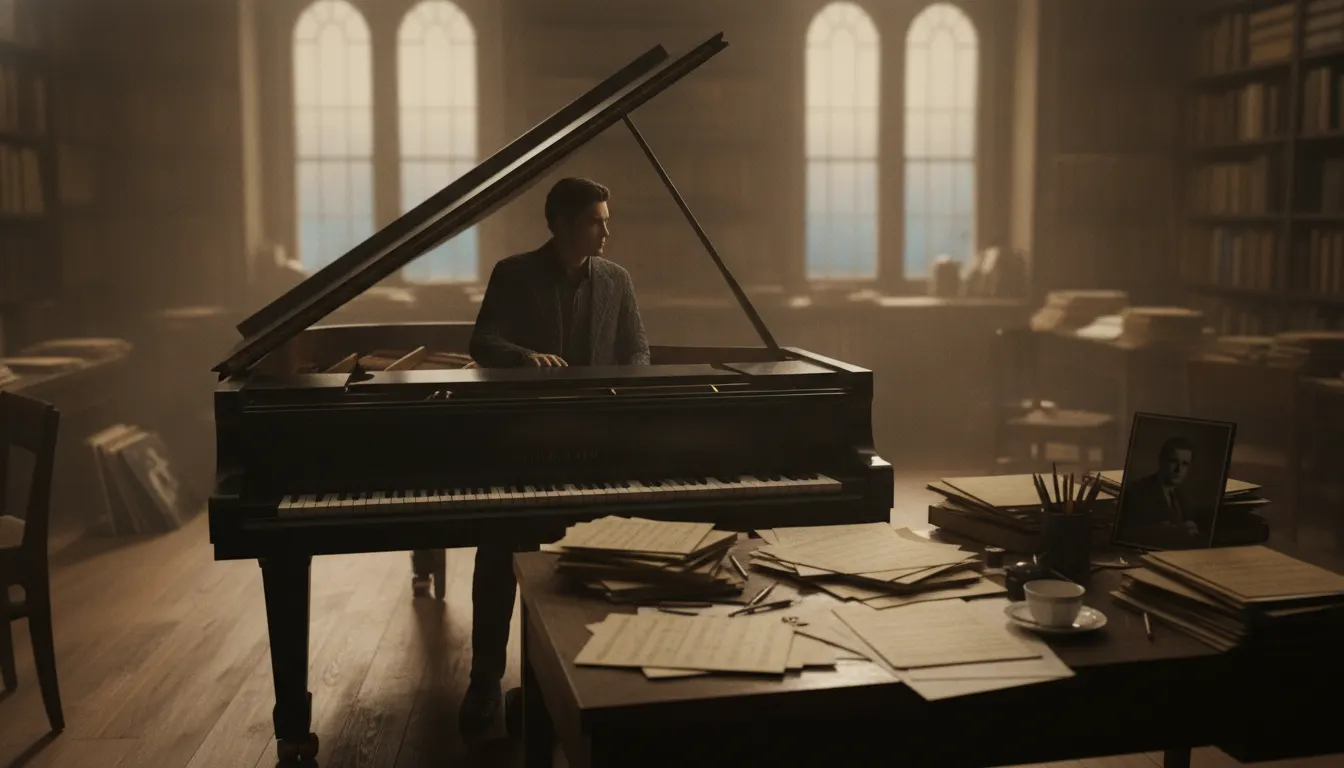
Arnold Newman
1946
*Igor Stravinsky at the Piano* , definitional environmental portrait
Arnold Newman environmental portrait. Stravinsky at piano, subject framed inside their workspace, considered context-as-character.
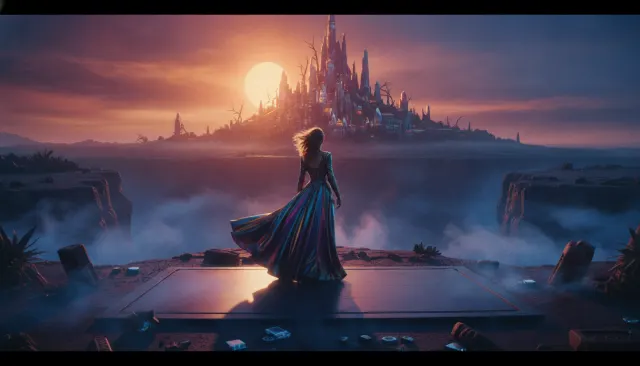
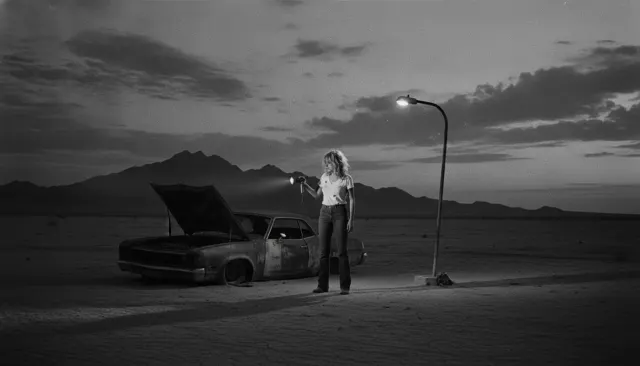
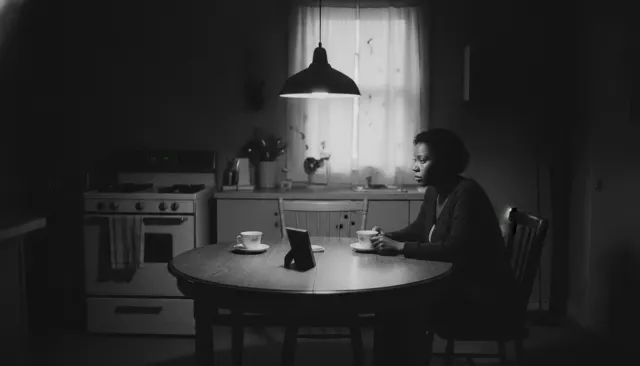
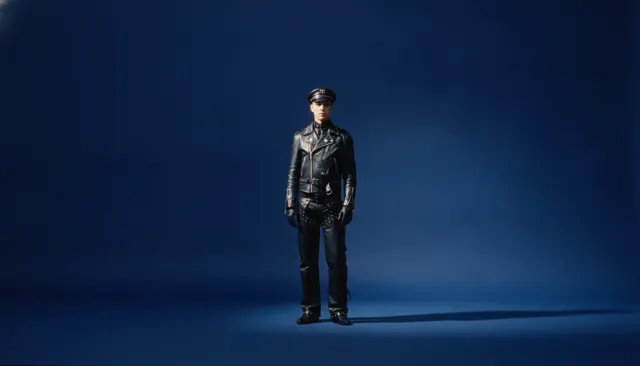
The moves a human crew would use to get here. Cue applies them for you, and knowing their names is how you ask for a change.
angle lens (28-35mm) in close proximity to include significant environmental context without distortion
shoot time (sometimes hours) organizing and simplifying the environment to serve the concept
subject may occupy less than one-third of the frame
Arnold Newman (1918-2006) is the photographer most credited with defining and popularizing the environmental portrait - the practice of photographing subjects within their professional or personal environment, using the space itself as a psychological and biographical extension of the sitter. Newman explicitly rejected the neutral-background studio portrait as false: he believed that a person's context - their tools, their workplace, their creative objects - could reveal character more truthfully than any expression captured against a seamless background.
The single most famous environmental portrait in photography history was made in 1946 when Newman photographed composer Igor Stravinsky at a Steinway concert grand piano. Newman placed Stravinsky in the lower-left corner of a radically cropped frame, making the piano's raised lid curve dominate nearly two-thirds of the image. The composition suggests both the crushing scale of Stravinsky's musical ambition and the precision of his relationship to the instrument. The image has been reproduced continuously for nearly 80 years.
Newman photographed an extraordinary range of 20th-century figures: Pablo Picasso (1954, in his studio with Bulls-Head sculpture prominent), Piet Mondrian (1942, in his Manhattan studio among his geometric canvases), Marilyn Monroe, John F. Kennedy, Dwight Eisenhower, Marc Chagall, and hundreds of others. In each case, the environment was carefully organized - Newman often spent hours arranging the setting before making an exposure - to serve the portrait's psychological argument.
The environmental portrait has become the dominant convention for executive, celebrity, and public-figure portraiture in editorial and commercial photography. It implicitly argues that identity is inseparable from occupation and environment - a claim that feels more naturalistic than the explicit theater of studio work.
While Newman defined the form, many photographers have extended it. Yousuf Karnak's studio portraits of the powerful occasionally approached environmental portraiture. More directly, photographers like Dan Winters (long-running editorial work for Esquire, Texas Monthly, and others) and Platon Antoniou (his Power project photographing world leaders at the UN General Assembly since 2009) have built careers on the environmental or quasi-environmental formal portrait. In the corporate photography world, the approach is now standard for C-suite executive portraiture across LinkedIn, annual reports, and executive team pages.
1946
*Igor Stravinsky at the Piano* , definitional environmental portrait
1954
*Pablo Picasso* , Vallauris studio with Bull's Head sculpture
1942
*Piet Mondrian* , Manhattan studio with geometric canvas background
1963
*Alfred Krupp* , steel industrialist portrait in factory, Time magazine
1980
*Artists: Portrait of the Creative Personality* , career survey book
1986
Posthumous retrospective, *Arnold Newman: Five Decades* , MOCA
A Look is not a filter. It is a set of stored decisions the pipeline reads before it makes a single frame, so two videos in the same Look actually match.