Mac OS X Aqua Interface
Apple Human Interface Group (Craig Hockenberry et al.) · 2001
The visual progenitor of all Web 2.0 glossy design - candy dock icons, gummy buttons, translucent surfaces
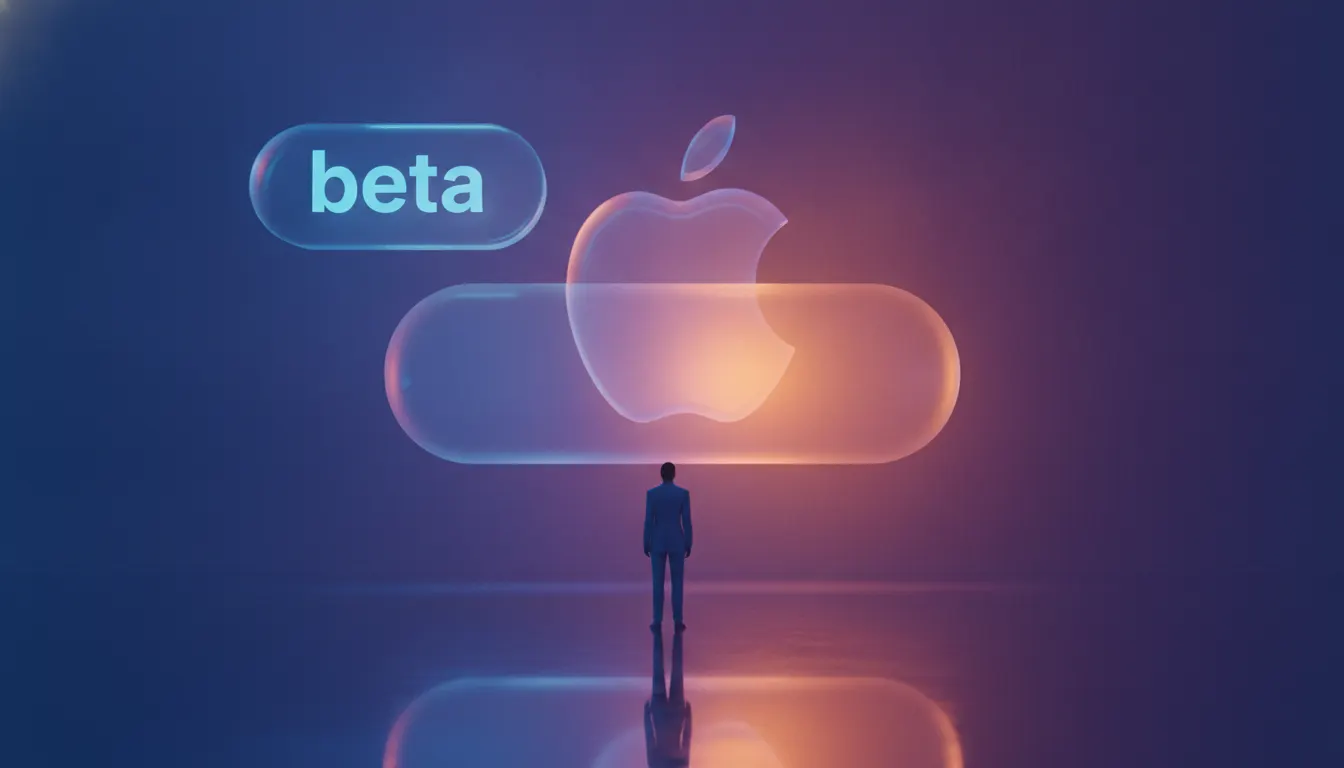
Web 2.0 glossy gradient era. Apple-style glass buttons, drop shadows, mirror floor reflection, beta-tag rounded rectangles, 2006 to 2010 SaaS look.
The moves a human crew would use to get here. Cue applies them for you, and knowing their names is how you ask for a change.
A white or near-white elliptical gradient placed in the upper-left quarter of a button or icon to simulate a glossy surface reflection.
Background fills transitioning from a lighter, more saturated version of a hue at top to a darker, less saturated version at bottom.
The specific corner radius that characterized Web 2.0 elements - enough to soften squares without becoming circular.
Soft, slightly offset drop shadows applied to containers and UI elements to create the illusion of physical depth.
Icons with subsurface scattering, multiple specular highlight layers, and lit-from-upper-left-at-130-degrees convention.
Brand names set in lowercase rounded-corner sans-serif on a gradient color background badge.
The Web 2.0 glossy gradient aesthetic was the dominant visual language of internet product design from approximately 2004 to 2012, arising from the confluence of new browser rendering capabilities (CSS drop shadows, border-radius, semi-transparent PNGs), the graphic influence of Apple's Aqua interface (introduced with Mac OS X in 2001), and the social networking era's need to make digital products feel physically substantial and trustworthy at a moment when online credibility was still being established.
Apple's Aqua interface, designed by Craig Hockenberry and the Apple Human Interface Group and introduced with Mac OS X 10.0 in 2001, was the visual precedent for Web 2.0 glossy design. The Aqua dock icons - three-dimensional, candy-colored objects with specular highlights and reflections against a translucent dock - demonstrated a specific visual proposition: digital objects could have the luminous, solid quality of physical objects. The Aqua interface's gummy button style, with its three-dimensional rounded bubble appearance and radial highlight, was the single most immediately imitated element in subsequent web design.
John Gruber at Daring Fireball and the broader Mac design community disseminated the Aqua aesthetic into web design practice. By 2004-2005, CSS techniques for gradient backgrounds and 'glass' button treatments were being widely shared in the web design community, establishing the standard that characterized the Web 2.0 era.
The period 2005-2009 produced the most concentrated expression of the Web 2.0 glossy gradient aesthetic. Web 2.0 logos characteristically featured two-tone gradients (light-to-dark or light-to-saturated within a single hue), rounded corners (4-8px border-radius was standard), and a lowercase, rounded-corner wordmark often in white on a colored gradient background. Del.icio.us, Digg, Flickr (the lowercase 'r' was a famous detail), Netvibes, and dozens of other services established these conventions.
Icon design in the period was dominated by the Iconfactory (Troy Sobotka, Talos Tsui, and colleagues) and individual designers like David Lanham, who produced icons with extreme three-dimensionality, subsurface scattering effects in glossy surfaces, and the specific angle (light from upper-left at approximately 130 degrees) that Apple's own icon guidelines specified.
Apple's iOS 7 redesign (2013, led by Jony Ive following Scott Forstall's departure) eliminated skeuomorphism and glossy gradients from Apple's UI in a single release, triggering the flat design wave that made Web 2.0 glossy gradient aesthetics immediately obsolete in professional contexts. The backlash was so complete that the glossy style became shorthand for dated, unaware design for approximately five years before its rehabilitation as a nostalgic reference in the early 2020s, particularly in the Y2K revival context.
Apple Human Interface Group (Craig Hockenberry et al.) · 2001
The visual progenitor of all Web 2.0 glossy design - candy dock icons, gummy buttons, translucent surfaces
Ludicorp / Stewart Butterfield, Caterina Fake · 2004
The two-color lowercase logo and photo-sharing UI that defined Web 2.0 aesthetic sensibility
Kevin Rose et al. · 2004-2010
Social news platform whose glossy gradient logo and UI embodied the period's visual standard
Apple Design Team · 2007
The ultimate expression of Web 2.0 glossy icon design - Springboard icons with automatic gloss overlay
Iconfactory (Troy Sobotka, Talos Tsui) · 2000s
Third-party icon design studio whose work set the bar for Web 2.0 three-dimensional icon aesthetics
A Look is not a filter. It is a set of stored decisions the pipeline reads before it makes a single frame, so two videos in the same Look actually match.