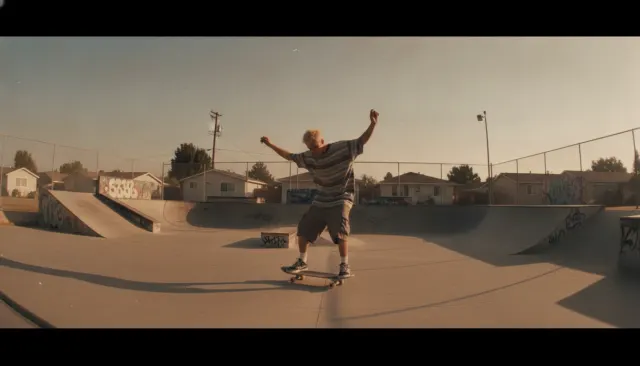
Just Do It Campaign (launch)
Wieden+Kennedy for Nike · 1988
The founding campaign of the aspirational sports brand visual language
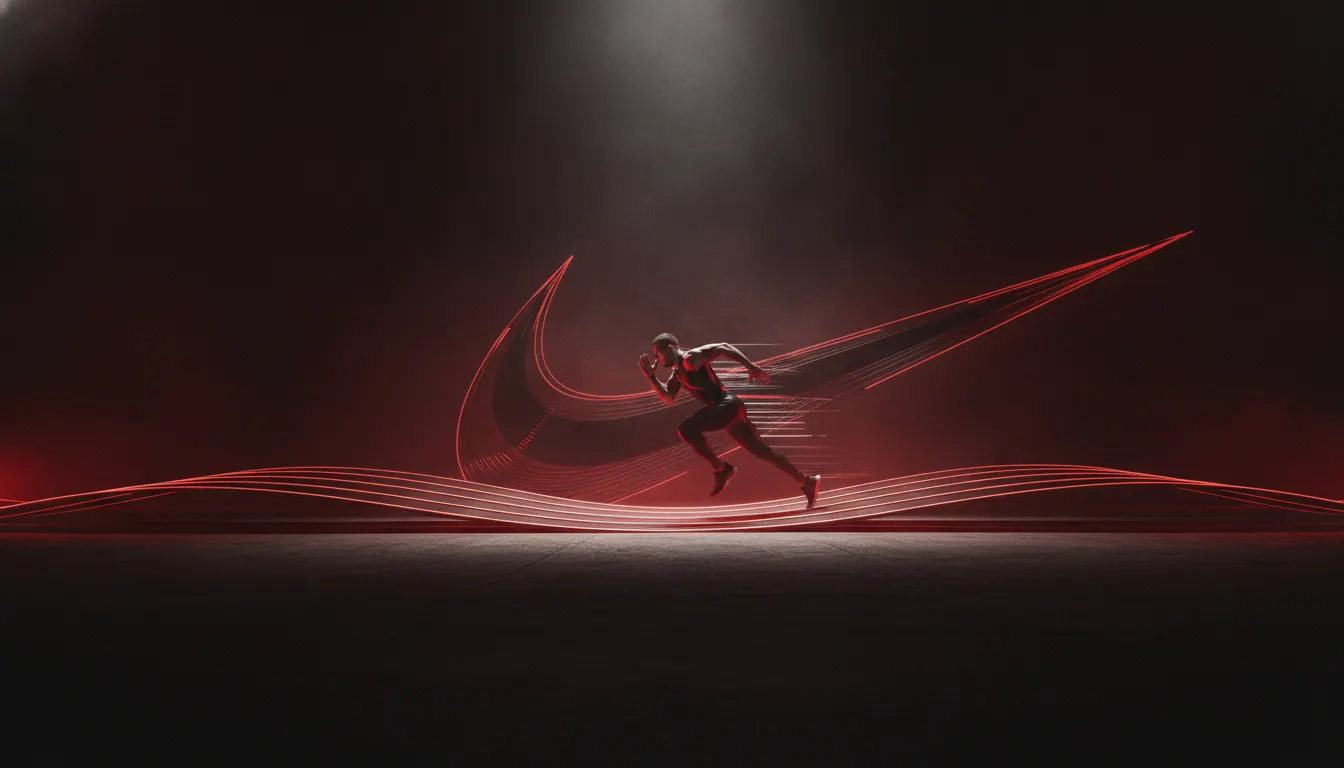
Athletic sports brand identity. Nike and Adidas lineage, bold italic sans, motion-blur action photography, swoosh-mark dynamism, deep black plus athlete-red.
The moves a human crew would use to get here. Cue applies them for you, and knowing their names is how you ask for a change.
Athletes captured at the moment of maximum physical exertion - the jump, the sprint, the swing - sharp against a blurred background.
Background and environment blurred by motion while the central figure remains sharp, creating a speed-in-place sensation.
Subjects lit with hard, directional light that reveals muscle definition and creates strong shadow detail against clean backgrounds.
Single words or short phrases set in heavy condensed sans-serifs (Helvetica Neue Condensed, Futura Bold, custom typefaces) at near-display scale.
Subjects, type, and graphic elements placed on diagonals that imply forward movement and imminent action.
Two or three vivid accent colors against black or white - Nike's red and white, Adidas's black and gold - applied consistently without competition.
High-frame-rate footage revealed in slow motion to show performance details - fabric tension, sweat, equipment deformation - invisible to the naked eye.
The sports brand visual language as it exists today was largely consolidated between the mid-1980s and the late 1990s, as Nike, Adidas, Reebok, and later Under Armour transformed athletic performance marketing from product-feature advertising into identity and aspiration advertising. The aesthetic is defined by kinetic energy, bold typography, compressed color palettes, and a visual rhetoric of effort, achievement, and transformation that borrows from action photography, graphic novel composition, and military visual culture.
Nike's 'Just Do It' campaign (1988), created by Wieden+Kennedy, established the template that every subsequent sports brand campaign has navigated: an athlete photographed in peak physical effort, minimal text, maximum graphic impact. The tagline contained no product mention; the image did all the work. Nike's visual identity - the Swoosh designed by Carolyn Davidson in 1971 for a $35 fee - became inseparable from this energetic aesthetic through decades of consistent application.
Adidas's Trefoil logo (designed by Rudi Dassler, 1972) and later the Three Stripes identity represented a more austere geometric approach that became its own brand of energy - the architectural boldness of parallel lines in motion. Adidas's Originals campaigns from the 1990s onward introduced a retro-athletic visual register that operated alongside the pure-performance aesthetic.
Jordan Brand (established 1984 within Nike, named for Michael Jordan) pushed the visual language toward cultural iconography: the Jumpman logo (derived from a photograph by Jacobus Rentmeester in 1984) became one of the most recognized athletic silhouettes in history. Jordan Brand advertising combined performance imagery with celebrity portraiture and street culture aesthetics.
Under Armour (founded 1996, major marketing push from 2003) introduced a darker, more militarized visual register: black and gray palettes, industrial textures, athletes photographed with low-key dramatic lighting against near-black backgrounds. Their 'Protect This House' campaign (2003) positioned sports performance as battle preparation.
The sports brand energetic look relies on several visual strategies: motion blur or freeze-frame photography that captures peak effort; bold typography in condensed sans-serif fonts at large scale; high contrast between figure and background; color palettes limited to two or three high-energy hues against black or white grounds; and compositional diagonals that imply momentum. Slow-motion video that reveals details invisible to normal perception - sweat droplets, muscle fiber engagement, fabric deformation - has become a standard documentary technique. Typography functions as a graphic element as much as a linguistic one: single words ('FASTER', 'FEARLESS', 'POWER') set at large scale create visual anchors.
From the 2010s onward, the sports brand energetic aesthetic migrated extensively into activewear fashion, fitness app visual design, and the direct-to-consumer athletic brand space with companies like Lululemon, Gymshark, and Peloton. Each adapted the core visual grammar to their specific demographic while maintaining the foundational principles of kinetic energy and aspirational transformation.
Wieden+Kennedy for Nike · 1988
The founding campaign of the aspirational sports brand visual language
Jacobus Rentmeester (photo) / Nike Design · 1984/1988
Michael Jordan silhouette that became the most recognized athletic iconography after the Swoosh
Carolyn Davidson · 1971
Logo designed for $35 that became the world's most recognized brand mark through sports marketing
Rudi Dassler / Adidas Design · 1972
Geometric stripe identity that defined a parallel energetic visual language
GS&P / Under Armour · 2003
Dark militarized performance aesthetic that expanded the genre's tonal range
Nike / Wieden+Kennedy · 2014
Animated World Cup campaign demonstrating sports brand energetic language in motion graphics
A Look is not a filter. It is a set of stored decisions the pipeline reads before it makes a single frame, so two videos in the same Look actually match.