Colour Code Press editions
Colour Code, Netherlands · 2000s-present
European riso studio whose artist edition prints defined the fine-art riso multiple
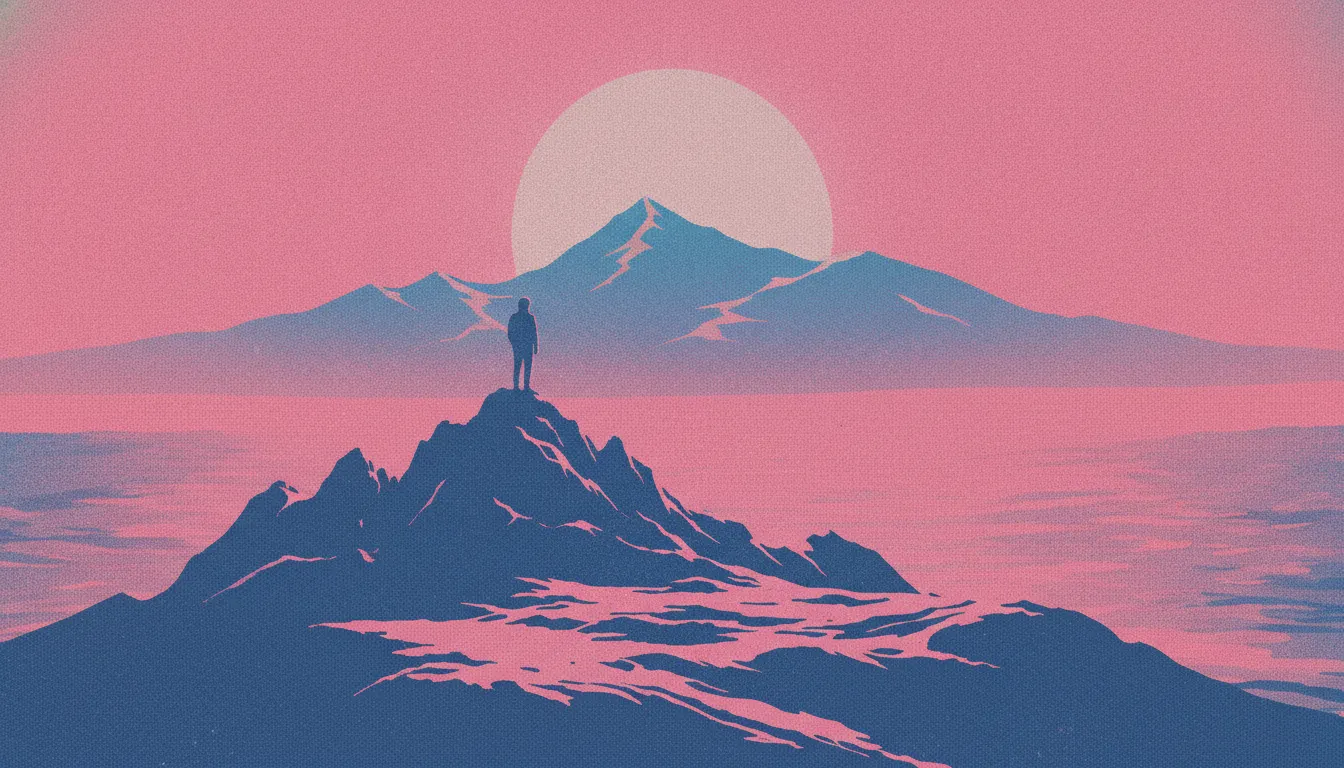
Risograph printed zine. Fluorescent pink and federal blue ink, registration drift, halftone grain, mimeograph-adjacent indie print revival.
The moves a human crew would use to get here. Cue applies them for you, and knowing their names is how you ask for a change.
Each color prints as a flat layer; where they overlap, they create an unexpected third hue through ink transparency.
The two ink layers are slightly offset from each other, creating a fringe or shadow effect at edges of color areas.
Tonal gradients are built from visible dots rather than continuous tone, at angles that avoid moiré with the other color.
Ink soaks into newsprint or uncoated text stock, softening edges and giving the print a matte, almost velvet surface.
Riso's fluorescent inks (fluro pink, orange, yellow) create hyper-vivid accents that are impossible to reproduce in CMYK.
Highlights clip to paper white and shadows clip to full ink density; no true photographic tonal range.
Risograph printing - the process that defines the riso zine aesthetic - emerged from Riso Kagaku Corporation's 1980 introduction of the GR-1700 duplicator in Japan. The machine was conceived as a low-cost, high-volume office duplicator, a replacement for spirit duplicators and cheaper than offset lithography. It used master stencils (digital from the mid-1990s onward) and soy-based ink in sealed drums, printing one color per pass at speeds of up to 130 pages per minute. The resulting prints showed a characteristic misregistration when multiple colors overlapped, ink transparency that allowed two colors to mix optically rather than physically, and a slight texture from the stencil mesh that no digital reproduction has fully captured.
Risograph's transformation from office equipment to art medium began in small-press and zine communities, particularly in Japan and Europe, during the 1990s. Print shops specializing in riso output - among the most influential was Colour Code in the Netherlands and Perfectly Acceptable Press in the United States - built communities of illustrators, comic artists, and zine makers who embraced the constraints of the process as aesthetic features. The misregistration became a register, not a mistake. The limited ink color range (fluorescent colors were introduced in the 2010s) became a palette discipline. The ink transparency and paper absorbency variation became texture.
By the 2010s, the aesthetic had migrated into digital illustration, where designers replicated riso effects using halftone dot patterns, deliberate color misregistration layers, and limited flat-color palettes. Procreate and Photoshop brush packs specifically replicating riso ink behavior became common commercial products.
Authentic riso printing is constrained to one or two colors per print run in most small-press contexts (three is possible but expensive and rare). Each color prints as a flat layer with no gradient; tonal variation is achieved through halftone dot screens at angles of 70-90 degrees rather than the 45-degree offset standard. The soy ink soaks into uncoated paper, producing a matte, slightly fuzzy edge. When two ink layers overlap, they create a third color optically - red over blue produces a brownish-purple, not a clean violet. This unpredictability is central to the aesthetic.
Zine format conventions reinforce the look: saddle-stitched or folded A5 or quarter-letter formats, uncoated newsprint or Munken Lynx paper, and covers that are the same paper stock as the interior, avoiding any glossy or laminated finish.
The riso zine exists at the intersection of underground comics, activist self-publishing, and fine-art multiples. Its community spans feminist and queer zine culture, indie game design, independent comics, poetry chapbooks, and limited-edition artist prints. The aesthetic signals handmade, community-produced, anti-commercial values even when the content itself is mainstream entertainment.
Colour Code, Netherlands · 2000s-present
European riso studio whose artist edition prints defined the fine-art riso multiple
Perfectly Acceptable, Columbus OH · 2010s
American riso publisher whose comics and zine editions built the US community
Riso Kagaku Corporation, Japan · 1980
The original machine whose soy-ink stencil printing created all the defining aesthetic characteristics
Various European illustrators · 2010s
Influential riso-printed illustration magazine circulated in European art school communities
Nobrow, London · 2008-present
Indie comics publisher using riso for covers and limited-edition prints, bridging art-book and zine markets
A Look is not a filter. It is a set of stored decisions the pipeline reads before it makes a single frame, so two videos in the same Look actually match.