MV GENRE ALT ROCK · 2005-2015 · USA
Paramore Pop Punk Saturated
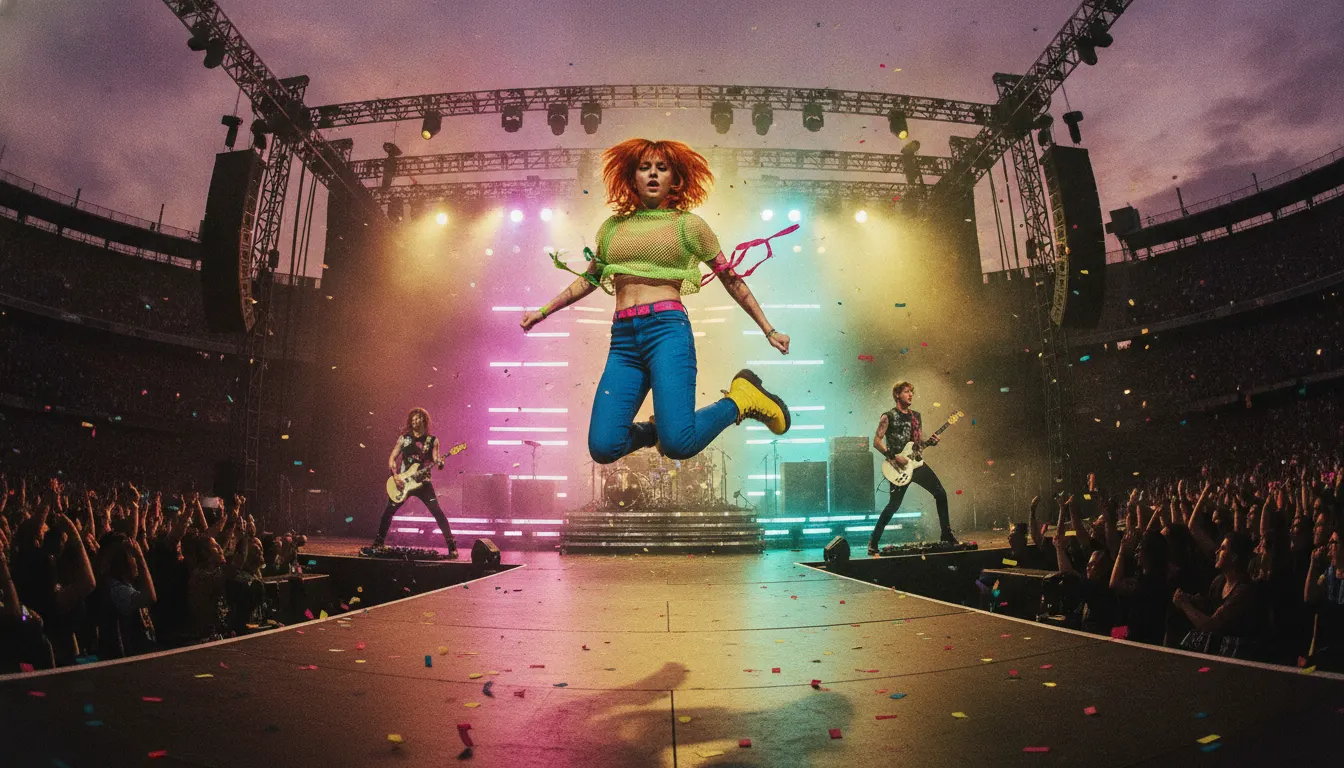
Paramore pop-punk saturated MV aesthetic. Hayley Williams orange-hair era, Riot and Brand New Eyes color-pop wardrobe, kinetic band-performance energy.
paramorepop-punkkinetichayley-williams
LUT paramore-orange-saturate
WHEN TO USE
- Pop-punk, emo, or alternative rock content that benefits from bright, high-energy visual treatment
- Content referencing mid-2000s alternative music culture for Gen Z and Millennial nostalgia
- Band or artist content that wants to emphasize performance energy and band chemistry over individual glamour
- Content for young adult audiences where bright color saturation and physical exuberance are appropriate
- Social media content using 2000s pop-punk as a nostalgic reference frame
- Content where Hayley Williams-era bright hair color and small-venue intimacy are the desired visual references
WHEN NOT TO USE
- Content that needs understated or minimalist visual treatment
- Music content from genres with different visual expectations (hip-hop, country, classical)
- Brand content in categories where the teenage-demographic association is a mismatch
- Content where the earnest sincerity of the aesthetic conflicts with an ironic or sophisticated tone
SIGNATURE TECHNIQUES
How the look is made.
The moves a human crew would use to get here. Cue applies them for you, and knowing their names is how you ask for a change.
- 01High saturation color grade with warm orange
pushed skin tones and bright primary accent colors
- 02Dyed hair as visual anchor
Williams-era red/orange against the band's darker palette
- 03Small
venue performance energy: low ceilings, close crowd, perspiration visible on performers
- 04Fast intercutting following drum pattern and guitar rhythm
edit becomes rhythm track visualization
- 05Low
angle heroic framing of vocalist and guitarists during chorus moments
- 06Handheld camera in crowd
adjacent positions for concert documentary energy
- 07Band chemistry framing
multi-person shots that show the group as unit rather than solo spotlight
- 08Jump cuts on repeated phrases creating staccato visual emphasis
HISTORY & CONTEXT
Where it comes from.
Paramore Pop Punk Saturated Aesthetic
Paramore arrived with their MTV breakthrough in 2007 with a visual identity that synthesized several strands of mid-2000s alternative music aesthetics: the theatrical emo energy of their Fueled by Ramen labelmates (Fall Out Boy, Panic! at the Disco), the saturated color exuberance of pop-punk, and the genuinely grassroots small-venue energy of a band that had toured relentlessly before their major-label debut. Hayley Williams' orange-and-red dyed hair against brightly saturated clothing in small venues created a color palette that became instantly iconic.
'Misery Business' (2007) and the Pop-Punk Moment
'Misery Business', the lead single from 'RIOT!' (2007), was directed by Marcos Siega, who had directed videos for Blink-182 and The Used and understood the grammar of post-hardcore performance video. The video is a pure performance clip: the band in a gymnasium or small venue setting, Williams in front of the rhythm section and guitar players, with the camera work emphasizing kinetic energy and band chemistry over narrative. The color grade is warm and saturated, skin tones are orange-leaning, and the edit follows the guitar rhythm's aggression.
The visual formula - bright hair, band performance, small venue energy, high saturation, fast cutting that follows the drum pattern - was consistent across Paramore's peak MTV period including 'Decode' (2008, Twilight soundtrack), 'Ignorance' (2009), and 'The Only Exception' (2009), which brought a softer aesthetic variant with its acoustic-inflected pallette and acoustic guitar intimacy.
Fueled by Ramen Visual Family
Paramore's aesthetic was part of a cohesive visual family across the Fueled by Ramen roster in the 2005-2010 period. Fall Out Boy's videos, directed by Matt Lenski and others, shared the mix of theatrical narrative ambition and band performance energy. Panic! at the Disco's early visual identity (Shane Drake directing) used the same period: Victorian theatrical staging that has more in common with My Chemical Romance's gothic emo than with Paramore's bright pop-punk energy, but occupies the same cultural moment and shares the irony-free sincerity as a common value.
The Visual Grammar of Pop-Punk Color
Pop-punk video aesthetics from this era share a specific color approach: saturation pushed well above photographic norms, warm-to-orange skin tones, bright primary or dyed-hair colors used as visual anchors, and a performance energy that values physical exuberance over composed glamour. The look is kinetic rather than static, democratic rather than aspirational.
NOTABLE WORKS
Where you have seen it.
Marcos Siega dir., Paramore 'Decode', 2008
Paramore 'Ignorance', 2009
Paramore 'The Only Exception', 2009 (softer acoustic variant)
Matt Lenski dir., Fall Out Boy 'Sugar We're Goin Down', 2005
Shane Drake dir., Panic! at the Disco 'I Write Sins Not Tragedies', 2005
Matt Lenski dir., Fall Out Boy 'This Ain't a Scene, It's an Arms Race', 2007
Marcos Siega dir., Blink-182 'What's My Age Again?', 1999 (pre-Paramore genre ancestor)
THE RECIPE
The exact knobs
the renderer turns.
A Look is not a filter. It is a set of stored decisions the pipeline reads before it makes a single frame, so two videos in the same Look actually match.
SettingValue
GradeColour LUT applied to every frame
paramore-orange-saturateTransitionHow one shot becomes the next
hard cuts · 90ms · linearKen BurnsCamera move applied to stills
Slow push · 0.035 · centerTypographyDisplay / body / mono pairing
Bebas Neue · Inter · JetBrains MonoMusic moodWhat the bed under the voice sounds like
pop-punk-power-chord · hayley-williams-vocal-beltPrompt suffixAppended to every shot prompt in this Look
Paramore pop punk saturated MV, Hayley Williams orange hair era, Riot Brand New Eyes color pop wardrobe, kinetic band performance energyPALETTE
Primary
#FF6600
Secondary
#1A1A1A
Accent
#F0F0E8
Text/Light
#1F0808
Text/Dark
#FFF1E8
BG 900
#0A0405
BG 800
#1F0808
RELATED LOOKS
Next to it on the shelf.
Your first cut
is on us.
+ New videoFree plan · no card · 1080p export