CLAYMATION · CONTEMPORARY · UK
Aardman Shaun the Sheep Modern
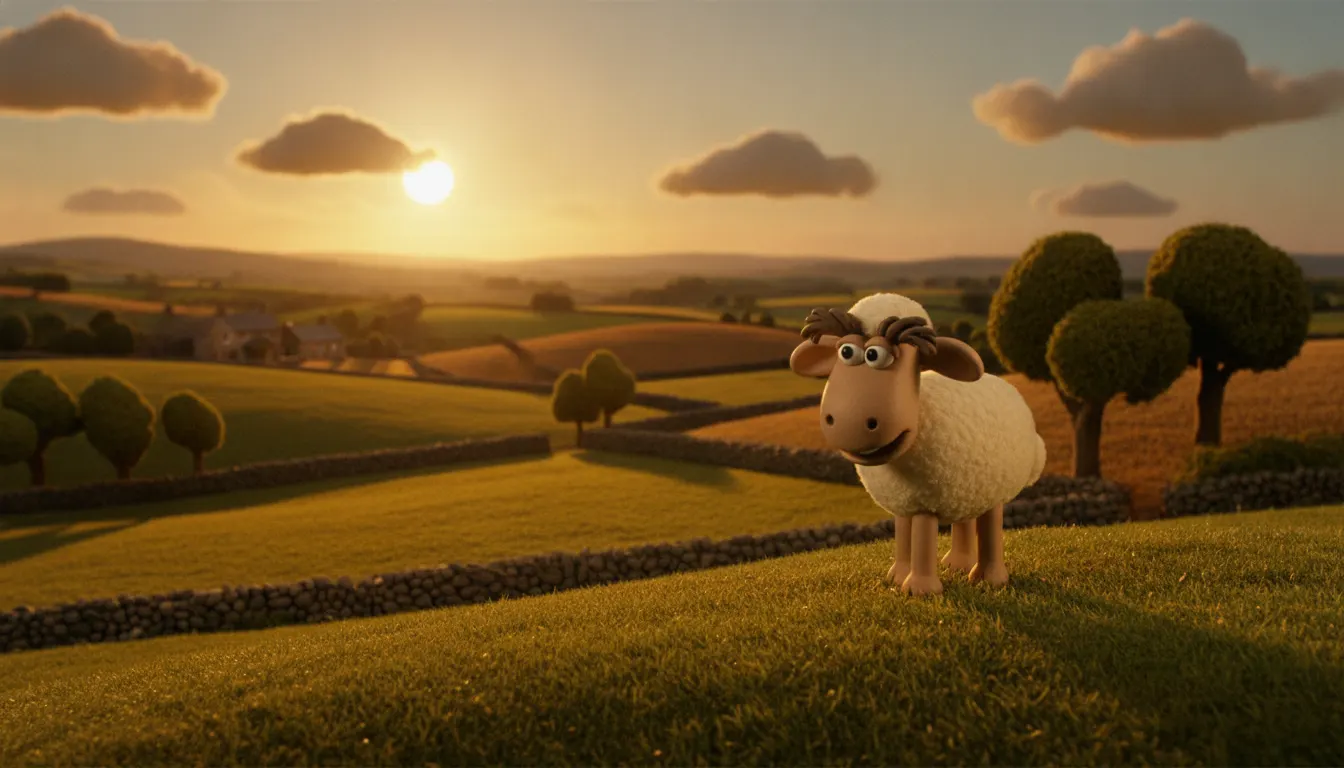
Aardman Shaun the Sheep dialogue-free claymation. Pastoral British countryside, expressive eyebrows on plasticine sheep, silent-movie comic timing.
claymationpastoralsilent-comedybritish
LUT aardman-pastoral-green
WHEN TO USE
- Content that needs universal appeal across language barriers -- the dialogue-free format translates globally
- Warm, gentle brand content for family or children's audiences
- Comedy relying on physical performance and mime rather than spoken humour
- Rural, pastoral, or agricultural brand storytelling with artisanal warmth
- Social media content where character-driven silent comedy works without sound
- Campaigns celebrating simplicity, craft, and the pleasure of small everyday moments
WHEN NOT TO USE
- Content that requires complex verbal explanation or information-dense storytelling
- Urban, tech, or sophisticated adult contexts where the pastoral simplicity feels out of register
- Action-heavy content -- the Shaun aesthetic is gentle, observational, and slow-paced
- Brands that need to signal cutting-edge modernity rather than handcrafted tradition
SIGNATURE TECHNIQUES
How the look is made.
The moves a human crew would use to get here. Cue applies them for you, and knowing their names is how you ask for a change.
- 01Radically simplified character design
minimal facial features with maximum eye expressiveness
- 02Entirely dialogue
free storytelling relying on physical performance and pantomime
- 03Warm, soft English countryside palette
mossy green, grey stone, amber hay
- 04Plasticine surface texture maintained even as 3D printing is incorporated for production efficiency
- 05Ensemble physical comedy with ensemble farm animal characters
- 06Tight physical comedy timing calibrated for children and adult audiences simultaneously
- 07Silent
film tradition references: Chaplin, Keaton, and Tati as structural and comedic models
HISTORY & CONTEXT
Where it comes from.
Aardman Shaun the Sheep Modern Look
Shaun the Sheep began as a recurring background character in the 1995 Wallace & Gromit short A Close Shave, created by Nick Park. The character's solo series launched in 2007, produced by Aardman Animations for the BBC, and quickly became one of the most internationally successful children's programmes ever made. The series is entirely dialogue-free, relying on physical performance, mime, and Aardman's refined stop-motion craft to tell stories across every episode.
The Simplicity Principle
Shaun the Sheep operates on a visual simplicity that is more radical than it might first appear. The character design is deliberately minimal: Shaun himself is essentially a white wool sphere with black legs, a black face, and two expressive eyes. This reduction to essentials is a deliberate design philosophy that maximises expressiveness through the eyes and body language rather than facial complexity.
Silent Comedy Tradition
By stripping out dialogue entirely, Shaun the Sheep places itself in the tradition of Buster Keaton, Charlie Chaplin, and Jacques Tati. Every narrative beat must be communicated through physical performance and environment, which disciplines the animation team to make every movement count. The Farmageddon film (2019, dir. Will Becher / Richard Phelan) expanded this into feature territory with the same dialogue-free approach.
Palette and Environment
Mossy Hill Farm is rendered in a warm, slightly desaturated English countryside palette: soft green fields, grey stone walls, amber hay bales, and the warm terracotta of the farmhouse. The colour temperature is gentle and domestic, never garish.
Contemporary Stop-Motion Craft
The series has evolved technically since 2007. Later series and both feature films incorporate 3D-printed replacement parts for finer animation control, but the plasticine surface aesthetic and handmade look are maintained throughout as a deliberate identity choice.
NOTABLE WORKS
Where you have seen it.
Shaun the Sheep Movie (2015, dir. Mark Burton / Richard Starzak, Aardman / Lionsgate)
A Shaun the Sheep Movie: Farmageddon (2019, dir. Will Becher / Richard Phelan)
Wallace & Gromit: A Close Shave (1995, dir. Nick Park, Shaun's debut)
Timmy Time (2009, Aardman spin-off for pre-school audiences)
Creature Comforts (1989, dir. Nick Park, foundational Aardman voice)
THE RECIPE
The exact knobs
the renderer turns.
A Look is not a filter. It is a set of stored decisions the pipeline reads before it makes a single frame, so two videos in the same Look actually match.
SettingValue
GradeColour LUT applied to every frame
aardman-pastoral-greenTransitionHow one shot becomes the next
soft cuts · 200ms · ease-in-outKen BurnsCamera move applied to stills
Slow push · 0.025 · centerTypographyDisplay / body / mono pairing
Cooper Hewitt · Lora · CourierMusic moodWhat the bed under the voice sounds like
banjo-pastoral · whistle-folk-tunePrompt suffixAppended to every shot prompt in this Look
Aardman Shaun the Sheep claymation, dialogue-free pastoral comedy, plasticine sheep puppet expressive eyebrows, British countryside, stop motionPALETTE
Primary
#7AA053
Secondary
#4A6033
Accent
#F5F1E8
Text/Light
#1A2410
Text/Dark
#F5F1E8
BG 900
#0F1808
BG 800
#1F2A14
RELATED LOOKS
Next to it on the shelf.
Your first cut
is on us.
+ New videoFree plan · no card · 1080p export