Glamour Shots franchise
600+ US mall locations at peak, 1988-mid 2000s
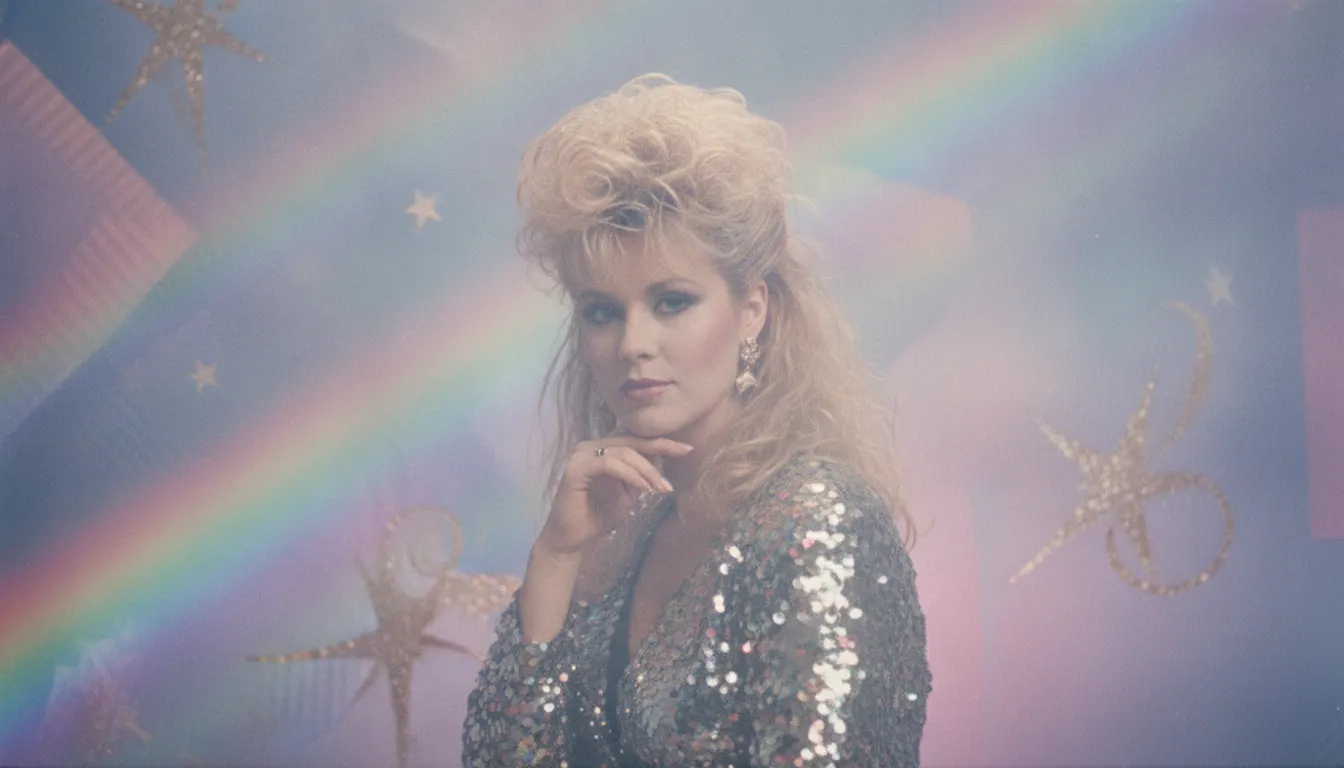
Mall-studio glamour-portrait makeover session. Soft-focus rainbow gel, big-hair perm, sequin top, hand-on-chin pose, hand-tinted print finish.
The moves a human crew would use to get here. Cue applies them for you, and knowing their names is how you ask for a change.
Mist, Tiffen, or petroleum-jelly soft-focus effect creating warm halation
pink, lavender, peach, or warm purple gradient on painted paper
frosted eye shadow, blush contouring, strong lip, maximum mascara
Glamour Shots was the premier American mall portrait photography franchise of the 1990s, founded in 1988 and reaching over 600 locations at its peak. The concept was simple and revolutionary for mass-market photography: offer every customer a full professional makeover followed by a flattering, stylized portrait session that promised to make anyone look like a magazine cover model. The resulting aesthetic became one of the most recognizable and culturally loaded visual styles in American consumer culture.
Every Glamour Shots session began with a studio makeup consultation: contouring with heavy foundation, frosted eye shadow (pinks, purples, copper tones), bold lip color, and careful false eyelash or mascara application. Customers brought their own clothes or chose from the studio's wardrobe options: off-shoulder tops, sheer fabric, leather jackets. Then came the studio's defining props - the signature pink or white feather boa, rhinestone jewelry, scarves - arranged by a photographer's assistant before the shoot began.
Glamour Shots photographers worked with portrait lenses equipped with heavy soft-focus attachments - typically a Pro-Mist or Tiffen soft filter - and strong frontal lighting from a large softbox positioned to minimize facial shadows entirely. Backgrounds were mottled pastels (pink, peach, purple, lavender) or blue-gray gradients. Prints were often retouched to further reduce skin texture. The overall effect: a warm, glowing, borderline-ethereal portrait that bore a calculated resemblance to the airbrushed glamour of Hollywood publicity photographs.
Glamour Shots' peak coincided with the height of American mall culture and the VHS home video era. The portraits appeared in households across every economic stratum - a democratic access to glamour previously available only to celebrities with professional publicists and photographers. The franchise's implicit promise was that the customer was, underneath everyday circumstances, as beautiful as a star.
By the mid-2000s, Glamour Shots had declined sharply as digital photography and smartphones democratized self-image in ways that made the format feel both redundant and faintly absurd. But the aesthetic has enjoyed sustained ironic and nostalgic revival in the social media era, celebrated as a capsule of a uniquely specific moment in American consumer culture.
600+ US mall locations at peak, 1988-mid 2000s
parallel consumer soft-portrait tradition, 1932-2018
similar mall-based soft portrait format, 1990s-2000s
documented Glamour Shots mall sessions as cultural artifact photography project (2010s)
A Look is not a filter. It is a set of stored decisions the pipeline reads before it makes a single frame, so two videos in the same Look actually match.