Lifetouch National School Studios
annual school portraits, 1936-present (merged with Shutterfly 2018)
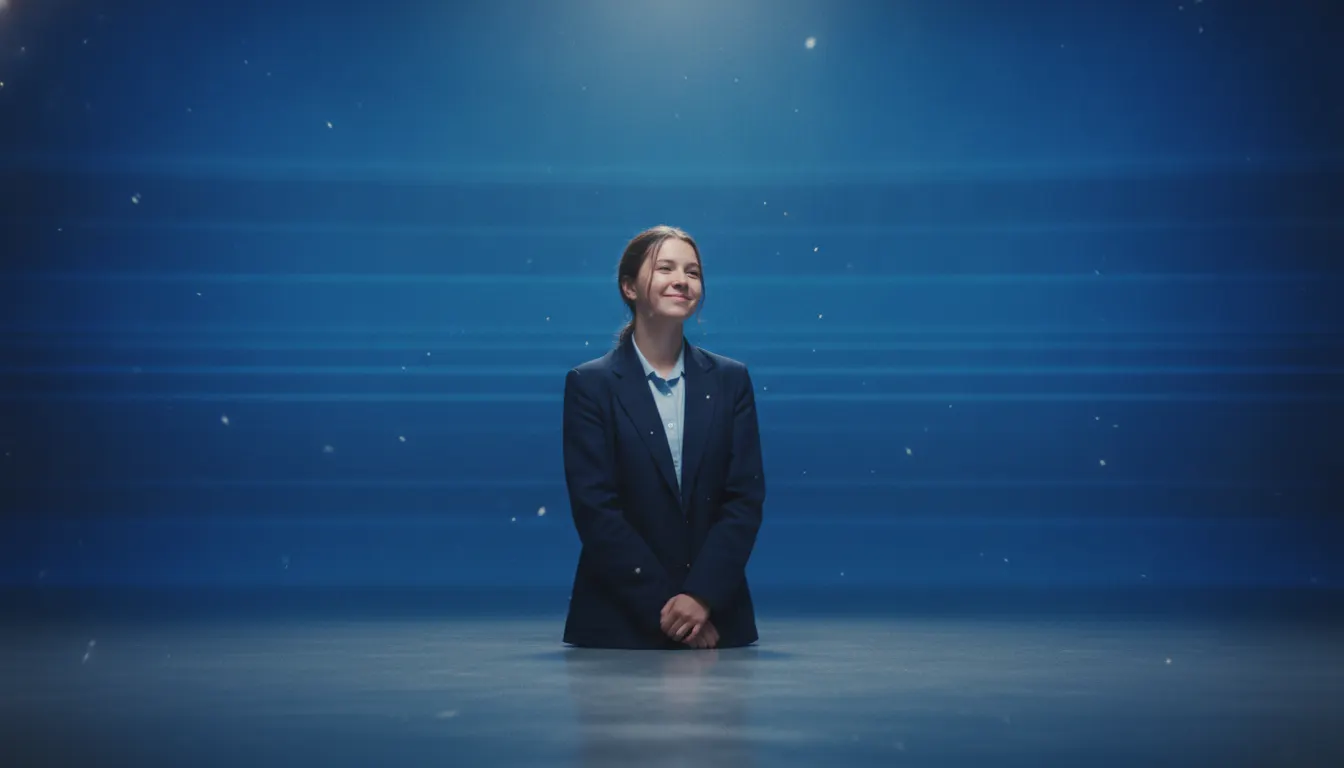
Classic K-12 school photo. Lifetouch laser-blue gradient backdrop, soft butterfly key, pinned smile, tilted head, photo-day uniform.
The moves a human crew would use to get here. Cue applies them for you, and knowing their names is how you ask for a change.
gray mottled gradient background on painted paper or fabric, lit separately
quarter turn body position with head turned back to camera - the universally recognized school pose
light setup: key light at 45 degrees high, fill card or second strobe on the opposite side
105mm portrait focal length
some studios provided a 'clothing changer' tool to standardize collars
school name, year, photographer watermark in a corner
The formal school portrait with a blue mottled or gradient background is one of the most universally recognized photographic formats in American culture. Nearly every American born between the 1950s and the 2000s has a version of this photograph in a school yearbook or family album - the slightly stiff pose, the comb-mark still visible in the hair, the blue or blue-gray mottled gradient background, the school logo or class year printed in the corner.
Lifetouch, founded in 1936 (originally National School Studios), became the dominant provider of school portrait photography in the United States, operating in tens of thousands of schools annually. Lifetouch's standardized approach - portable studio equipment trucked to gymnasiums and cafeterias, rapid assembly-line shooting with a professional and an assistant, standardized poses and backgrounds - created the template. Olan Mills, a parallel company founded in 1932, served similar markets through both school contracts and mall portrait studios.
The blue mottled or gradient background is so strongly associated with school portraiture that it has become a cultural shorthand. The color emerged partly from photographic technical requirements (blue-gray backgrounds photographed well with daylight-balanced studio flash on color negative film) and partly from Lifetouch's standardization, which made one color synonymous with the format. Green and black mottled backgrounds existed but blue dominated, particularly from the 1970s through the 1990s.
School portrait photography is optimized for throughput and reliability over individual creativity. Portable strobes (typically a key light and a fill, sometimes a background light) provide controlled, repeatable exposure. The camera position and subject distance are fixed; subjects are directed into a standardized three-quarter-turn seated pose with eye contact to camera, chin down. The entire session per student takes under two minutes.
The school portrait aesthetic has become a subject of nostalgic affection and ironic reference in contemporary visual culture. Artists including Dave Jordano and Dawoud Bey have used the school portrait format as a starting point for more complex explorations of youth, identity, and social documentation.
annual school portraits, 1936-present (merged with Shutterfly 2018)
portrait studio school and family photography, 1932-2018
*Class Pictures* (2006, Aperture), large-format school portrait project across US high schools
Detroit school portraiture documentation (2010s)
A Look is not a filter. It is a set of stored decisions the pipeline reads before it makes a single frame, so two videos in the same Look actually match.