Samoan ceremonial siapo, Bishop Museum collection
Various Samoan women artisans · 19th-20th century
Major collection in Honolulu; documents the full range of siapo pattern types and regional variation
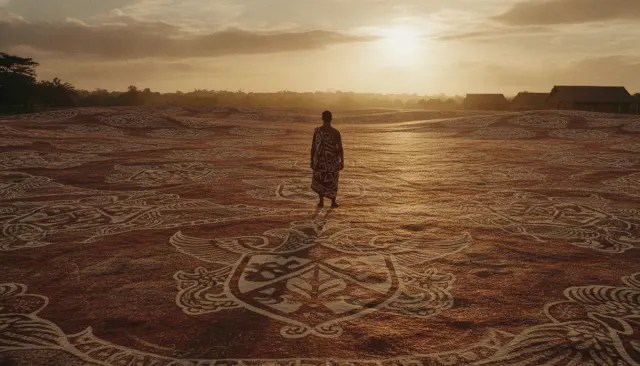
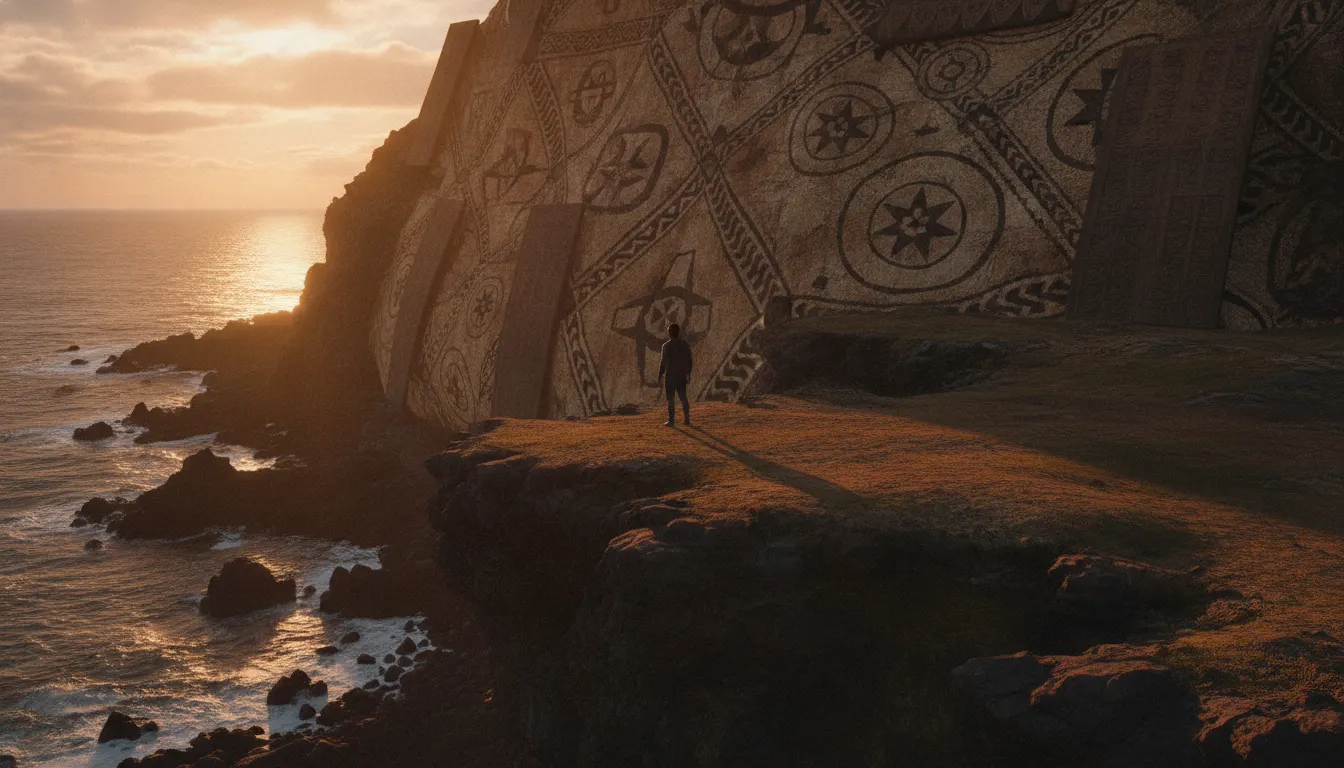
Honoring the craft of Samoan siapo tapa cloth, beaten bark stamped with carved upeti boards. Geometric rhomb and star motifs in earth-pigment brown, black, and bone.
The moves a human crew would use to get here. Cue applies them for you, and knowing their names is how you ask for a change.
Cloth is beaten from u'a (paper mulberry) inner bark into a cream-coloured felted sheet; the natural tone is the ground colour.
Carved hardwood or woven coconut-leaf pattern tablets are placed under cloth; dye is rubbed across to transfer the geometric design.
Lama (candlenut) bark decoction produces rich brown tones from tan to near-black depending on concentration.
Interlocked Z-shapes, stepped diamonds, cross forms, and chevrons repeat in bilateral or rotational symmetry.
After rubbing establishes the base pattern, freehand brushwork refines borders, adds density, and introduces compositional variation.
Presentation pieces span several metres in length, with pattern modules scaled to remain legible at full ceremonial display.
Siapo is the Samoan term for tapa cloth - barkcloth made from the beaten inner bark of the paper mulberry tree (Broussonetia papyrifera, called u'a in Samoan). Across Polynesia tapa-making is a foundational craft, but each island group has developed distinct visual traditions; Samoan siapo is distinguished by its geometric precision, rich brown-on-cream palette, and the integration of two technique modes: siapo mamanu (freehand painted) and siapo tasina (rubbing over carved or woven pattern boards).
Strips of u'a inner bark are soaked, beaten with a wooden mallet (ike) on a flat board until thin and fibrous, then felted together by further beating and natural starch bonding into larger sheets. Multiple layers are laminated for thickness and durability. The resulting white or cream-coloured cloth is painted using a brush made from pandanus leaf or coconut midrib, dipped in dye made from Samoan candlenut (lama) bark for rich brown tones, or from turmeric for golden yellow.
The siapo tasina technique uses carved hardwood tablets or woven coconut-leaf pattern boards (upeti) placed under the cloth; the painter rubs a dye-loaded pad across the surface, transferring the raised pattern. Freehand additions refine and extend the transferred geometry.
Samoan siapo geometry centres on repeating rectilinear modules - interlocked Z-shapes, stepped diamonds, cross forms, and chevrons - arranged in bilateral or rotational symmetry across the cloth surface. Brown tones range from tan to near-black depending on dye concentration. The ground remains the natural cream of the bark. Unlike Tongan ngatu (which uses angular figurative elements), siapo tends toward pure abstraction; figurative imagery is rare in the traditional canon. Large ceremonial siapo can exceed several metres in length and serve as wealth objects, gift exchange items, and ceremonial floor coverings at fa'alavelave (communal obligations including weddings, funerals, and title ceremonies).
Siapo production is traditionally women's work, and the knowledge of pattern grammar is passed mother-to-daughter. In the context of the fa'asamoa (the Samoan way), siapo represents both economic value and cultural identity - gifting a large siapo signals respect, status, and social obligation. Contemporary Samoan artists including Fatu Feu'u and Samoa-based practitioners have incorporated siapo geometry into painting, printmaking, and digital design.
Various Samoan women artisans · 19th-20th century
Major collection in Honolulu; documents the full range of siapo pattern types and regional variation
Various · 19th-20th century
Extensive Pacific collection including large-format ceremonial siapo from Western Samoa and American Samoa
Fatu Feu'u (Samoa/New Zealand) · 1980s-present
Major Samoan-New Zealand artist who translates siapo pattern vocabulary into large-format oil painting
Pitt Rivers Museum, Oxford · 2007
Documented contemporary and historical siapo production in ecological and cultural context
Various Pacific Island artisans · ongoing
Wellington museum holds one of the strongest comparative Pacific tapa collections
Institutional · ongoing
Active preservation and transmission programme for siapo-making techniques
A Look is not a filter. It is a set of stored decisions the pipeline reads before it makes a single frame, so two videos in the same Look actually match.