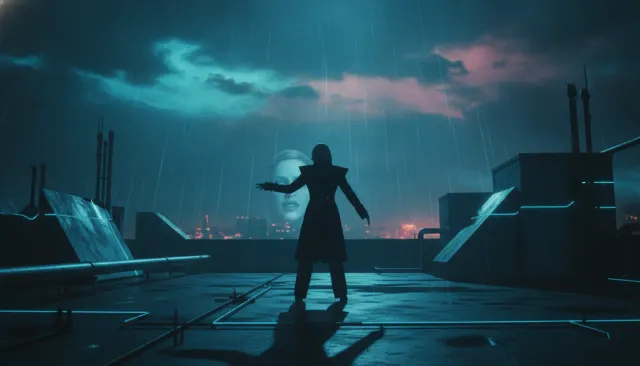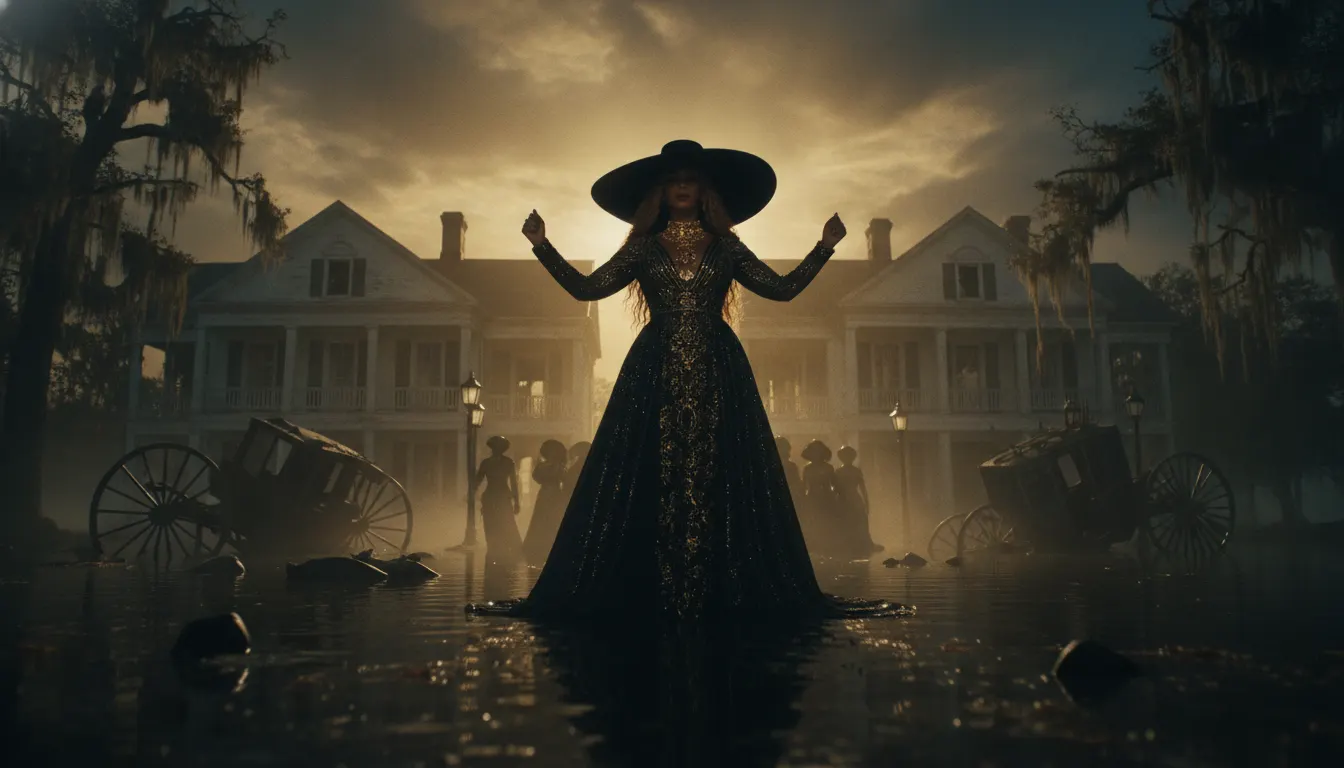
Beyoncé
Formation (2016, dir. Melina Matsoukas)
Beyonce Formation 2016 bold MV aesthetic. Melina Matsoukas direction, New Orleans cultural imagery, gold-and-black power palette, southern Gothic Lemonade visual album lineage.
The moves a human crew would use to get here. Cue applies them for you, and knowing their names is how you ask for a change.
contrast color science: saturated highlights, crushed blacks, deep shadow compression with cinematic color grading
specific Southern Black costuming (Victorian-inflected gowns, marching band uniforms, second-line regalia) against decayed or industrial environments
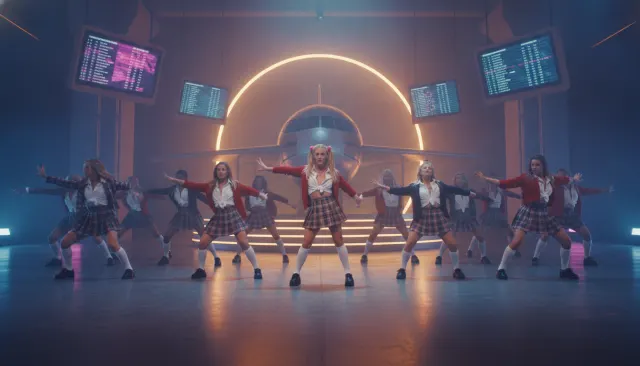
motion dance sequences shot at 120fps+ with dancers in extreme precision formation
style inserts - home video, news footage, archival imagery - cut against high-production scenes
New Orleans plantation facades, shotgun houses, flooded streets
angle ground-level camera looking up at performers to convey power and scale
line parade cultural choreography (Big Freedia, drill teams) used as visual anchor
Formation (2016) is the most politically loaded and visually dense music video of the 2010s, a five-minute visual essay by director Melina Matsoukas that weaponized Southern Black culture, New Orleans Mardi Gras tradition, and the visual language of protest into an unmistakable aesthetic manifesto. Its release the day before Beyoncé's Super Bowl 50 halftime performance made it a cultural flashpoint, but its visual craft made it a lasting reference for directors and brands working in bold, culturally specific, high-contrast imagery.
Melina Matsoukas had already established herself as one of the foremost music video directors in the industry before Formation - her work includes Rihanna's We Found Love (2011), Birthday Cake (2012), and Beyoncé's own Drunk in Love (2013). But Formation was her masterwork.
The video was shot primarily in New Orleans, centering on imagery of Black Southern culture - second-line parade dancers, Big Freedia, plantation houses, NOPD squad cars - and cutting between past and present, celebration and mourning, in a way that directly invoked the legacy of Hurricane Katrina and police violence against Black communities. The image of Beyoncé atop a sinking police cruiser became an international icon.
Matsoukas's visual grammar in Formation uses extreme contrast: bright white against deep black, elaborate Victorian-inflected costuming against industrial or ruined environments, slow-motion choreography of drill-team precision against news-footage urgency. Cinematographer Malik Hassan Sayeed brought a saturated but desaturated-in-shadows color science that makes the video feel simultaneously documentary and painterly.
Formation was the lead single for Lemonade (2016), the visual album directed by Matsoukas, Kahlil Joseph, Beyoncé herself, and others. The full album extended the vocabulary: Jonas Åkerlund's Holding Up sequence, the country-inflected Daddy Lessons imagery, and Kahlil Joseph's deeply personal Black domestic imagery together constitute the 2010s visual-album grammar that every subsequent artist (Frank Ocean, Childish Gambino, Taylor Swift) has referenced.
Formation (2016, dir. Melina Matsoukas)
Lemonade visual album (2016, dirs. Matsoukas, Kahlil Joseph, Jonas Åkerlund, Beyoncé)
Hold Up (2016, dir. Kahlil Joseph)
Drunk in Love (2013, dir. Melina Matsoukas)
We Found Love (2011, dir. Melina Matsoukas)
Alright (2015, dir. Colin Tilley) - adjacent grammar
This Is America (2018, dir. Hiro Murai)
Django Jane (2018, dir. Andrew Donoho)
A Look is not a filter. It is a set of stored decisions the pipeline reads before it makes a single frame, so two videos in the same Look actually match.