Naruto: Ultimate Ninja Storm
2008
CyberConnect2/Bandai Namco; PS3 debut
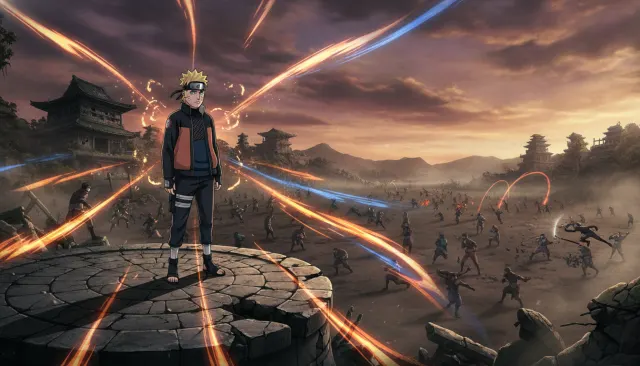
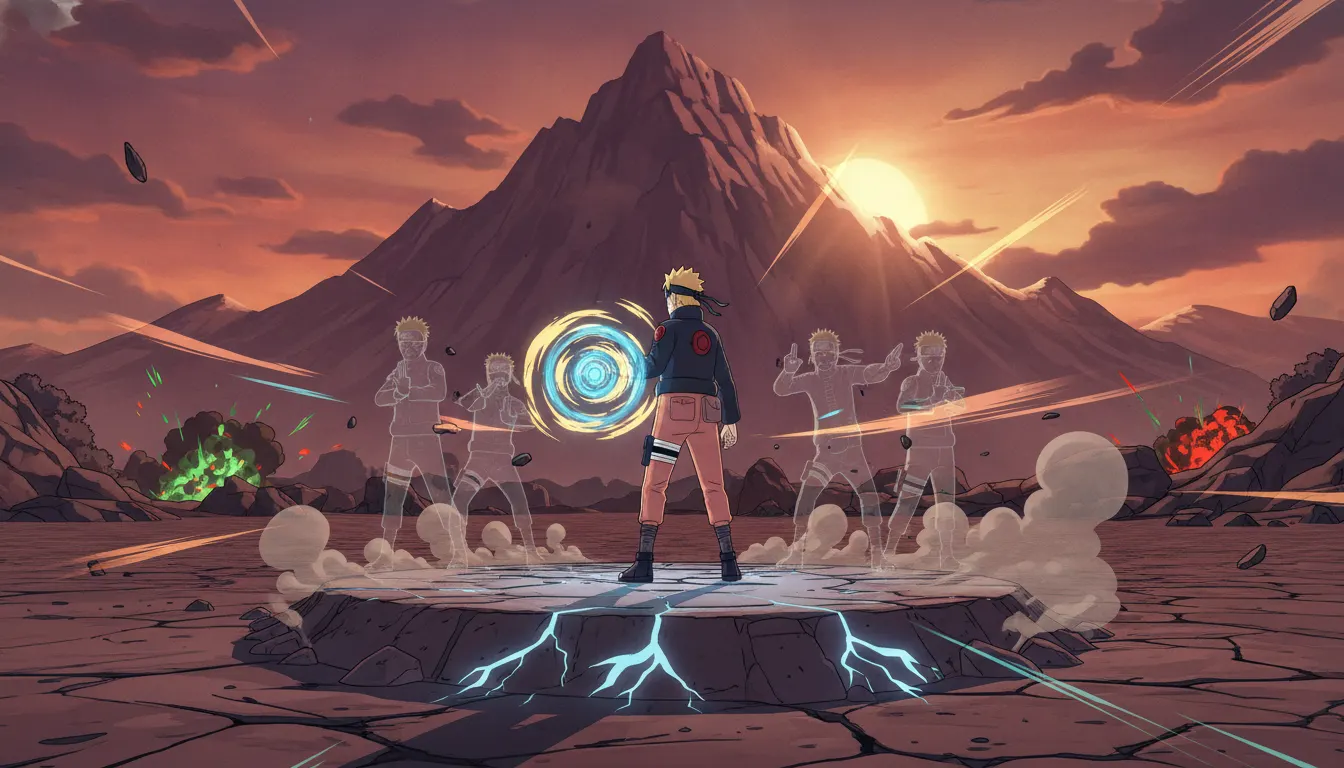
Naruto Ultimate Ninja Storm cel-shaded. Anime-faithful 3D, jutsu energy effects, Shonen-camera dynamic angles.
The moves a human crew would use to get here. Cue applies them for you, and knowing their names is how you ask for a change.
threshold toon shading with two-tone flat diffuse stepping matching source anime palettes
accurate character proportions and color extracted from Studio Pierrot reference frames
of-field blur for cinematic parallax between character and environment layers
blue (normal), red/orange (tailed-beast), purple (Sharingan)
The Naruto: Ultimate Ninja Storm series, developed by CyberConnect2 and published by Bandai Namco between 2008 and 2017, represents the gold standard of anime-to-game visual fidelity through cel shading. Where most 3D anime adaptations compromise source material accuracy for technical feasibility, the Storm series engineered a rendering pipeline specifically to reproduce Masashi Kishimoto's character designs and Pierrot's anime color palettes in real-time 3D.
The series used hard-threshold toon shading with ink outlines derived from edge detection on the depth and normal buffers. The outline weights vary by distance: close character geometry carries thick outlines evocative of Kishimoto's pen work, while background geometry uses thinner lines to preserve depth. Diffuse shading uses two-tone stepping (shadowed and lit) with anime-accurate flat color palettes extracted directly from the Studio Pierrot animation.
Naruto: Ultimate Ninja Storm (2008, PS3) was the series debut and remains notable for its visual quality on release - the Konoha Village environment rendered in toon-shaded 3D with background depth-of-field blurring was frequently cited as the most convincing anime-to-game transfer seen to that point. Naruto Shippuden: Ultimate Ninja Storm 4 (2016) added dynamic cloth simulation and particle systems for jutsu effects that reproduced signature attacks (Rasengan, Chidori, tailed-beast transformations) at a fidelity that matched or exceeded the anime's key animation sequences.
The Storm series' jutsu visual effects became a design benchmark for anime game combat. Rasengan's spinning blue energy sphere, Sasuke's Chidori lightning wrap, and the Nine-Tails chakra cloak all use layered particle systems with anime-accurate color gradients: vibrant chromatic saturation, additive glow compositing, and motion-trailed debris. The series established viewer expectations for how anime power sequences should translate into interactive media.
CyberConnect2's work directly influenced the broader anime fighting game genre. Arc System Works cited the Storm series as a competitive benchmark when developing Dragon Ball FighterZ (2018) and Guilty Gear Strive (2021), both of which pursued their own versions of 3D-lit-as-2D rendering. The distinction is that Storm prioritizes model accuracy - preserving Kishimoto's proportions precisely - while Arc System Works optimizes for animation fluidity and hand-drawn illusion. Together these two studios defined the poles of the anime game aesthetic spectrum in the 2010s.
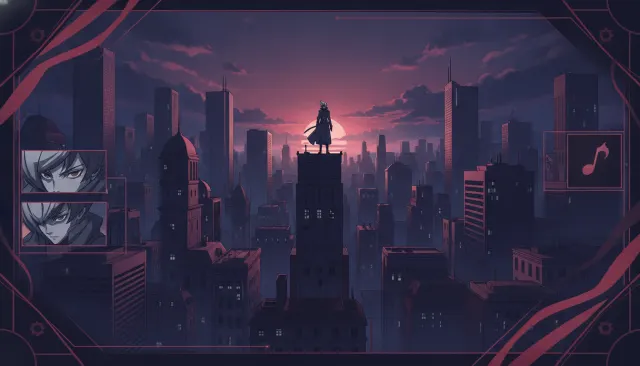
The series also pioneered the use of manga-panel freeze frames - a sequence pausing mid-action with halftone dot overlays and bordered panel composition - as a transition technique that has since appeared in multiple anime games as a signature moment device.
2008
CyberConnect2/Bandai Namco; PS3 debut
2010
CyberConnect2; expanded world roster
2013
CyberConnect2; five-kage summit and Fourth War arcs
2016
CyberConnect2; final arc and cloth simulation upgrade
2014
CyberConnect2; tournament and team combination moves
2018
Arc System Works; related anime cel-shading benchmark in fighting games
A Look is not a filter. It is a set of stored decisions the pipeline reads before it makes a single frame, so two videos in the same Look actually match.