The Mitchells vs. the Machines
2021
Sony Pictures Animation, Mike Rianda/Lord Miller
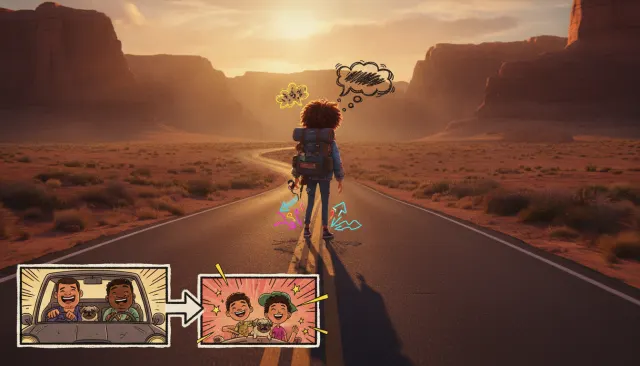
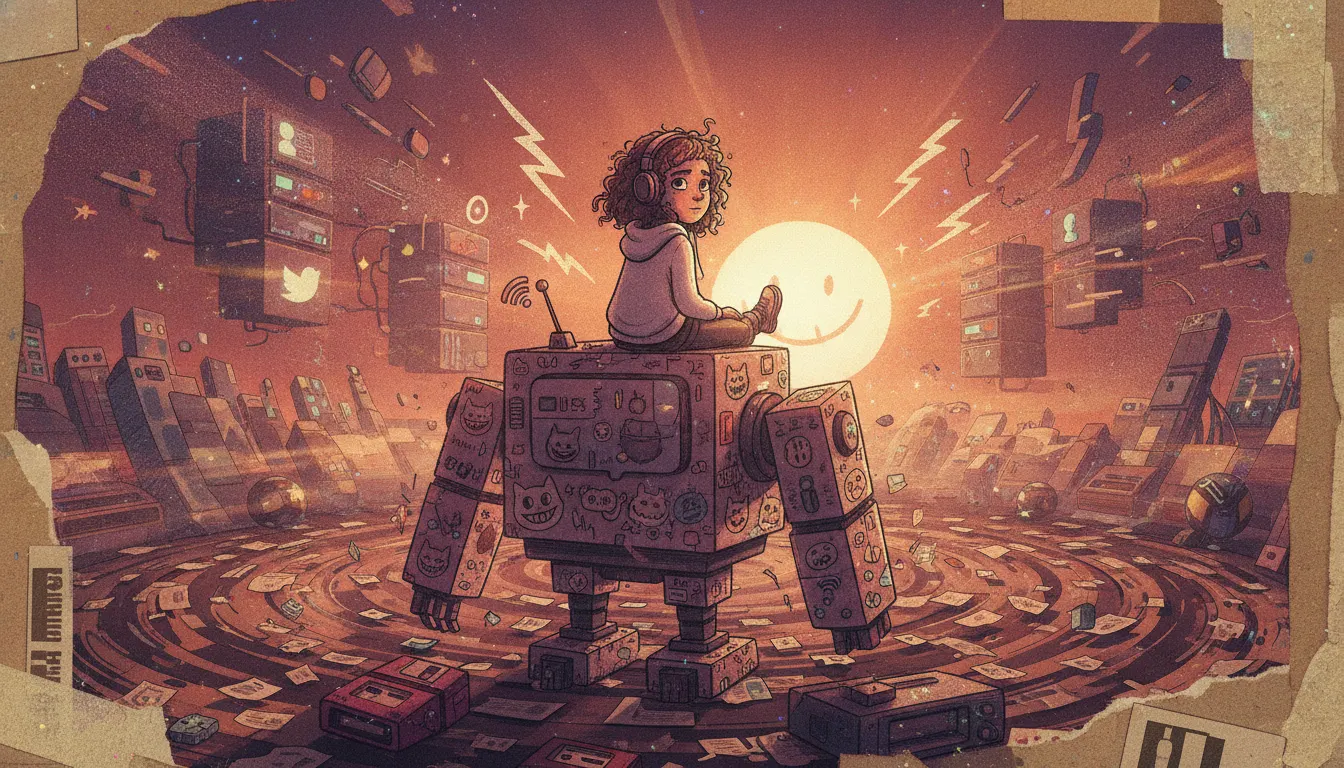
Sony Mitchells vs the Machines comic-doodle hybrid 3D. Hand-drawn 2D doodles over 3D models, scrapbook texture, kinetic millennial-internet humor.
The moves a human crew would use to get here. Cue applies them for you, and knowing their names is how you ask for a change.
specific annotation languages: Katie's filmmaking references, Aaron's animal obsession
photograph color grading on the 3D layer, evocative of consumer camera white balance
layer punctuation (stars, impact marks, motion lines)
bubble and internal-monologue sequences rendered as 2D handmade short films within the film
driven sticker overlays on antagonists that reframe villain scenes as absurdist comedy
Where the mitchells-vs-machines-comic look focuses on the overlay layer, the comic-3D hybrid look addresses the entire visual system of The Mitchells vs. the Machines (2021) - the interplay between the sophisticated Sony Pictures Imageworks 3D rendering and the 2D overlay art that personalizes every frame.
Sony Pictures Imageworks developed the 3D layer using an approach that deliberately subverts technical perfection. The rendering is intentionally 'impure' by studio standards: lighting is warm and slightly exaggerated rather than physically accurate, character proportions are pushed toward caricature, and surfaces carry a slight softness that prevents the plastic-hyper-real quality of early Pixar and DreamWorks contemporaries.
Production designer Lindsey Olivares cited the visual grammar of personal family photographs and home videos as a reference - the 3D world should feel observed rather than constructed, even though every element is fully synthetic. This contrasts with Pixar's typical approach, where technical perfection is itself the aesthetic achievement.
The 2D overlay layer, developed by 2D effects artists working alongside the Imageworks rendering team, is not a post-process effect but a parallel production track. Sticker frames, doodle annotations, and thought-bubble sequences were designed per-scene and rendered at matching resolution, then composited with knowledge of what the 3D layer would show. This is fundamentally different from simply drawing over finished frames - the two layers are designed to interact.
Director Mike Rianda (who also voices Aaron Mitchell) developed the aesthetic with producer Phil Lord and co-director Jeff Rowe, extending the visual experimentation Lord and Miller had pioneered in The LEGO Movie (2014) and Spider-Man: Into the Spider-Verse (2018). The Mitchells aesthetic takes the Spider-Verse principle - that animation style should reflect character psychology - and applies it not to a whole-world transformation but to a single character's annotated perspective on a shared world.
The Mitchells vs. the Machines won the Annie Award for Outstanding Achievement for Writing in an Animated Feature Production (2022) and received wide critical recognition for its visual originality. The film's streaming debut on Netflix (it was originally developed for theatrical release before the pandemic shifted it to streaming) gave the aesthetic enormous reach, influencing the YouTube generation of animators and content creators who saw the doodle-over-production approach as a model for combining personal creative voice with professional production infrastructure. The film demonstrated that a studio feature could carry the energy and personality of independent internet animation without sacrificing technical scale.
2021
Sony Pictures Animation, Mike Rianda/Lord Miller
2014
Sony/Warner, Lord/Miller; meta-animation precursor
2018
Sony Pictures Animation; style-as-psychology predecessor
2023
Sony Pictures Animation; style multiplicity expansion
2022
DreamWorks; influenced hybrid rendering philosophy
A Look is not a filter. It is a set of stored decisions the pipeline reads before it makes a single frame, so two videos in the same Look actually match.