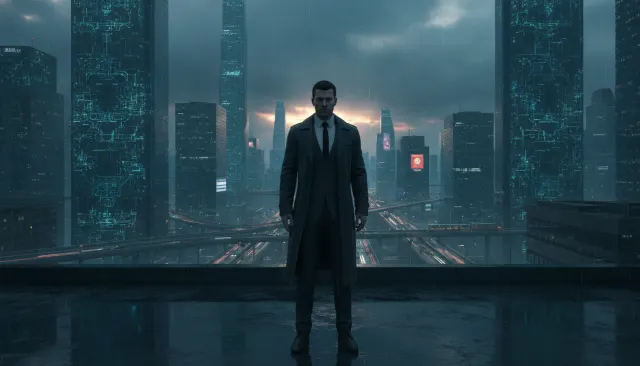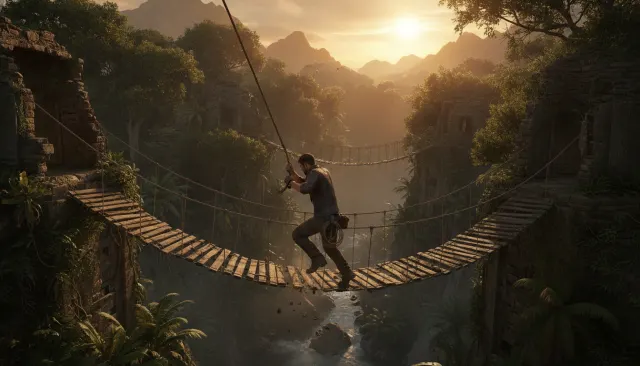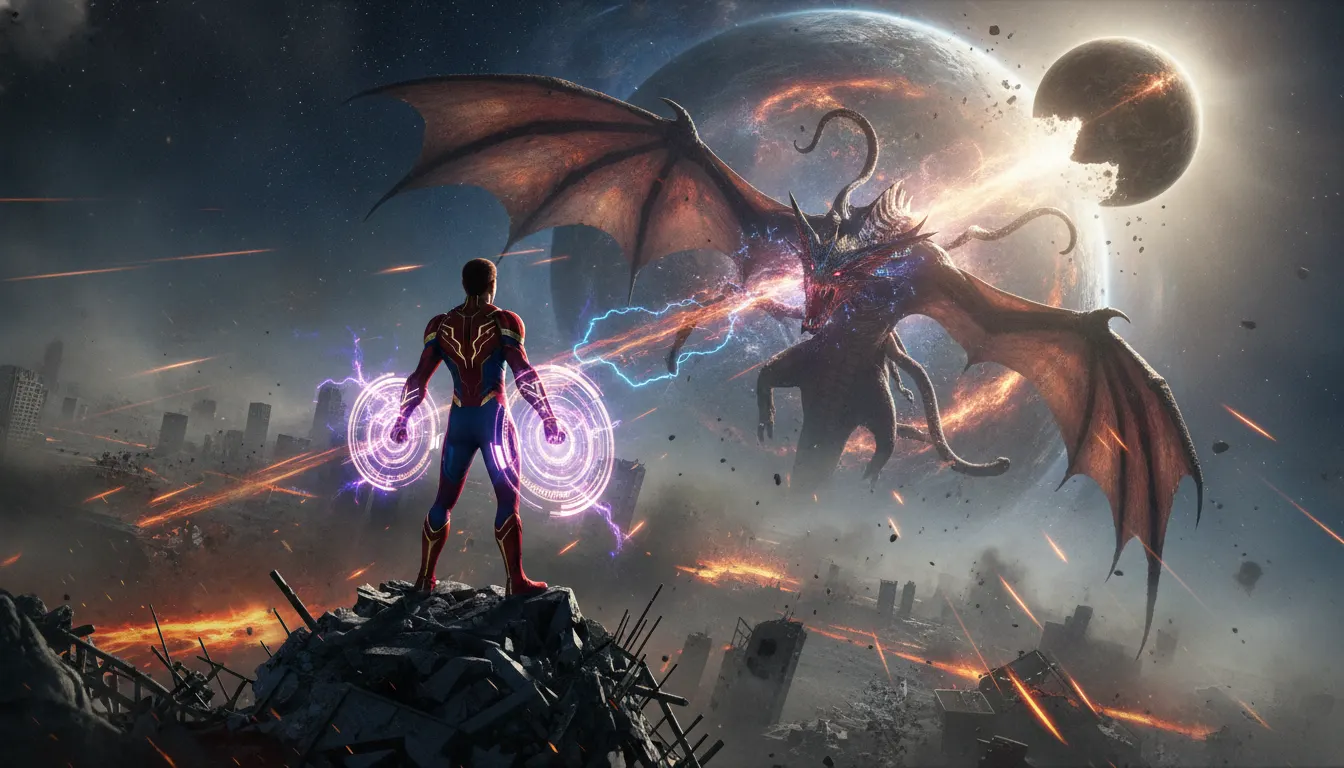
Iron Man
2008
ILM, Jon Favreau; established the suit-integration template
Marvel Cinematic Universe VFX. Saturated hero costume, energy-effect motion graphics, CG creature integration, world-ending action.
The moves a human crew would use to get here. Cue applies them for you, and knowing their names is how you ask for a change.
detail on digital characters and costumes
action photography character
scale crowd and destruction simulation with readable hero-priority silhouettes
camera AR/HUD overlays composited with parallax-matched live plates
ups with matched skin shading
The Marvel Cinematic Universe established one of the most recognizable visual effects vocabularies in modern cinema, built over more than 15 years of collaboration among ILM, Framestore, Weta Digital, Digital Domain, and dozens of smaller vendors.
Jon Favreau's Iron Man (2008) set the template: photoreal metal surfaces, dynamic HUD compositing, and motion-captured facial performances blended seamlessly into live-action footage. The arc reactor glow, the suit assembly sequences, and Stark's in-helmet AR interface became immediate reference points for VFX-driven storytelling.
By The Avengers (2012, directed by Joss Whedon), ILM had developed shared asset pipelines that let the Hulk - a fully digital character - hold closeups against practical photography without breaking believability. Framestore's work on Thor (2011) introduced operatic lighting schemes for mythological environments: Asgard's golden halls, bifrost energy trails, and scale-defying architecture.
The mid-phase MCU (2014-2018) pushed environment replacement. Guardians of the Galaxy (2014, James Gunn) demanded entirely alien worlds rendered to match the color temperature and lens character of real cinematography, using anamorphic emulation and atmospheric haze passes. Weta Digital's Avengers: Infinity War (2018) contained some of the most complex crowd simulation and destruction physics attempted at the time, culminating in the Wakanda battle and the Snap.
Avengers: Endgame (2019) required digital doubles for nearly every hero in the final portal sequence - a landmark in real-time tracked compositing - while maintaining the emotional legibility that superhero action demands.
The MCU aesthetic is defined by a tension between naturalism and spectacle. Base photography is grounded and practically lit, with VFX integrated to feel like documentary coverage of impossible events. Energy effects (repulsor blasts, magic rings, Infinity Stone pulses) use additive color compositing for bloom without blowout. Destruction simulations favor readable silhouettes over photographic chaos. Hero lighting is carefully maintained on digital characters even in multi-character battle frames.
Each MCU property developed a house color language. Captain America: Civil War (2016, Russo Brothers) used desaturated cold blues for its political conflict tone. Thor: Ragnarok (2017, Taika Waititi) employed vivid neon color saturation referencing Jack Kirby's comic-book panels. Doctor Strange (2016, Scott Derrickson) developed a geometry-fracturing effect language for the Mirror Dimension that Digital Domain's team built using recursive mandala patterns in volumetric rendering space. The consistency of hero costume colors across lighting conditions - Iron Man's red and gold, Captain America's deep navy - required per-character color grading passes to maintain brand identity through wildly varying light temperatures.
Post-2020 Disney+ productions (WandaVision, Loki, She-Hulk) exposed workload strain - some sequences show the compressed timelines in surface detail and lighting inconsistency - but the canonical theatrical look remains the photoreal integration benchmark for how live-action and CG coexist in blockbuster production at scale.
2008
ILM, Jon Favreau; established the suit-integration template
2011
Framestore; Asgard environment and bifrost effects
2012
ILM; Hulk digital character and Battle of New York
2014
ILM/Framestore; alien world photoreal environments
2016
Digital Domain; fractaling reality-bend effects
2018
Weta Digital/ILM; crowd simulation and Thanos performance
2019
multiple vendors; portal assembly and digital double finale
2018
ILM; Wakanda environments and Killmonger suit VFX
A Look is not a filter. It is a set of stored decisions the pipeline reads before it makes a single frame, so two videos in the same Look actually match.