PUPPET STOP MOTION · CONTEMPORARY · USA
Laika Boxtrolls
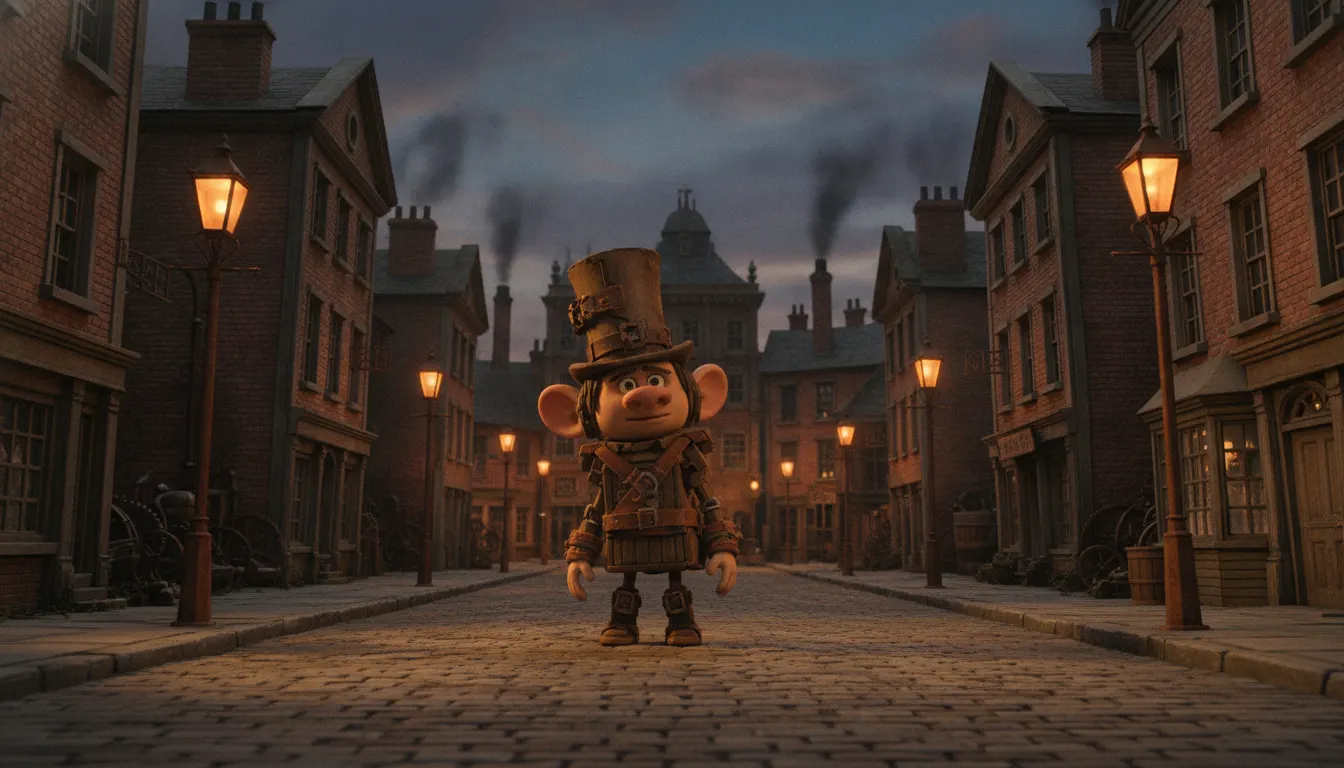
Laika Boxtrolls Victorian-industrial puppet stop motion. Cheesebridge gas-lit streets, cobbled-box troll wardrobe, soot and gear miniature world.
stop-motionvictorianindustrialsoot
LUT laika-boxtrolls-gaslit
WHEN TO USE
- Dark, atmospheric family content where Dickensian Gothic aesthetics combine with creature warmth
- Stop-motion content referencing Victorian industrial or steampunk visual traditions
- Animation showcasing craft excellence where the production process is itself a story
- Content celebrating outsider communities, found-object culture, or underground worlds
- Horror-adjacent family content where genuine menace and warmth coexist
- Brand content for craft, artisan, or made-in-America manufacturing stories
WHEN NOT TO USE
- Bright, primary-colour children's content -- Laika's aesthetic is deliberately dark and Gothic
- Very young children's content where the dark visual register and villain designs create fear
- Clean, minimal, or contemporary design contexts -- this look is maximally detailed and Victorian
- Budget-conscious productions referencing this look without the production infrastructure to achieve it
SIGNATURE TECHNIQUES
How the look is made.
The moves a human crew would use to get here. Cue applies them for you, and knowing their names is how you ask for a change.
- 013D
printed colour replacement face parts: thousands of unique expressions per character
- 02Foam latex and silicone puppet body construction over metal ball-and-socket armatures
- 03Dickensian Gothic environment design
gas lamp amber, cobblestone, tenement Victorian architecture
- 04Restricted colour palette emphasising warm light against deep, dusty shadow
- 05Character identity coded through found
object markers (cardboard box labels for the Boxtrolls)
- 06Underground world design from salvaged technology and reclaimed detritus
- 07Physical comedy timing calibrated through frame
by-frame stop-motion with micro-expression precision
HISTORY & CONTEXT
Where it comes from.
Laika Boxtrolls Look
The Boxtrolls (2014), directed by Anthony Stacchi and Graham Annable at Laika Entertainment and distributed by Focus Features, is one of the most technically accomplished stop-motion features ever produced. Based on Alan Snow's novel Here Be Monsters! (2005), the film is set in a fantastical Dickensian town called Cheesebridge and follows a community of underground-dwelling creature-people who live inside cardboard boxes.
Laika's Production Context
Laika Entertainment, founded in 2005 in Hillsboro, Oregon, under the ownership of Nike co-founder Phil Knight, has established itself as the leading American stop-motion studio since its debut with Coraline (2009, dir. Henry Selick). Laika's other features include ParaNorman (2012, dir. Sam Fell / Chris Butler) and Kubo and the Two Strings (2016, dir. Travis Knight). Each film pushes the technical limits of physical stop-motion production.
3D-Printed Replacement Animation
The Boxtrolls advanced Laika's use of 3D-printed replacement face parts for puppet animation. Rather than hand-sculpting each replacement mouth and eye position (as in traditional stop-motion), Laika uses colour 3D printing to produce thousands of precisely engineered replacement face components. The Boxtrolls production created approximately 1,600 unique printed face combinations and 55,000 individual puppet replacement parts total. This allows animation nuance impossible in traditional stop-motion while preserving the physical, tangible quality of puppet performance.
Dickensian Visual World
Production designer Nelson Lowry built Cheesebridge as a Victorian-industrial Gothic environment: cobblestone streets, gas lamp lighting, cramped tenement buildings, and an elaborate underground world of tunnels and reclaimed objects. The colour palette is deliberately restricted -- warm amber gas light against cool shadow, with the Boxtrolls' underground world rendered in dusty earth tones punctuated by the bright, warm light of salvaged technology.
Character Design
The Boxtrolls themselves -- creatures whose upper bodies emerge from cardboard boxes they wear as clothing -- represent one of the most original character designs in recent animation. Their design by concept artist Viginia Lee combines pathos, absurdity, and physical specificity (each troll has a unique box with a different brand/product label as their identity marker).
NOTABLE WORKS
Where you have seen it.
Coraline (2009, dir. Henry Selick, Laika Entertainment, first Laika feature)
ParaNorman (2012, dir. Sam Fell / Chris Butler, Laika Entertainment)
Kubo and the Two Strings (2016, dir. Travis Knight, Laika, Academy Award nominee)
Missing Link (2019, dir. Chris Butler, Laika Entertainment)
Wildwood (in production, Laika, based on Colin Meloy / Carson Ellis novel)
THE RECIPE
The exact knobs
the renderer turns.
A Look is not a filter. It is a set of stored decisions the pipeline reads before it makes a single frame, so two videos in the same Look actually match.
SettingValue
GradeColour LUT applied to every frame
laika-boxtrolls-gaslitTransitionHow one shot becomes the next
hard cuts · 220ms · ease-in-outKen BurnsCamera move applied to stills
Slow push · 0.025 · centerTypographyDisplay / body / mono pairing
Cormorant · Lora · CourierMusic moodWhat the bed under the voice sounds like
accordion-waltz · tin-whistle-folkPrompt suffixAppended to every shot prompt in this Look
Laika Boxtrolls puppet stop motion, Victorian industrial Cheesebridge gas-lit street, cobbled box troll wardrobe, soot and gear miniaturePALETTE
Primary
#5A4A3A
Secondary
#2A2018
Accent
#D7A24E
Text/Light
#1A1410
Text/Dark
#F0DCB0
BG 900
#0F0A05
BG 800
#1F1810
RELATED LOOKS
Next to it on the shelf.
 Puppet Stop MotionHenry Selick James and the Giant Peach
 ClaymationAardman Wallace and Gromit Claymation
 Puppet Stop MotionJiri Trnka Czech Puppet Classic
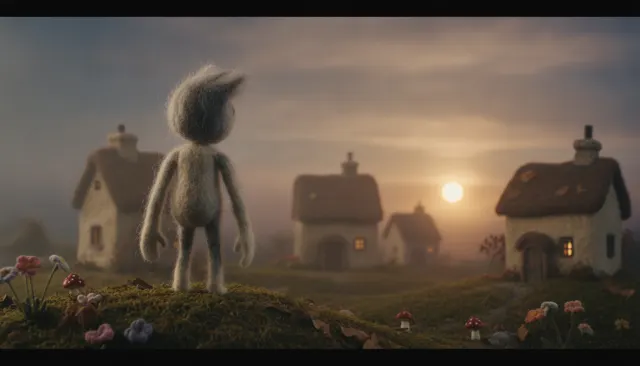 Felted Knitted TextileIn Shadow Felted Puppet
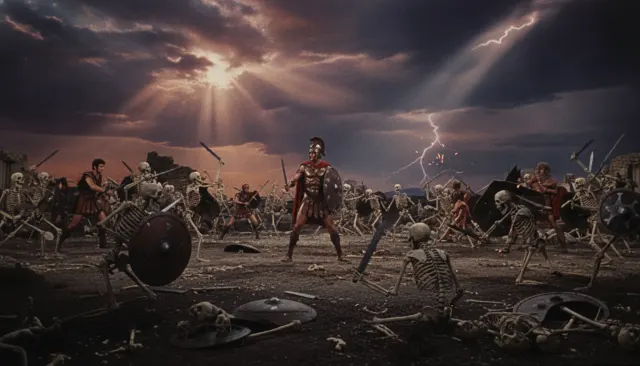 Harryhausen DynamationJason and the Argonauts Skeleton
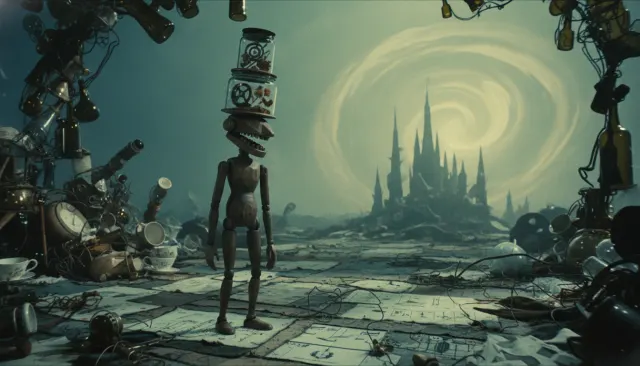 Traditional Puppet ExtendedCzech Svankmajer Surreal Puppet
Your first cut
is on us.
+ New videoFree plan · no card · 1080p export